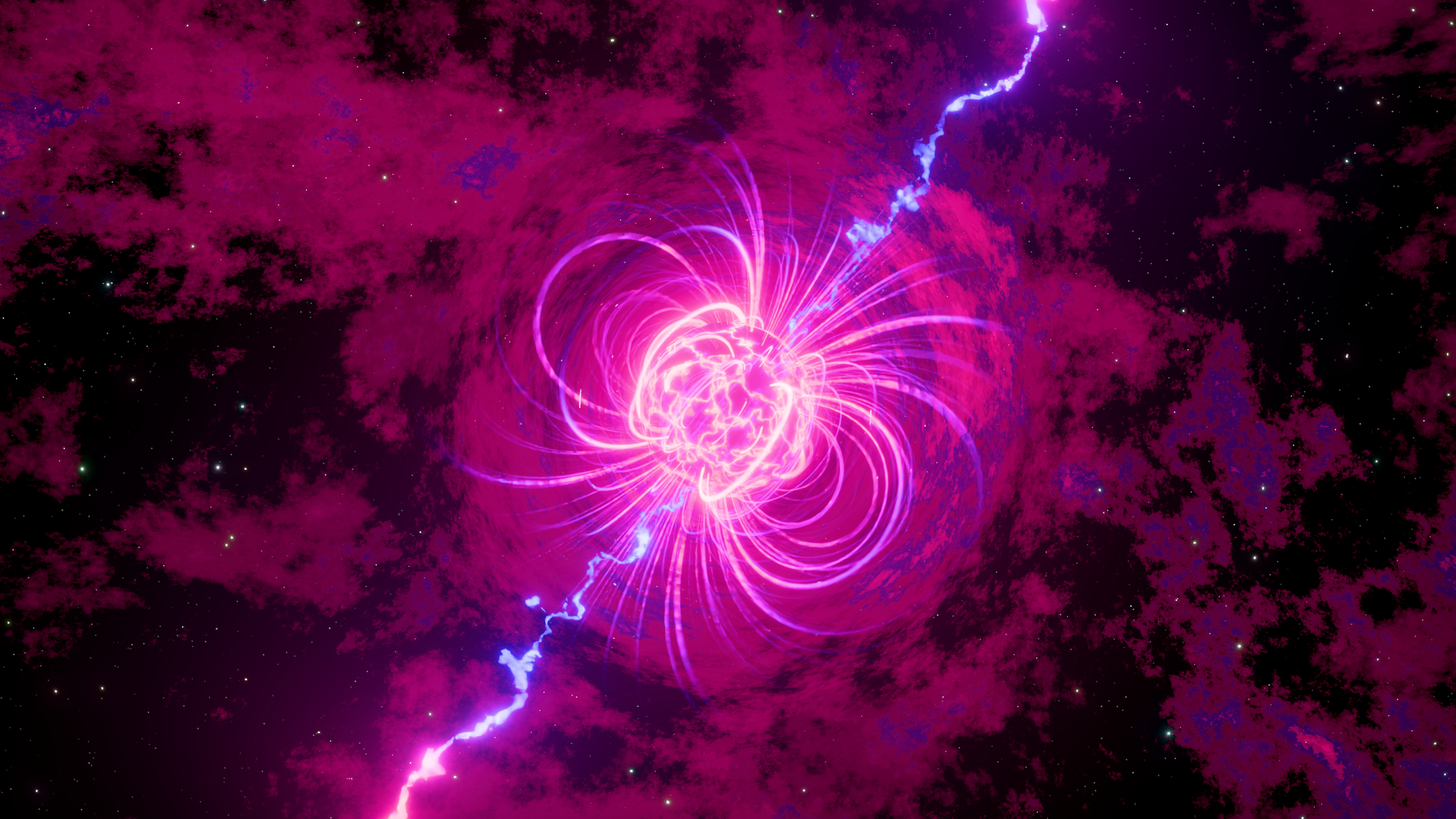
Neutron Stars Are So Dense a Teaspoon Weighs Billions of Tons
Neutron stars represent one of the most extreme objects in the universe. When massive stars collapse at the end of their lives, their cores compress to such an unimaginable density that a teaspoon of neutron star material would weigh approximately 6 billion tons on Earth—roughly equivalent to the weight of Mount Everest. These stellar remnants are typically only 20 kilometers in diameter yet contain more mass than our entire Sun. A neutron star's gravity is so intense that it warps spacetime itself, and its surface gravity is about 200 billion times stronger than Earth's. Interestingly, neutron stars spin incredibly fast—some rotating hundreds of times per second—creating lighthouse-like beams of radiation called pulsars. The neutrons are packed so tightly that if you tried to compress Earth to neutron star density, it would shrink to the size of a marble. Despite their incredible density, neutron stars were only theoretically predicted in 1934 and not observationally confirmed until 1967 when astronomer Jocelyn Bell Burnell detected the first pulsar. Today, scientists study neutron stars to understand the behavior of matter under extreme conditions that cannot be replicated in laboratories, providing insights into fundamental physics.