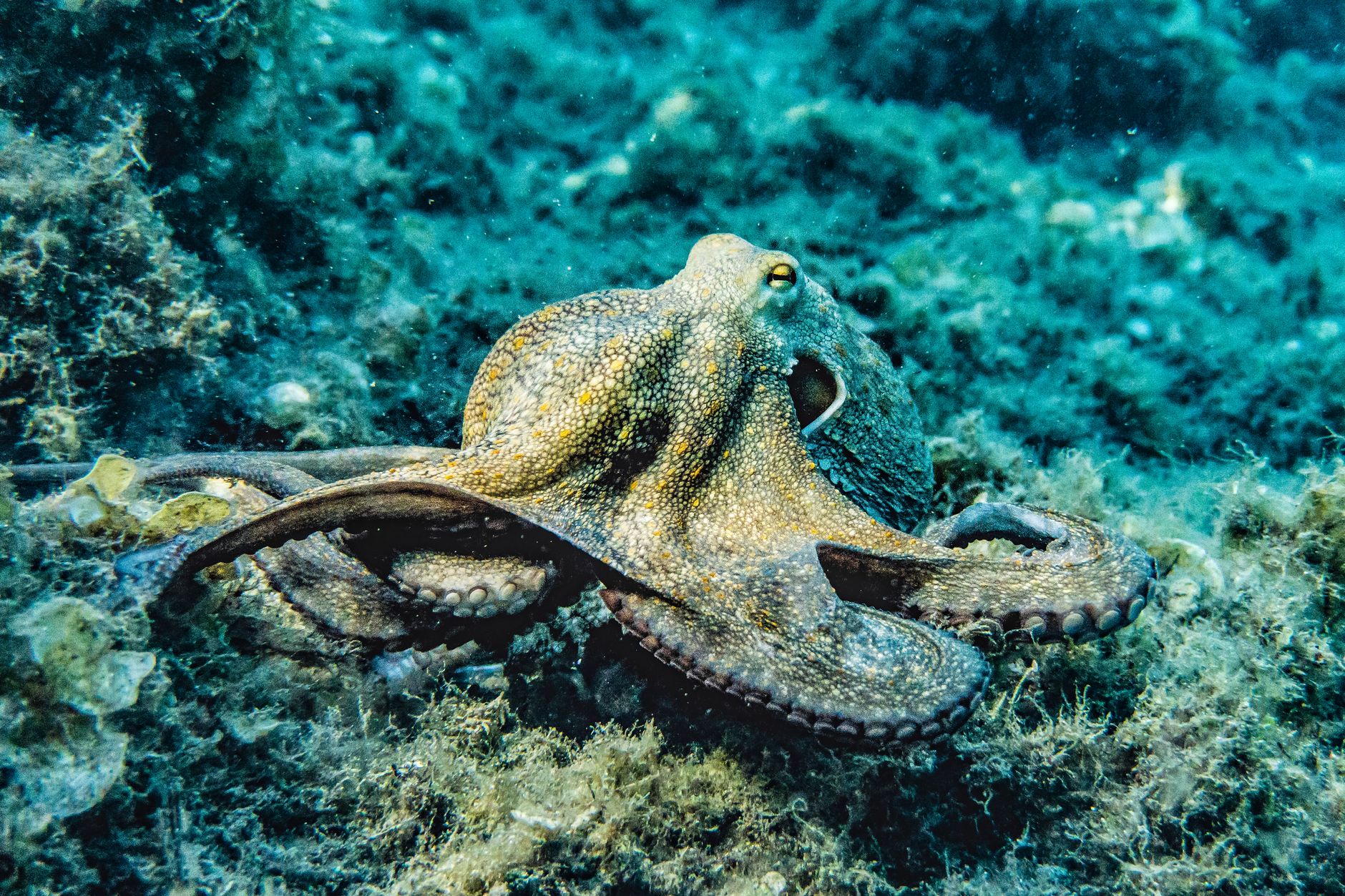
Octopuses possess a distributed nervous system that defies conventional biology. While they have one central brain, they also have a mini-brain in each of their eight arms, allowing each arm to act semi-independently. An arm can solve problems, hunt, and manipulate objects even when severed from the body—it essentially "thinks" on its own. Additionally, octopus blood is blue instead of red because it uses copper-based hemocyanin to carry oxygen rather than the iron-based hemoglobin found in humans and most vertebrates. This copper-based system is more efficient in cold, low-oxygen ocean environments where octopuses thrive. Their cognitive abilities are remarkable; they can navigate mazes, use tools, and demonstrate playful behavior. The nine-brain system gives octopuses extraordinary flexibility and problem-solving capability, making them among the most intelligent invertebrates on Earth. This distributed intelligence model is so effective that it has inspired researchers studying artificial intelligence and robotics. The evolutionary advantages of this neural architecture reflect how different life forms develop unique solutions to environmental challenges, showcasing the incredible diversity of biological design in nature.