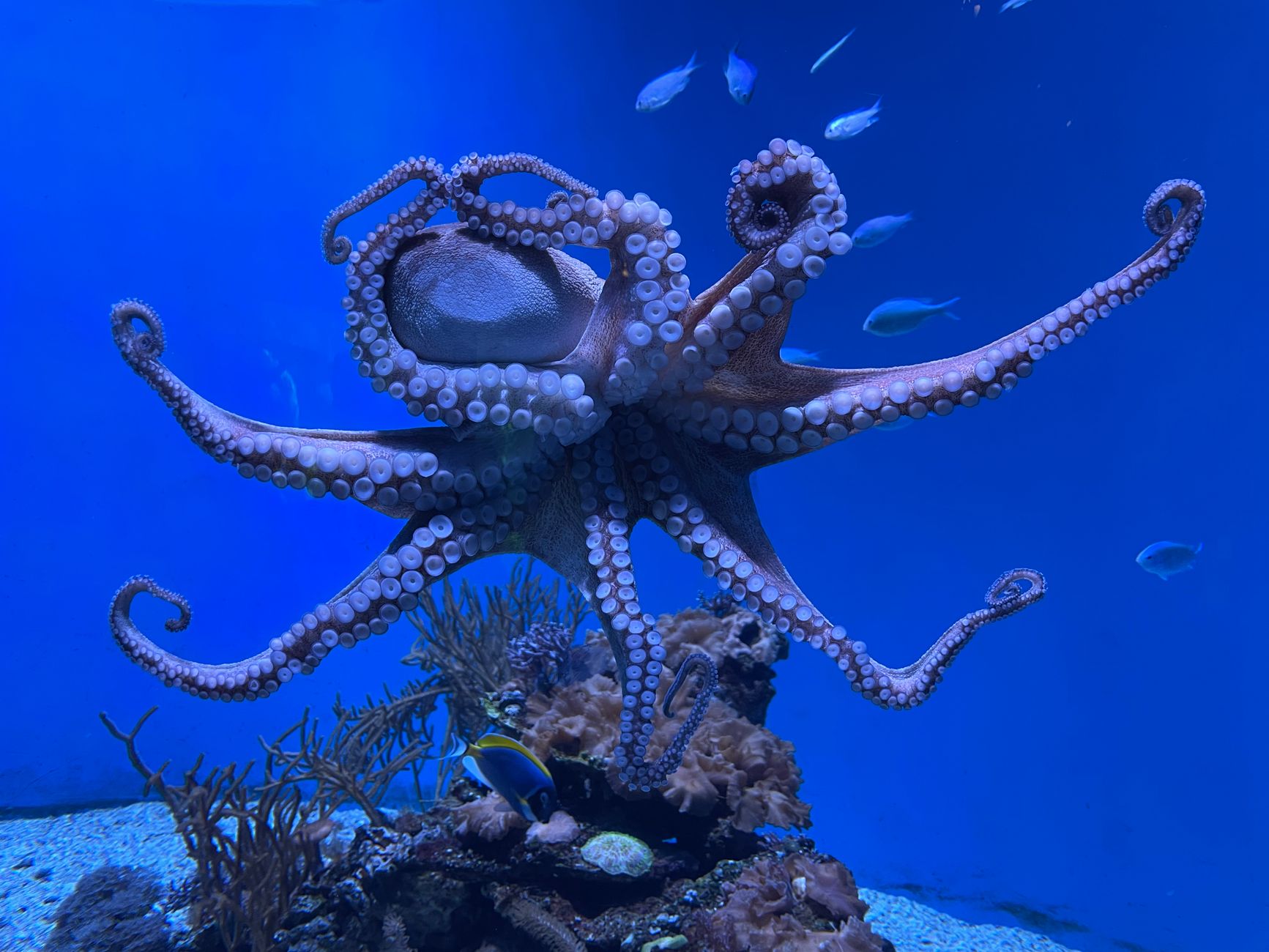
Octopuses Have Three Hearts and Blue Blood
Octopuses possess a cardiovascular system that defies our typical understanding of animal biology. They have three hearts: two pump blood to the gills, while the third pumps it to the rest of the body. Even more remarkably, their blood is blue, not red like ours. This happens because octopuses use copper-based hemocyanin to carry oxygen instead of the iron-based hemoglobin found in mammals. The copper compound is more efficient at transporting oxygen in cold, low-oxygen ocean environments where octopuses live. This adaptation allows them to thrive in deep-sea conditions that would be inhospitable to most creatures. However, there's a fascinating trade-off: when an octopus swims, the heart that pumps blood to the body actually stops beating, which is why these creatures prefer crawling along the ocean floor rather than swimming—swimming exhausts them rapidly. This unique physiology is just one reason octopuses are considered among the most alien-like creatures on Earth, despite being invertebrates that evolved on our own planet. Their three-heart system and blue blood represent millions of years of adaptation to extreme marine environments.