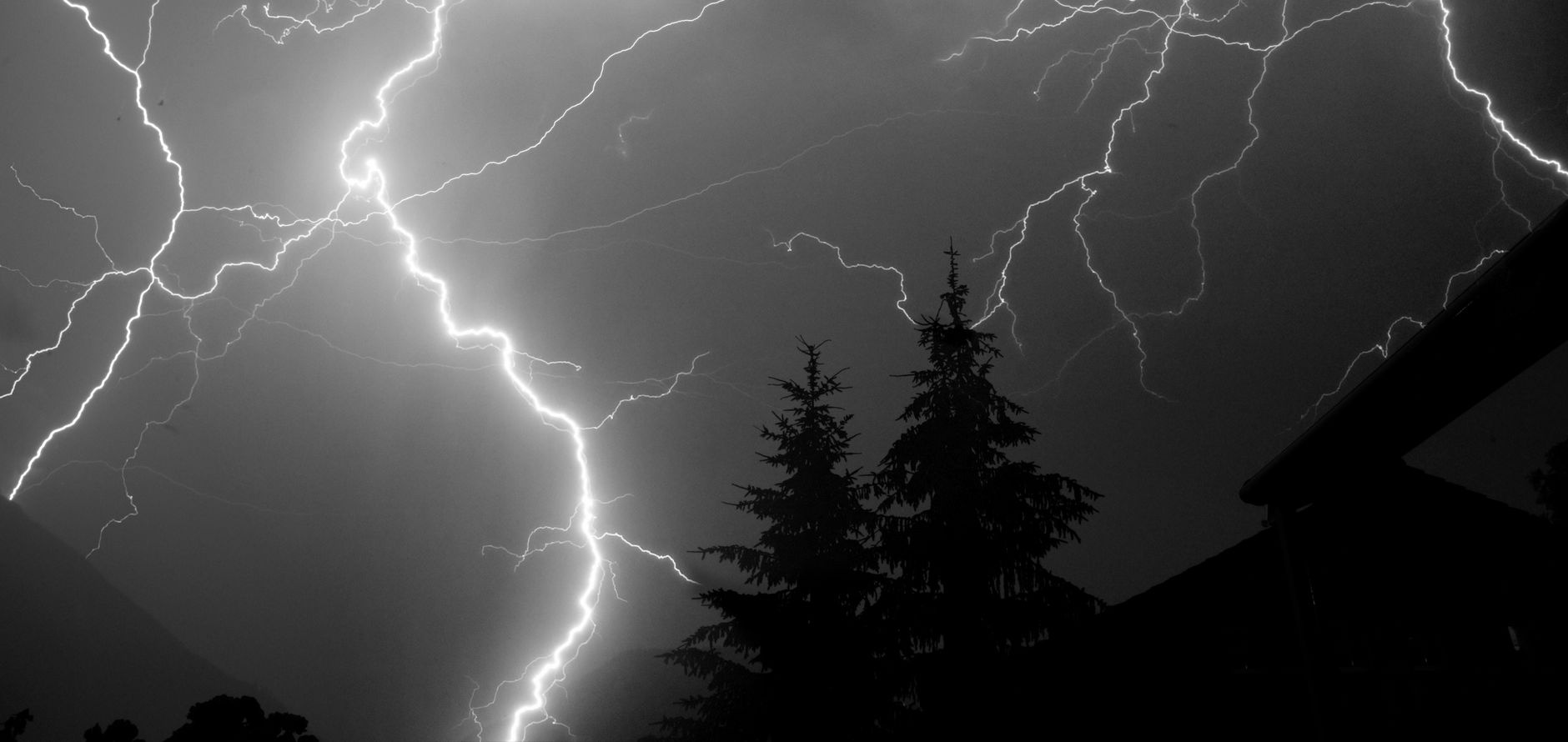
Lightning Strikes Upward More Often Than You'd Think
Most people imagine lightning as a bolt that streaks down from clouds to the ground. The reality is more complicated. While negative lightning does travel downward, positive lightning travels upward from the ground toward the clouds, and it's far more dangerous than its negative counterpart. Positive lightning accounts for only about 25 percent of cloud-to-ground strikes, yet it carries roughly ten times more current and can strike from a clear sky several miles away from the storm's center. This makes it harder to predict and more likely to cause severe injury or death. The bolt also lasts longer, increasing the duration of electrical contact with whatever it hits. Positive lightning is most common in the upper regions of thunderstorms, where ice crystals collide and separate charge differently than in the lower regions. When conditions align, the ground beneath becomes positively charged, and the negative charge in the cloud base draws an upward streamer from the earth. This upward-traveling lightning is what often ignites large forest fires and causes the most catastrophic damage to power grids and structures. For years, scientists underestimated positive lightning's frequency because it was harder to detect and measure. Modern instruments have revealed that it poses a genuine hazard, especially in regions prone to severe storms. Understanding this distinction has changed how meteorologists assess lightning risk and how engineers design protection systems for buildings and infrastructure.