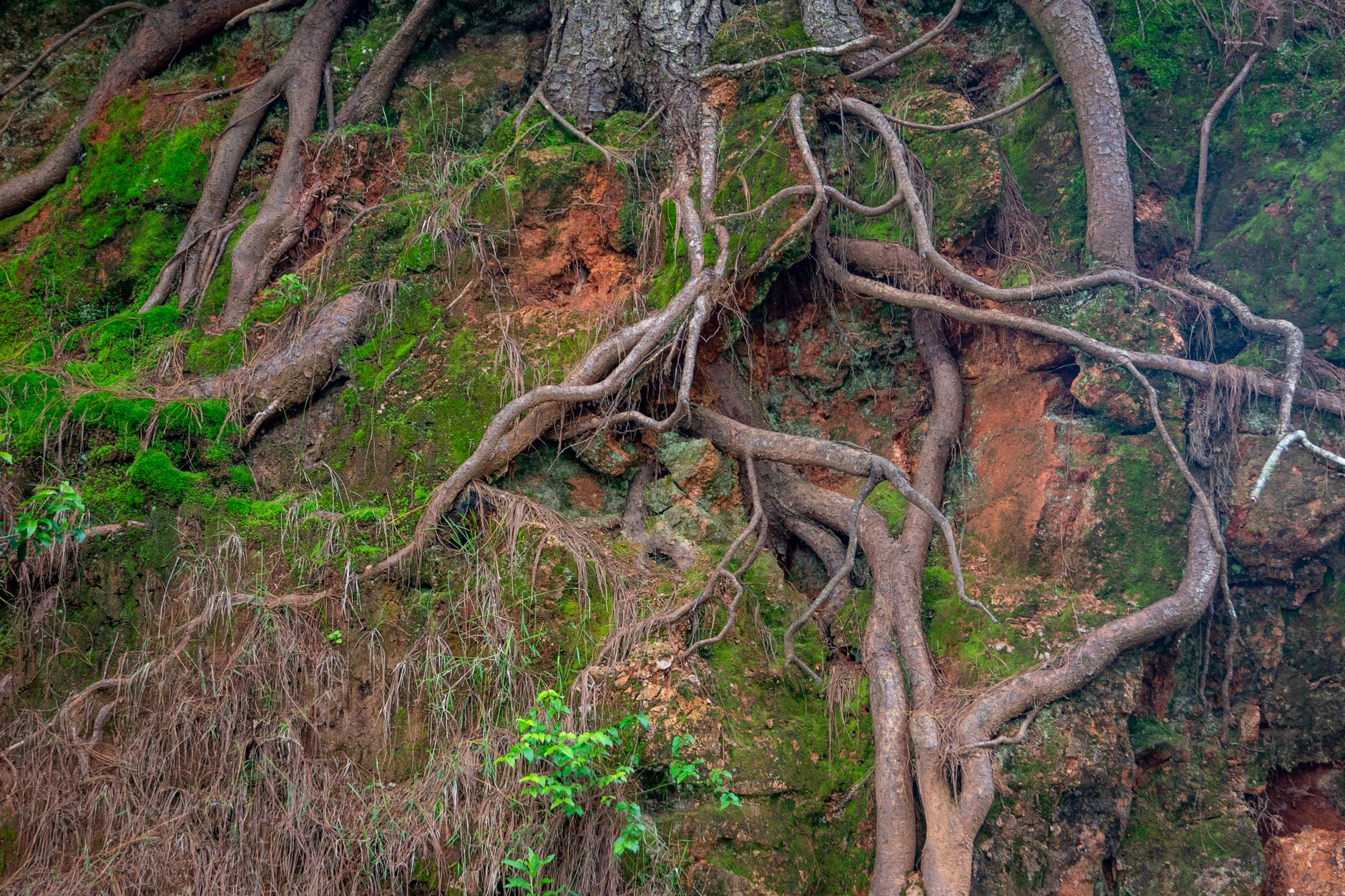
Trees Can "Talk" to Each Other Through Underground Networks
Beneath the forest floor exists a remarkable communication system that scientists call the "Wood Wide Web." Trees are connected through networks of fungi called mycorrhizal networks, which form symbiotic relationships with tree roots. Through these fungal highways, trees can send chemical signals, nutrients, and even warning messages to neighboring trees. When a tree is attacked by insects, it can transmit chemical distress signals through the fungal network to warn other trees, which then increase production of defensive compounds before being attacked themselves. Trees can also transfer carbon and nitrogen to struggling neighbors, effectively "feeding" sick or shaded trees that cannot photosynthesize efficiently. Research by scientists like Suzanne Simard has demonstrated that mother trees—large, mature trees—can nurture their offspring and related trees by selectively sending them more resources. In experiments, radioactive isotopes tracked carbon moving from established trees to seedlings, proving this transfer is deliberate and preferential. This discovery fundamentally changed how we understand forest ecosystems. Forests aren't collections of individual competitors but rather cooperative communities where trees prioritize the survival of their kin and support the weakest members. This network can span entire forests, connecting thousands of trees across acres of land, creating one of nature's most sophisticated biological internet systems.