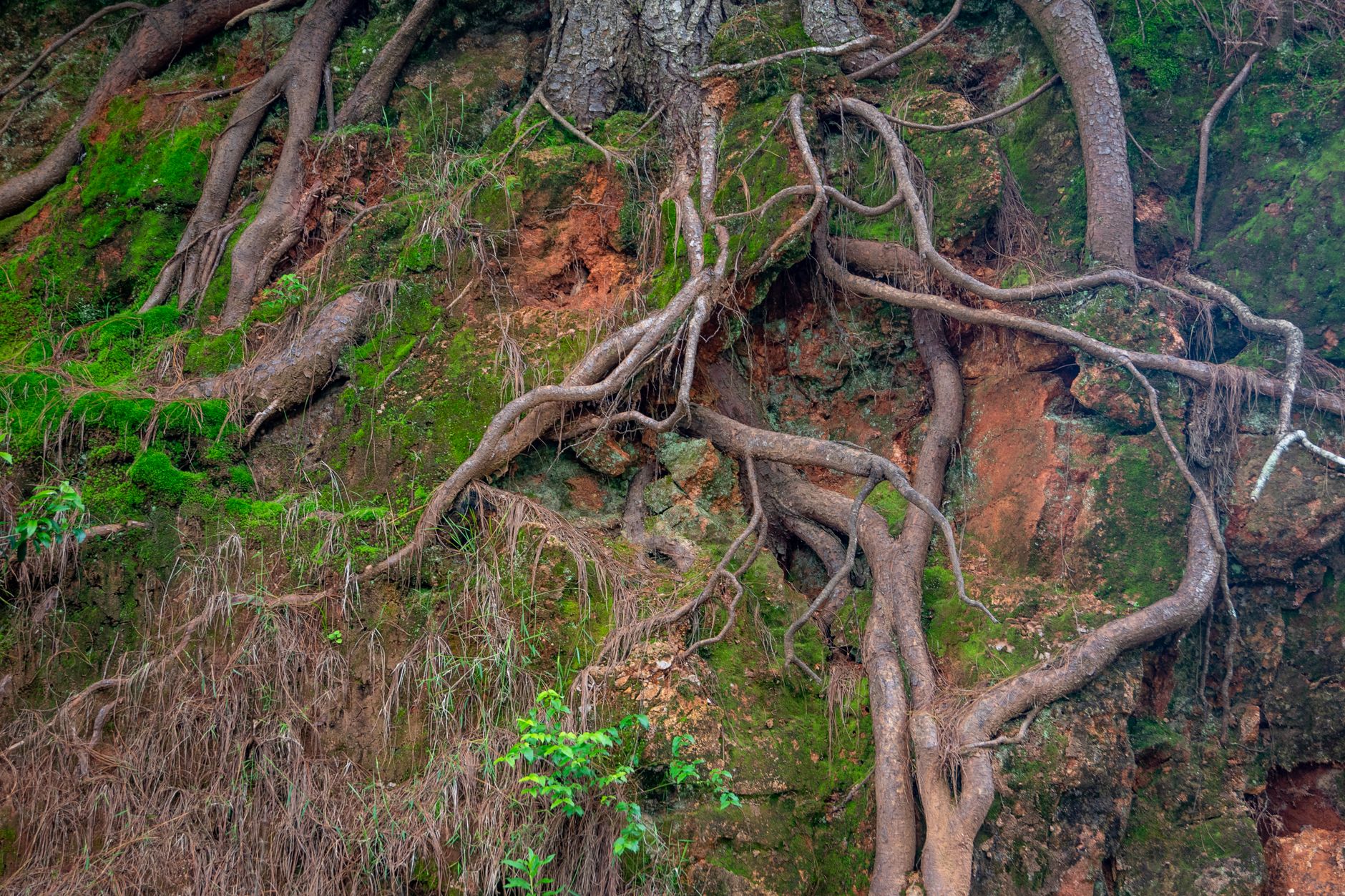
Trees Can Talk Underground Through a Fungal Network
Beneath the forest floor exists a largely invisible communication system. Tree roots connect to each other through threadlike fungal networks called mycorrhizal networks, which scientists sometimes refer to as the "wood wide web." These networks allow trees to send chemical signals, share nutrients, and even warn neighboring trees about pest attacks. When a tree is damaged by insects, it releases chemical distress signals through the fungal network to nearby trees, which then boost their own chemical defenses before the pests arrive. A mother tree can also nurture her seedlings by funneling extra carbon and nutrients through the network to help them survive in shaded understory conditions. Research has shown that trees in a network prioritize keeping their kin alive. Douglas firs, for instance, preferentially send more resources to their own offspring than to unrelated trees. The fungal partners benefit too, receiving sugars from photosynthesis in exchange for helping trees access water and minerals from soil that the roots alone cannot reach. This interdependence challenges the old view of forests as collections of individual competitors. Trees are wired into a community system where survival isn't purely about outcompeting neighbors but about cooperative resource sharing and collective defense. The network works best in old-growth forests where trees have had decades to establish these fungal connections.