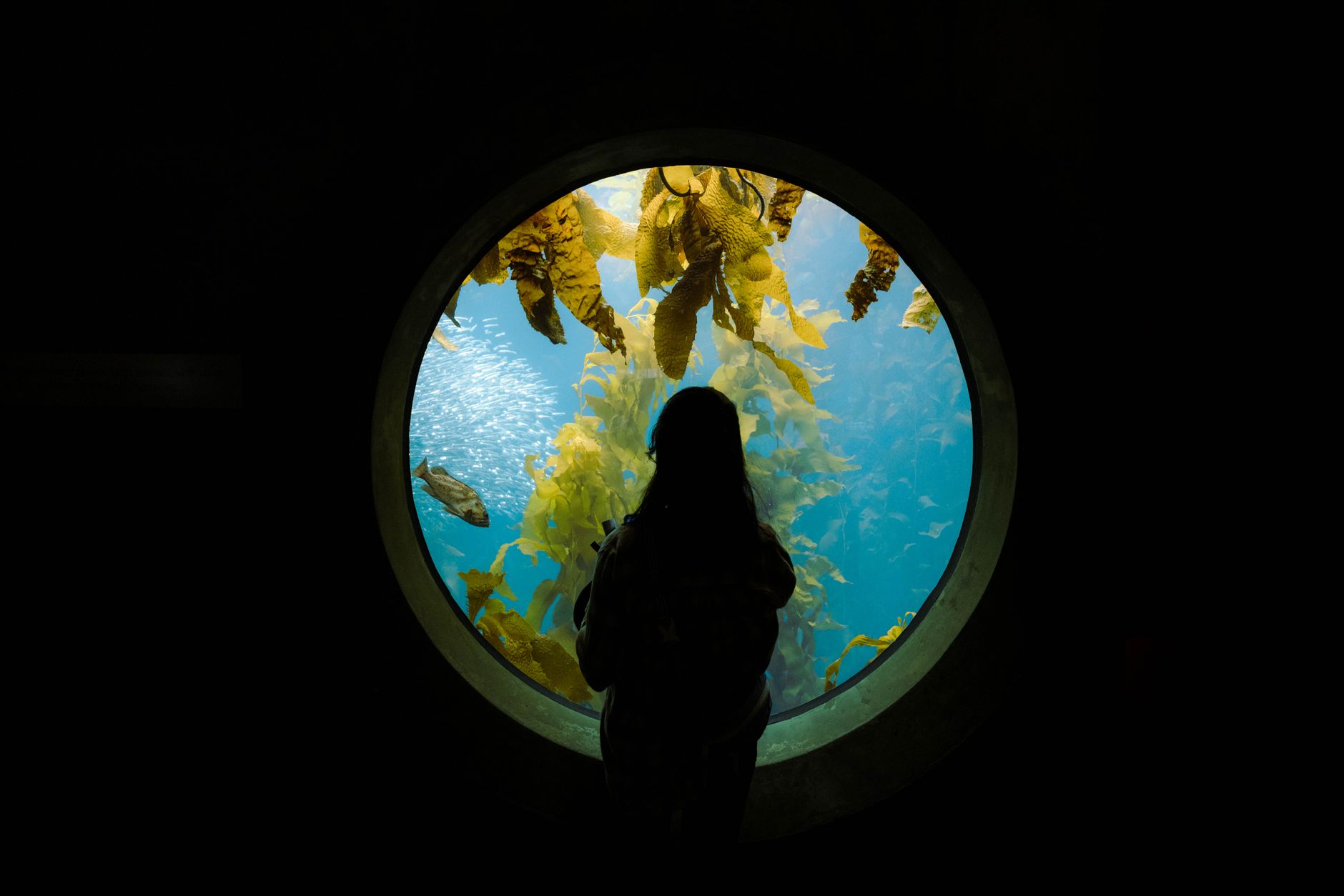
Underwater Forests Are Quietly Absorbing More Carbon Than Land Forests
Kelp forests and seagrass meadows are among Earth's most efficient carbon sinks, sequestering carbon at rates up to 40 times faster than terrestrial forests. A single kelp plant can grow up to two feet per day, and when it dies and sinks to the ocean floor, the carbon locked within it becomes trapped in deep-sea sediments for thousands of years—a process called "blue carbon sequestration." Unlike terrestrial forests where decomposition releases carbon back into the atmosphere, underwater vegetation in the deep ocean remains largely undisturbed. Scientists estimate that seagrass meadows, mangrove forests, and kelp beds capture approximately 200 million tons of carbon annually, yet these ecosystems cover less than 0.2% of the ocean floor. This makes them disproportionately valuable for climate regulation. Despite their critical importance, underwater carbon-capturing ecosystems are disappearing three times faster than rainforests due to coastal development, pollution, and climate change. Protecting and restoring these underwater forests could be one of our most powerful—and underutilized—weapons against climate change. Recent research shows that expanding seagrass restoration projects could sequester an additional 299 million tons of CO2 annually by 2100.