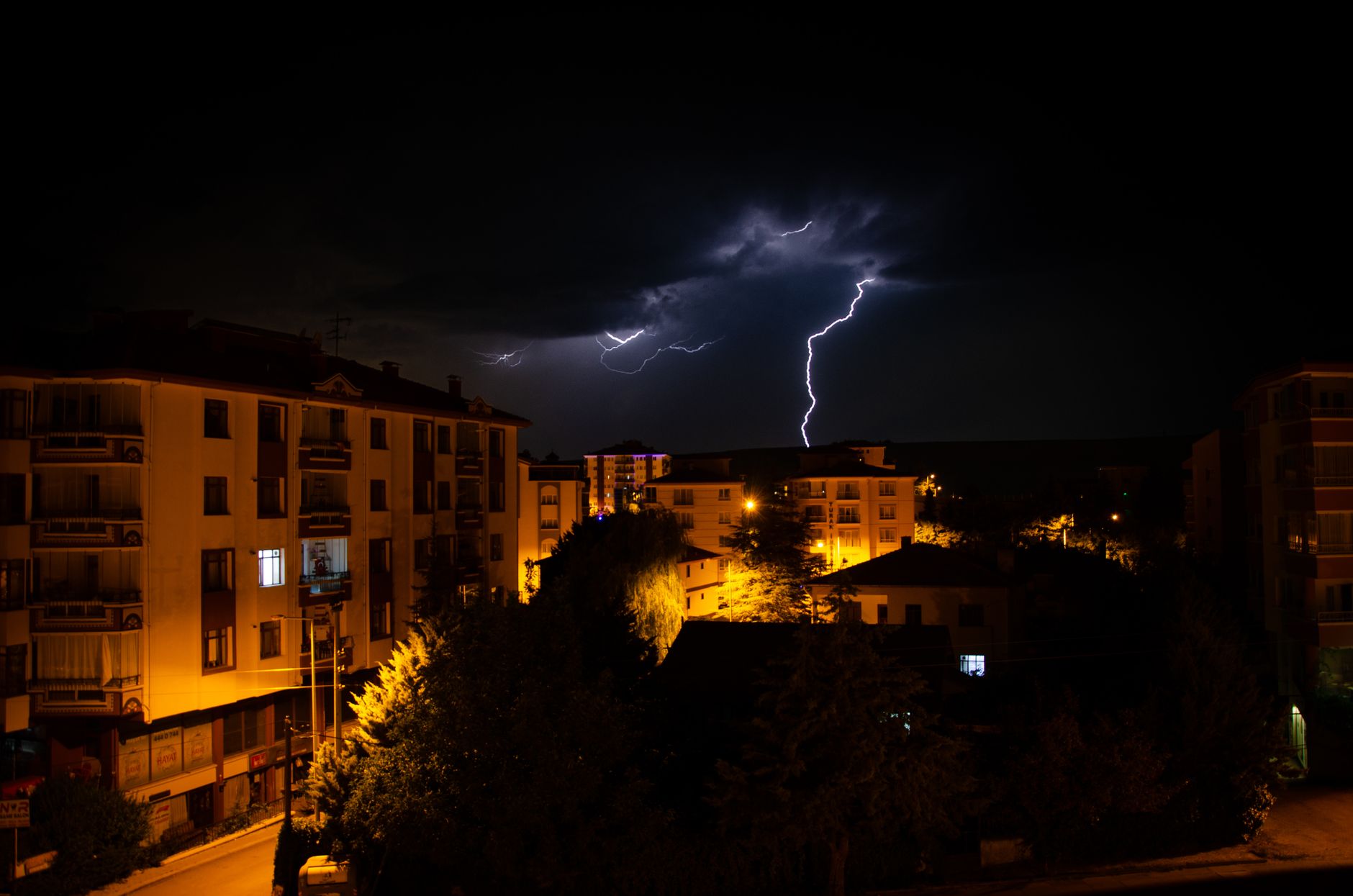
Lightning Strikes the Same Place Twice, Often
The old saying that lightning never strikes the same place twice is backwards. Lightning actually seeks out tall structures and conductive surfaces repeatedly, which is why lightning rods protect buildings and why certain locations get struck far more often than random chance would predict. The Empire State Building in New York is hit roughly 20 to 25 times per year. During a single storm in 1969, it was struck 15 times in 15 minutes. Florida's Ybor City neighborhood holds the record for the most lightning strikes in a concentrated area, with some spots receiving multiple strikes annually. This happens because lightning follows the path of least electrical resistance. A tall building or a metallic object creates that path, so storm systems passing overhead will discharge through the same structure again and again. The ground itself plays a role too. Certain soil compositions and moisture levels conduct electricity better, making those spots magnetic for lightning strikes. The danger is real but manageable. Lightning rods have been protecting structures for centuries by channeling the massive electrical discharge safely into the ground. Without them, the repeated strikes would cause fires and damage. Understanding that lightning targets the same places repeatedly has been crucial for designing safe buildings in areas prone to severe thunderstorms.