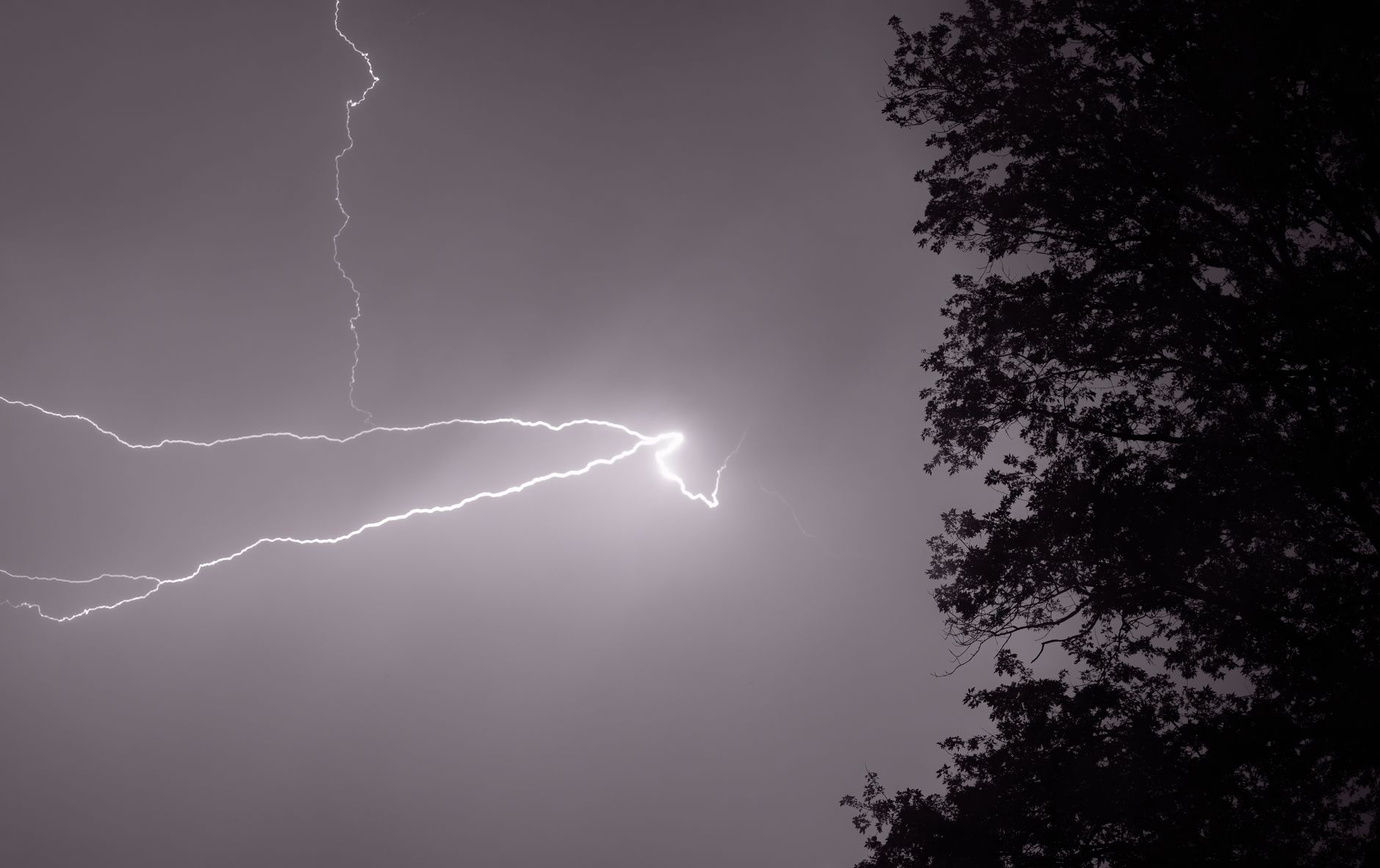
Lightning Can Create Glass Sculptures Underground
When lightning strikes sandy soil or sandy beaches, the extreme heat—reaching 30,000 Kelvin, hotter than the sun's surface—can instantly fuse sand particles into glass tubes called fulgurites. These hollow, branching glass formations can extend several meters deep into the ground, creating intricate natural sculptures that persist for thousands of years. The process happens so rapidly that the sand doesn't have time to melt uniformly; instead, it vitrifies along the lightning's conductive path, leaving behind a delicate glass mold of the electrical discharge itself. Fulgurites are hollow because the lightning vaporizes moisture and organic material inside the sand column, creating a void. These formations range from pencil-thin to several centimeters in diameter and can branch extensively as the electrical current seeks the path of least resistance through the ground. Scientists study fulgurites to understand lightning behavior and soil composition, while collectors prize them as rare natural wonders. The largest known fulgurite, discovered in Florida, extended over 16 feet into the ground. Because they're fragile and require specific conditions to form—sandy soil with sufficient moisture—fulgurites are relatively uncommon finds, making them remarkable geological specimens that represent nature's most violent weather events crystallized in glass.