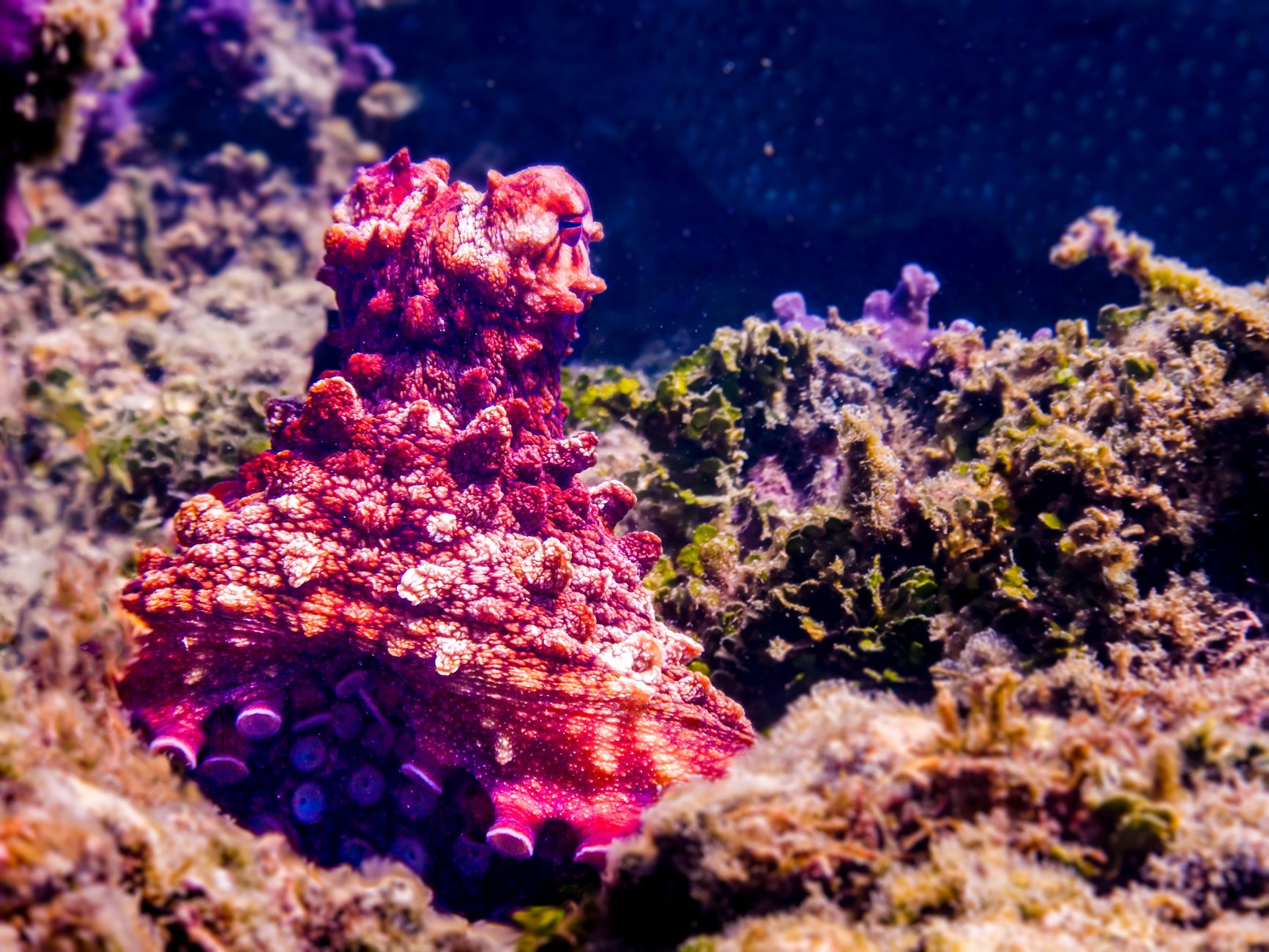
Most animals concentrate their neural processing in a single brain, but octopuses evolved a radically different system. Two-thirds of an octopus's neurons live in its arms rather than its head. Each arm operates with significant autonomy, capable of solving problems, tasting, and moving independently while the central brain handles other tasks. This distributed intelligence means an octopus can hunt with one arm, explore with another, and defend itself with a third, all simultaneously without coordinating everything through a central command center. The system works so well that if an arm gets severed, it continues to move and respond to stimuli for hours afterward. Researchers have found that arms can even taste food before bringing it to the mouth, making decisions about what to eat without input from the main brain. This architecture reflects the octopus's evolutionary path. These creatures diverged from other mollusks millions of years ago and developed in ways that prioritized flexibility and independent problem-solving over centralized control. The arrangement gives them an edge in complex ocean environments where quick, localized responses to threats or prey matter more than unified strategic thinking. It's a reminder that intelligence doesn't require the blueprint we're familiar with.