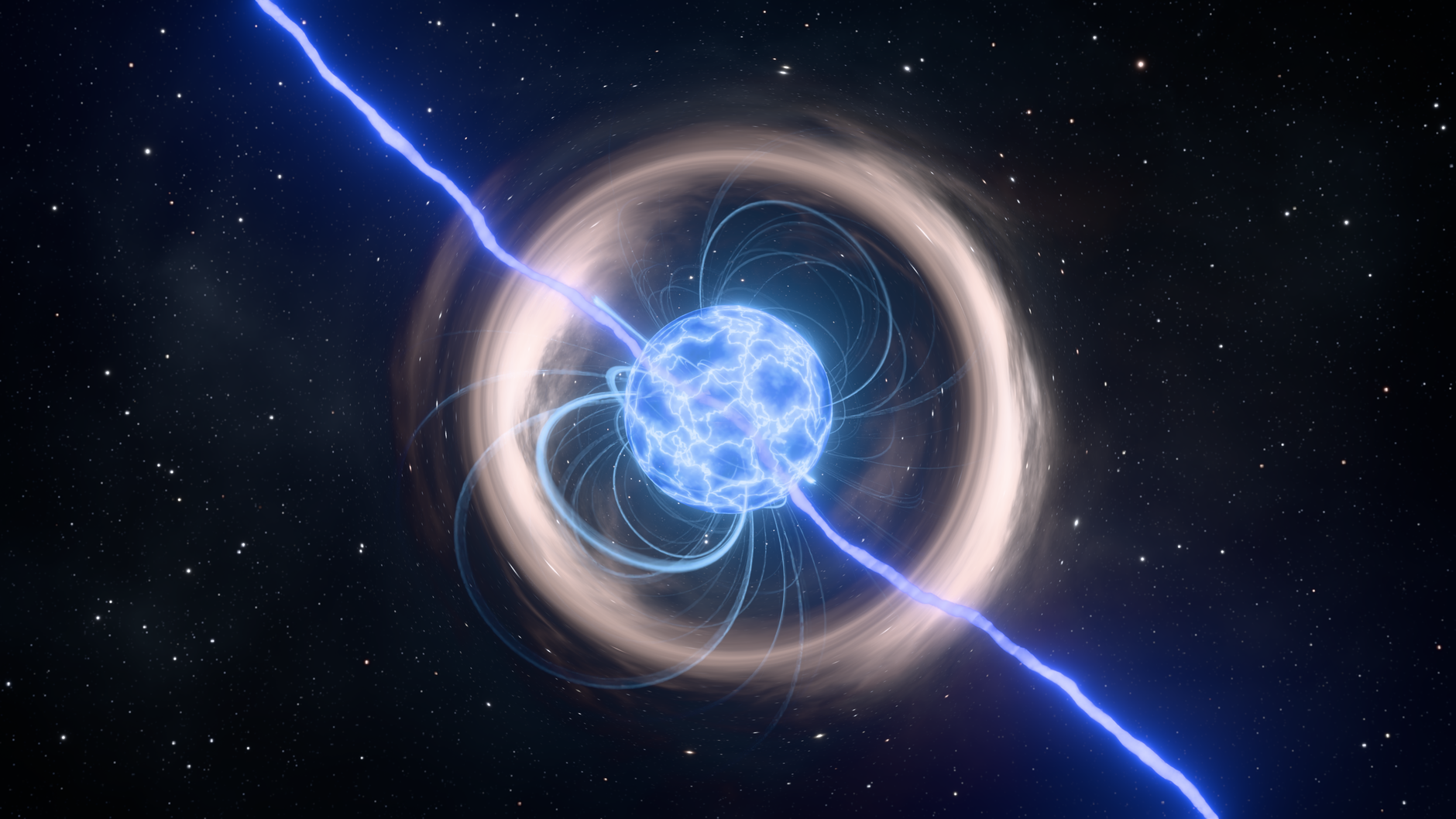
Neutron Stars Are So Dense, a Teaspoon Weighs 6 Billion Tons
Neutron stars represent one of the most extreme objects in the universe. When massive stars collapse at the end of their lives, their cores compress to such an incredible density that electrons are forced into protons, creating neutrons. A neutron star typically has a mass similar to our Sun but is compressed into a sphere only about 20 kilometers (12 miles) in diameter. To put this in perspective, a teaspoon of neutron star material would weigh approximately 6 billion tons on Earth—equivalent to the mass of Mount Everest. This mind-bending density occurs because the neutrons are packed so tightly that there's almost no empty space between them. A neutron star's gravity is equally extreme; if you were to drop an object from just one meter above its surface, it would strike at speeds exceeding 2,000 kilometers per second, releasing energy comparable to an atomic bomb. Some neutron stars rotate hundreds of times per second while emitting beams of radiation, appearing as pulsars when these beams sweep past Earth. Their existence was theoretically predicted in 1934 but not observationally confirmed until 1967 when Jocelyn Bell Burnell detected the first pulsar. Today, astronomers have discovered thousands of these stellar remnants, each offering insights into the most extreme physics in the universe.