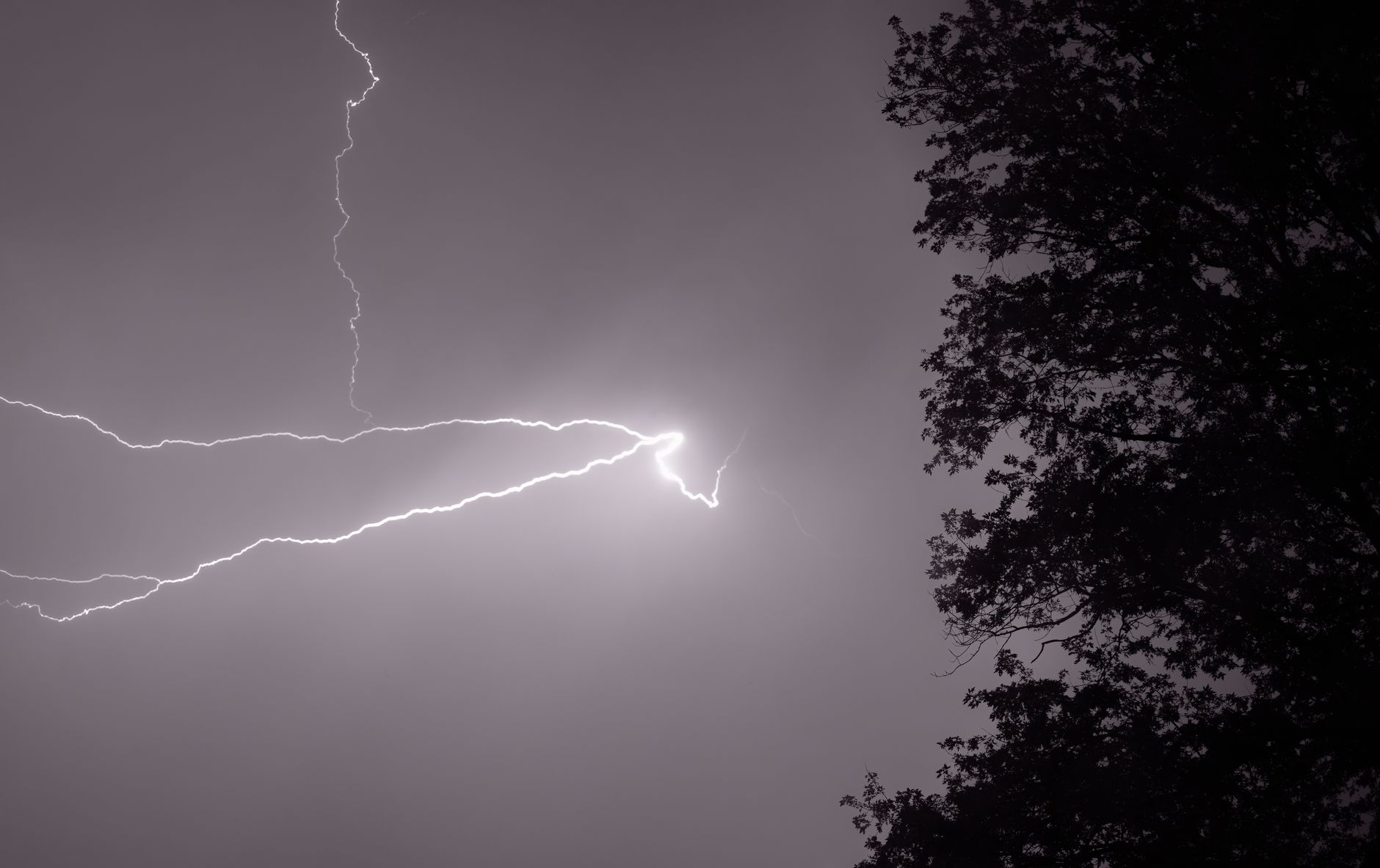
Lightning Can Travel Upward at Light Speed
When lightning strikes, most people imagine a bolt descending from cloud to ground. The reality is stranger. Lightning begins with what's called a stepped leader, a channel of ionized air that moves downward from the cloud in 50-meter jumps, searching for a path to the ground. Once this leader gets close enough to the surface, something unexpected happens. A streamer of positive charge shoots upward from the ground or a tall object, racing to meet the descending leader. When they connect, the actual lightning discharge travels upward along that connected channel at roughly one-third the speed of light. This return stroke is what produces the bright flash we see and the thunder we hear. Tall structures like skyscrapers and radio towers are struck more often because their streamers can reach farther into the cloud, intercepting the stepped leader sooner. This upward component of lightning was counterintuitive to early scientists, who assumed all electrical discharge moved downward. High-speed photography and modern instrumentation have revealed that lightning is essentially a bidirectional process, with the most dangerous and luminous part traveling from ground to cloud, not the other way around.