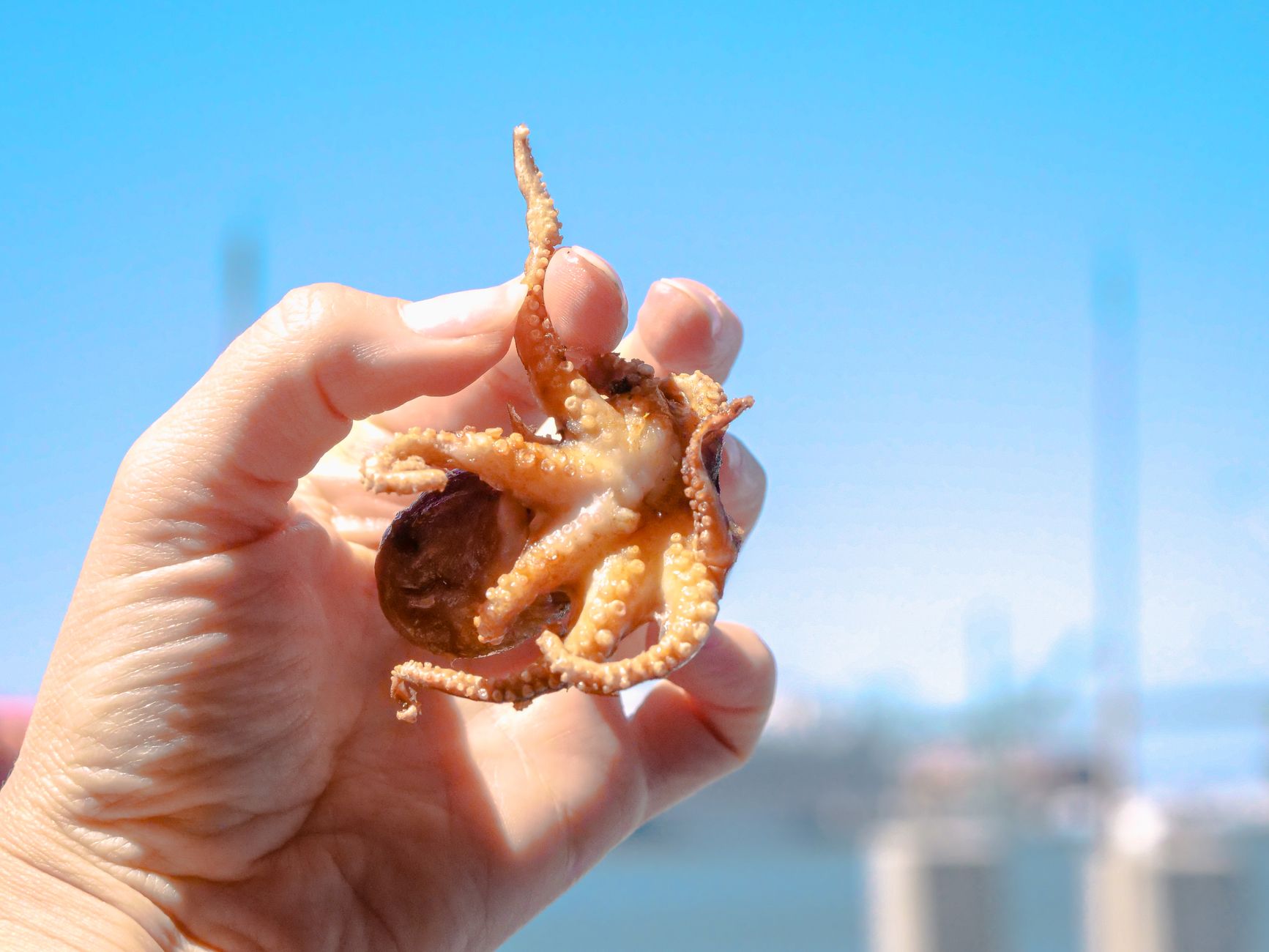
An octopus doesn't have one central brain like humans do. Instead, it has nine separate brains: one in its head and a smaller brain in each of its eight arms. This distributed system means each arm can operate almost independently, solving problems and exploring its environment without waiting for instructions from the central brain. An octopus arm can taste what it touches, hunt for food, and even continue moving for a short time after being severed from the body. The central brain handles higher-level functions like learning and memory, but the arm brains handle immediate responses to stimuli. This is why octopuses can simultaneously hold different objects with different arms while the central brain focuses on other tasks. Researchers have observed octopuses using their arms to investigate crevices, manipulate objects, and even open jars, often making decisions that seem independent from the main body. This neural architecture allows octopuses to be remarkably efficient hunters and problem-solvers in complex ocean environments where instant, localized reactions matter more than centralized control.