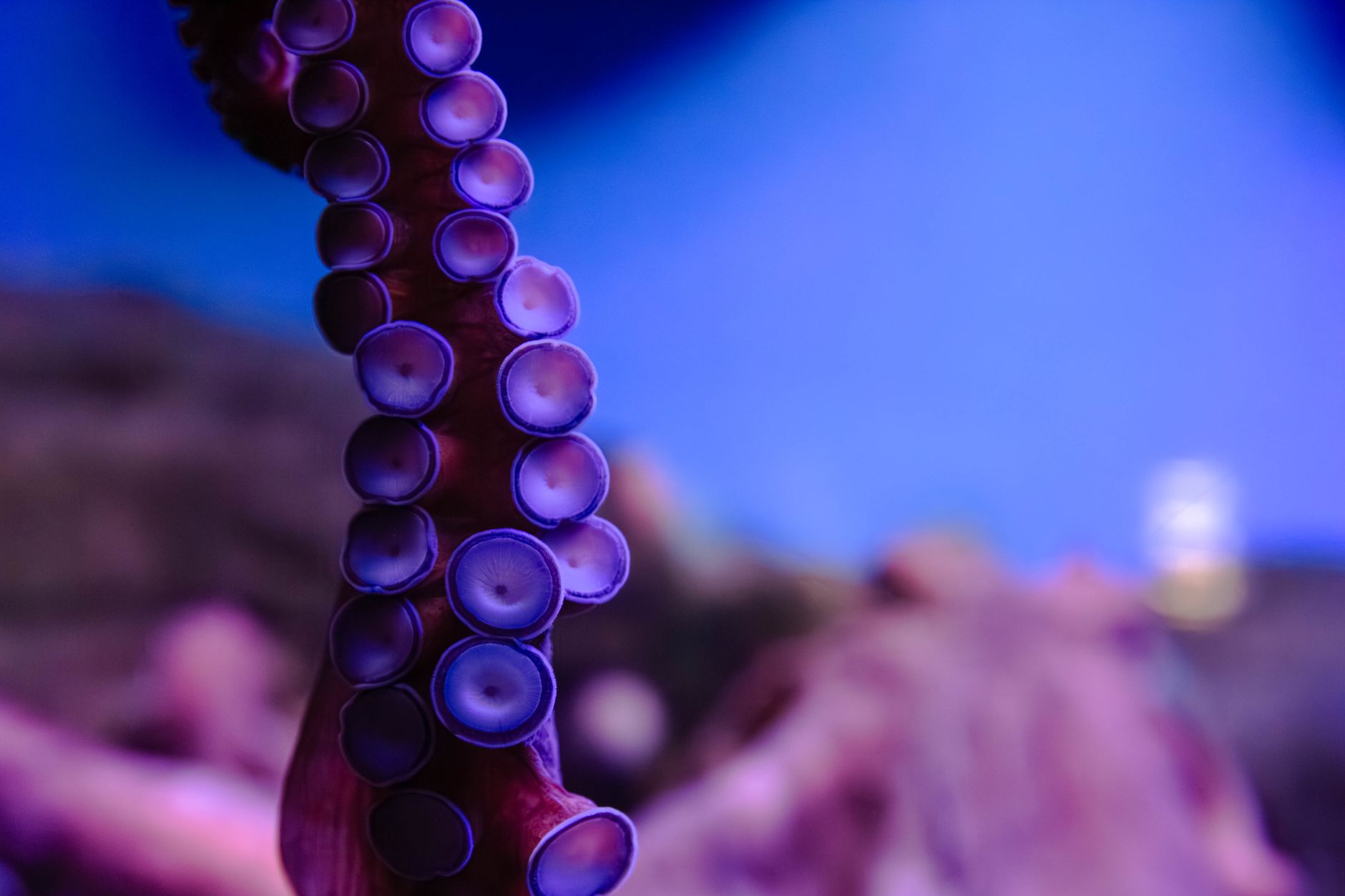
Octopuses possess a distributed nervous system unlike any other animal on Earth. While they have one central brain, two-thirds of their 500 million neurons are located in their eight arms, allowing each arm to act semi-independently. This means an octopus arm can solve problems, taste food, and navigate obstacles without conscious input from the main brain—essentially giving the creature nine functional brains working in parallel. Even more remarkably, octopus blood is blue, not red. Instead of iron-based hemoglobin like humans, octopuses use copper-based hemocyanin to carry oxygen. This adaptation makes their blood far more efficient at transporting oxygen in cold, low-oxygen ocean environments where they live. The copper also makes their blood less viscous, allowing it to flow through their small capillaries more easily. These biological innovations make octopuses extraordinarily intelligent and adaptable. They can squeeze through impossibly tiny spaces, change color and texture in milliseconds, and solve complex puzzles—all while their individual arms are essentially thinking for themselves. This decentralized intelligence is so effective that octopuses are considered among the most intelligent invertebrates on the planet, rivaling some vertebrates in problem-solving ability.