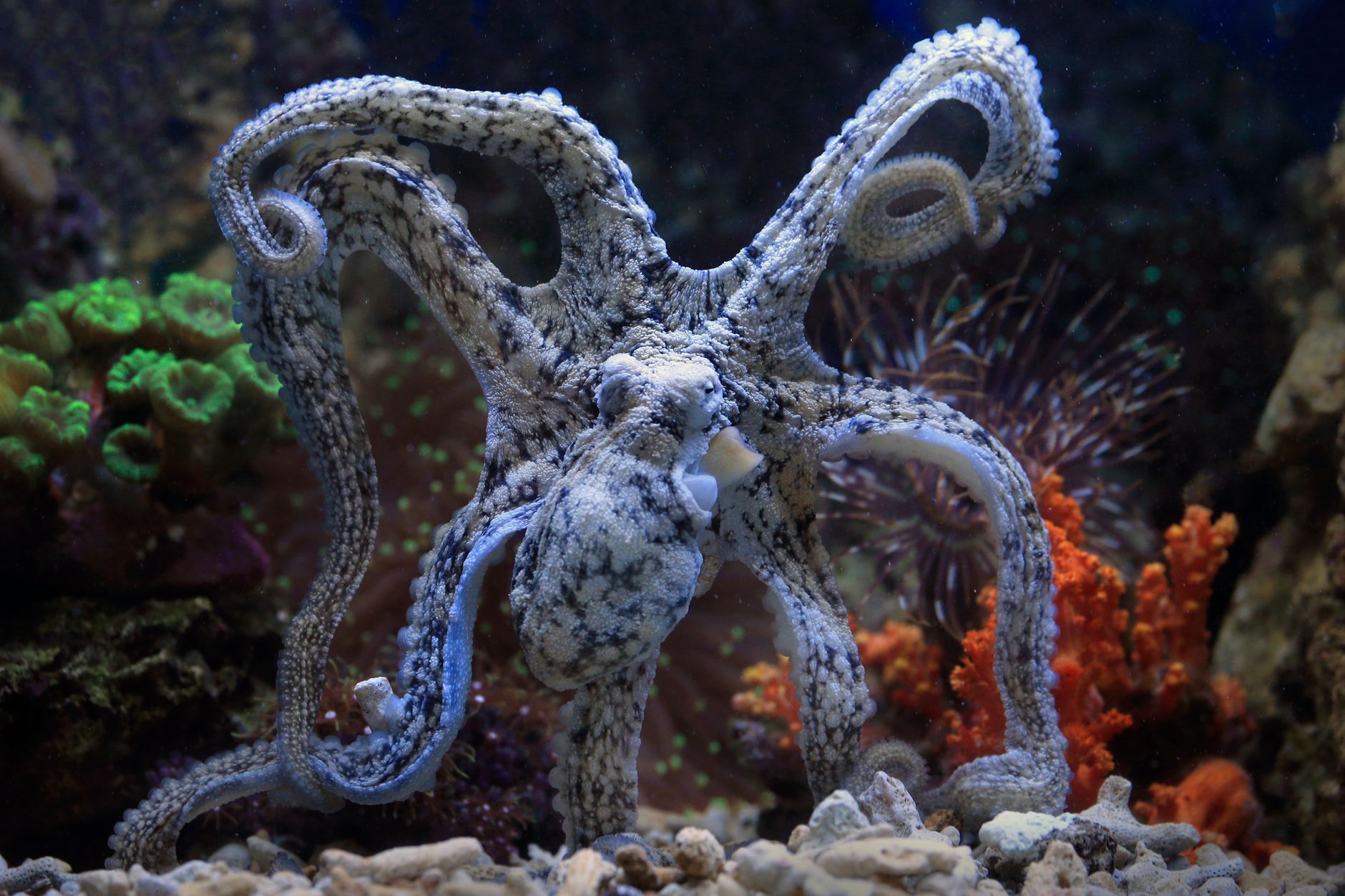
Octopuses possess a neural architecture that fundamentally challenges our understanding of intelligence and consciousness. While they have one central brain, two-thirds of their approximately 500 million neurons are distributed throughout their eight arms, creating nine independent decision-making centers. This means each arm can solve problems, taste food, and navigate obstacles autonomously without waiting for the central brain's approval. Even more remarkably, octopuses have blue blood instead of red. Their blood uses copper-based hemocyanin to carry oxygen rather than the iron-based hemoglobin found in mammals. This copper compound is more efficient at transporting oxygen in cold, low-oxygen ocean environments where octopuses thrive. The blue coloration reflects this chemical difference at the molecular level. This distributed neural system allows octopuses to perform extraordinary feats: an arm can continue hunting for food even if severed from the body, and they can change color and texture in milliseconds using specialized skin cells called chromatophores and iridophores—controlled by the local arm neurons, not the central brain. Scientists are still puzzled by how the central brain coordinates this decentralized system and maintains unified behavior. This biological marvel suggests that intelligence and consciousness might not require the centralized architecture we assumed was necessary, opening revolutionary perspectives on how nervous systems can evolve.