Neutron Stars Are So Dense a Teaspoon Weighs 6 Billion Tons
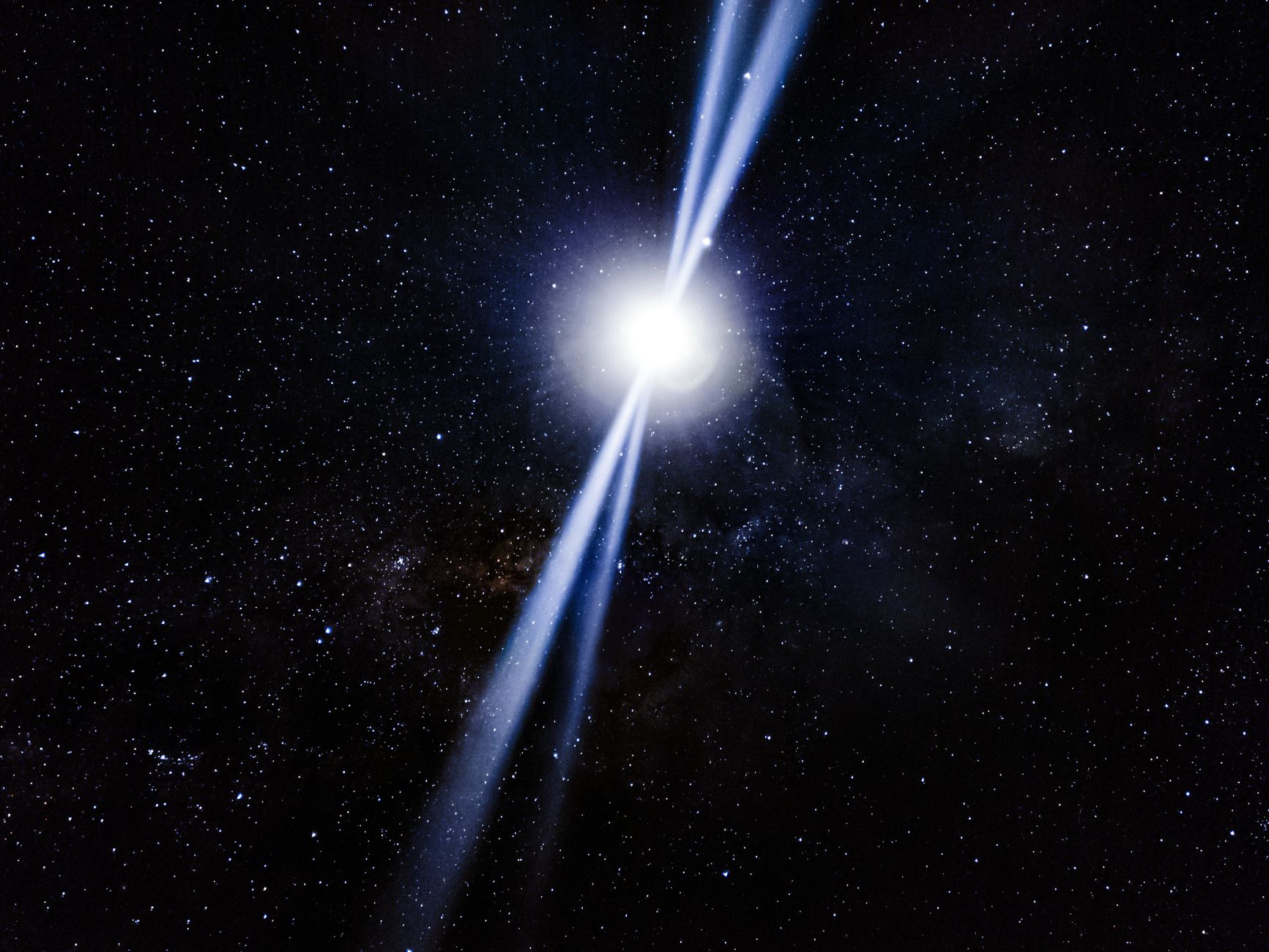
Neutron stars represent some of the most extreme objects in the universe. When massive stars—at least 20 times the Sun's mass—reach the end of their lives, they undergo catastrophic core collapse. The result is a neutron star: a stellar remnant so incredibly dense that matter is compressed to nuclear density. To grasp the scale: a neutron star typically has a mass equivalent to our entire Sun squeezed into a sphere only about 20 kilometers (12 miles) in diameter. This creates an unimaginable density where a teaspoon of neutron star material would weigh approximately 6 billion tons on Earth—equivalent to the weight of Mount Everest concentrated in a single spoon. Neutron stars spin incredibly fast, some completing rotations hundreds of times per second. As they spin, they emit beams of radiation from their magnetic poles, creating the phenomenon known as pulsars. These cosmic lighthouses have been so precise that scientists use them as cosmic clocks, accurate to microseconds over years. The physics governing neutron stars pushes our understanding of matter to its limits. Their surfaces feature mountains only millimeters high (due to the immense gravity), and their cores may contain even stranger matter—possibly strange quark matter. Studying neutron stars helps physicists understand the fundamental nature of matter under conditions impossible to replicate on Earth.