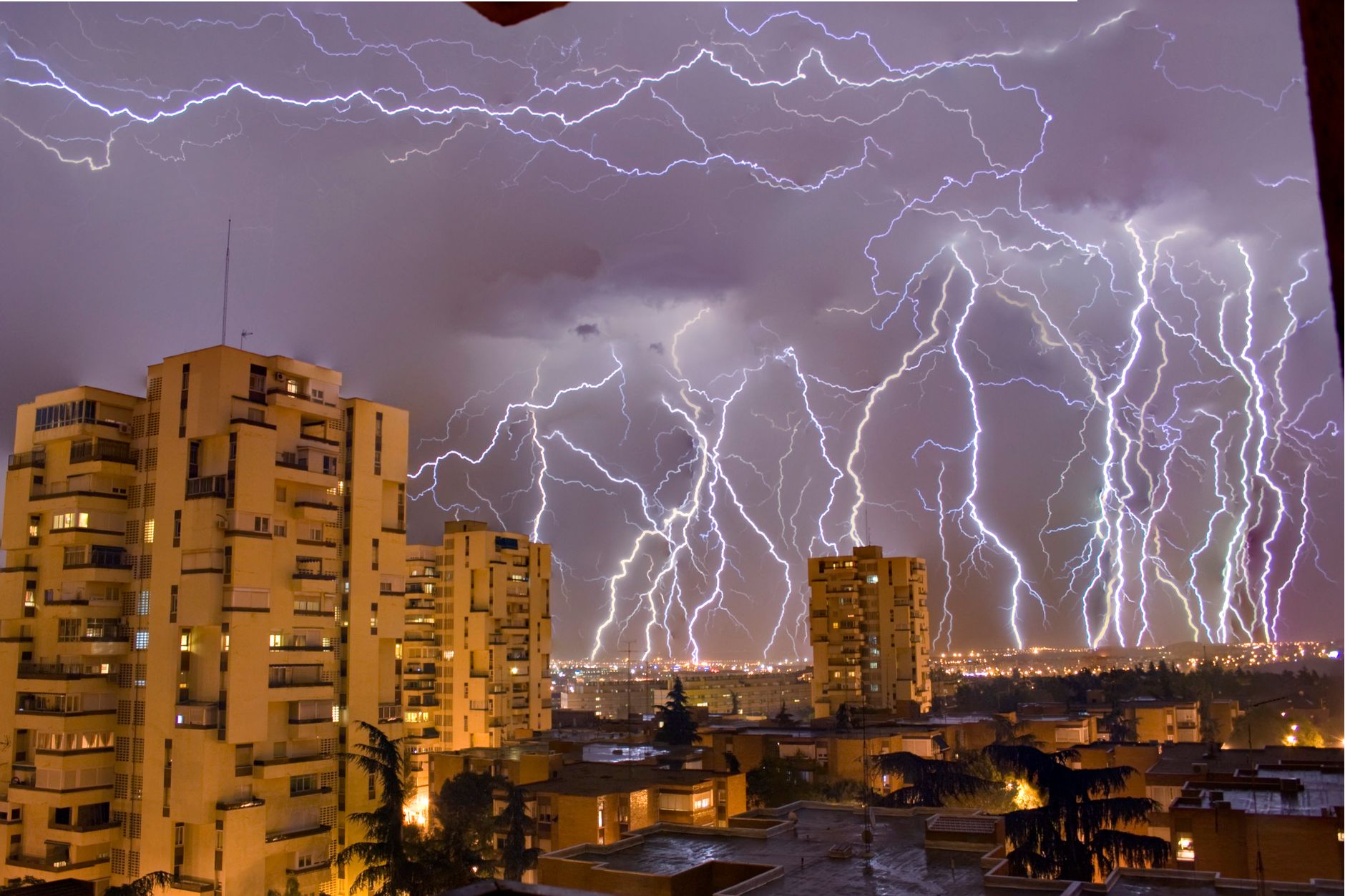
Lightning Can Strike the Same Place Twice, and Often Does
The old saying that lightning never strikes the same place twice is almost entirely backwards. Lightning strikes the Empire State Building about 20 to 25 times per year on average. The building's height and conductive materials make it a natural target, and it's been struck so often that scientists have used it as a research station to study electrical storms. This happens because lightning doesn't randomly pick targets. It follows the path of least electrical resistance through the air and ground. Tall structures, metal objects, and areas with certain geological features tend to attract repeated strikes. A tree in an open field might be struck multiple times in a single storm if it's the highest point around. Roy Sullivan, a park ranger in Virginia, was struck by lightning seven times between 1969 and 1977 and survived every strike. While his case was extraordinary, it demonstrates that lightning can and will hit the same person or location repeatedly if conditions align. The odds of being struck once in your lifetime are roughly one in 15,000, but if you're standing in the wrong place during a thunderstorm, those odds shift dramatically. Understanding this has practical value. Buildings and structures are now designed with lightning rods and grounding systems specifically because engineers know lightning will return to vulnerable spots.