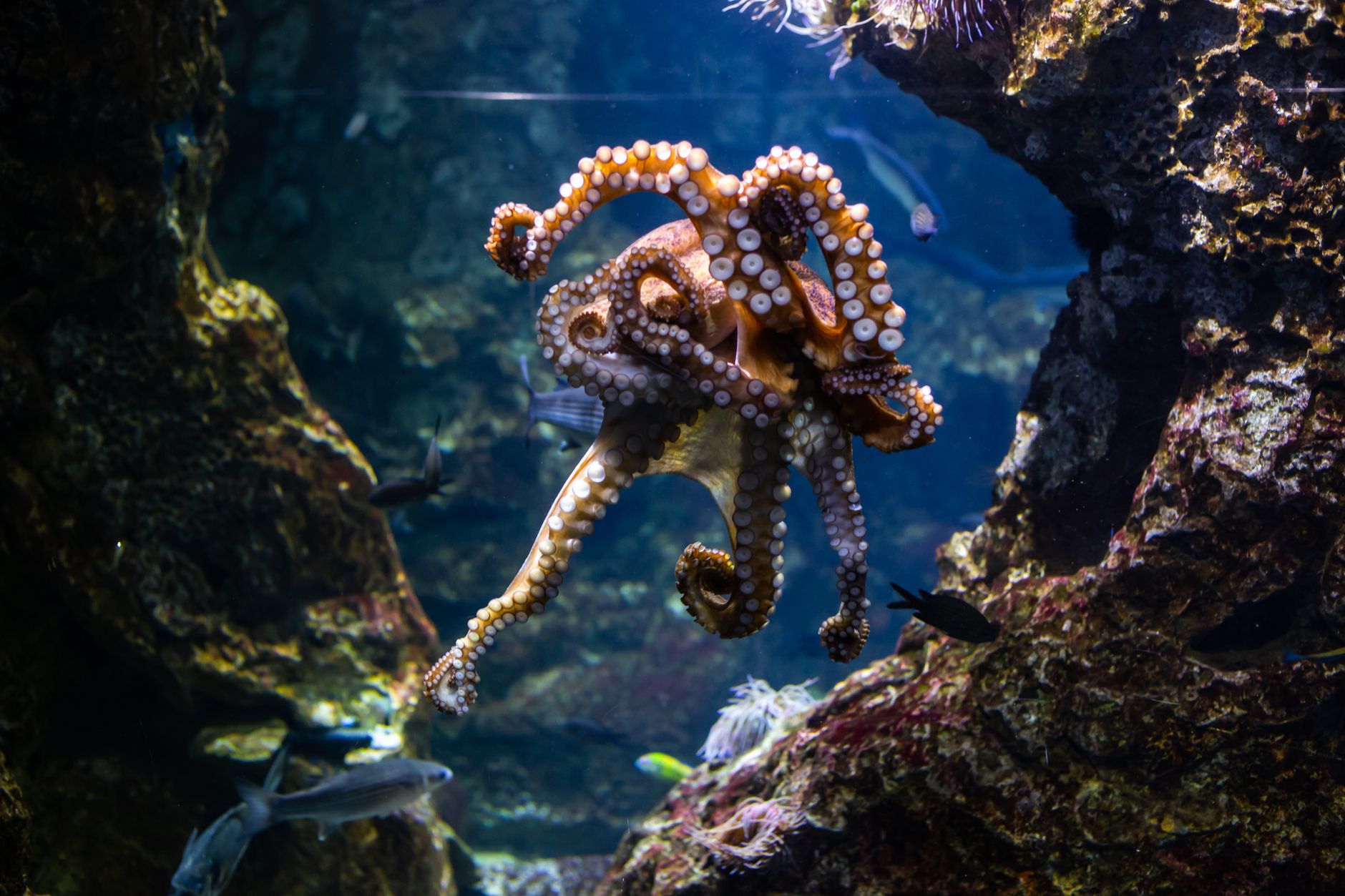
Octopuses Have Three Hearts and Blue Blood
Octopuses possess a circulatory system unlike almost any other animal on Earth. They have three hearts: two pump blood to the gills, while the third pumps it to the rest of the body. Even more remarkably, their blood is blue instead of red. This happens because octopuses use a copper-based protein called hemocyanin to carry oxygen, whereas most vertebrates use iron-based hemoglobin. The copper compound is more efficient at transporting oxygen in cold, low-oxygen ocean environments where octopuses live. However, there's a fascinating trade-off: when an octopus swims, the heart pumping blood to the body actually stops beating. This causes the animal to become exhausted quickly, which is why octopuses prefer crawling along the ocean floor rather than swimming. Their three-heart system also makes them incredibly sensitive to stress—when caught or threatened, the heart strain from fear can literally cause them to have a heart attack. This unique physiology is one reason octopuses remain among the ocean's most enigmatic and intelligent creatures, having evolved in isolation with adaptations perfectly suited to their deep-sea lifestyle.