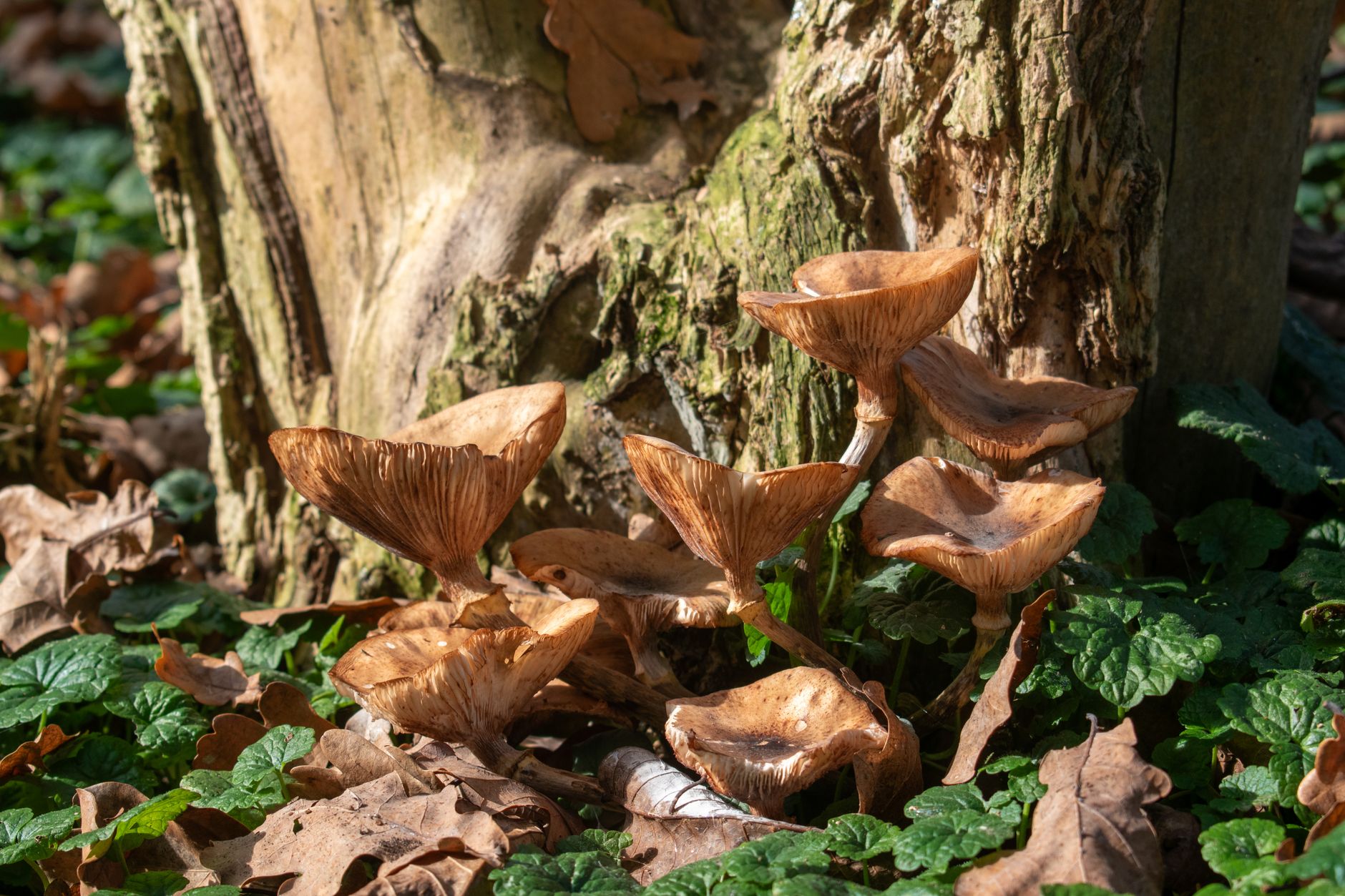
Trees Can Share Food Underground Through a Fungal Network
Beneath the forest floor, trees are connected by a vast underground network of fungi called mycorrhizal networks. These fungal threads link the roots of different trees, allowing them to exchange nutrients, water, and even chemical signals. A mother tree can send carbon and nutrients to her seedlings through these fungal highways, essentially feeding her own offspring. Mature trees sometimes deliberately reduce their nutrient uptake to allow struggling neighbors to survive. Scientists discovered this by tracking radioactive isotopes through the soil, watching as carbon moved from one tree to another through fungal pathways. The network also transmits warning signals when one tree is attacked by insects or disease, allowing neighboring trees to strengthen their own defenses before an outbreak reaches them. This isn't passive plumbing. Trees actively manage these connections, sending more resources to kin and potentially starving competitors. The fungal partners benefit too, receiving sugars from photosynthesis in exchange for the service they provide. What looked like isolated trees competing for survival turned out to be a cooperative ecosystem operating on a timeline and scale we're only beginning to understand.