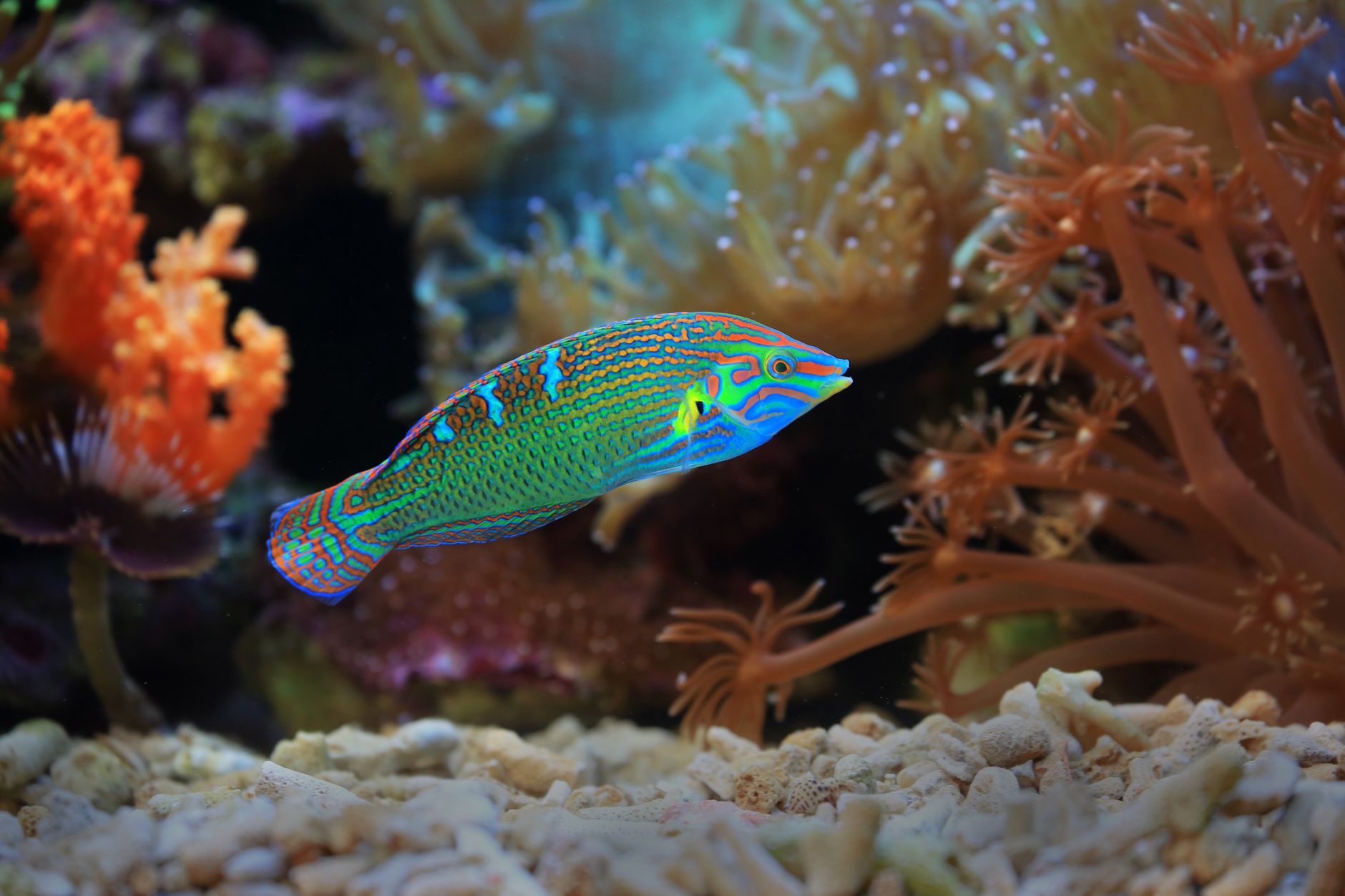
For decades, scientists believed self-recognition was a trait exclusive to highly intelligent animals like primates and dolphins. That changed when researchers discovered that certain fish species, particularly the cleaner wrasse, can recognize themselves in mirrors—a cognitive ability previously thought impossible for creatures with brains the size of a grain of rice. In groundbreaking experiments, scientists marked fish with colored dots and presented them with mirrors. Rather than attacking their reflection as a rival, cleaner wrasses examined the mark on their own bodies, demonstrating self-awareness. This discovery fundamentally challenged our understanding of consciousness and intelligence in aquatic life. What makes this even more remarkable is that fish brains lack a neocortex—the region associated with higher thinking in mammals. Yet they somehow developed the neural architecture necessary for self-recognition through entirely different evolutionary pathways. This suggests that consciousness and self-awareness may not require the brain structures we assumed were essential, opening new questions about how intelligence evolves across wildly different species. The implications extend beyond academic curiosity: if fish possess self-awareness, it raises ethical questions about how we treat them in aquaculture and fishing industries. This humble aquatic creature has become a key player in redefining what we know about animal cognition.