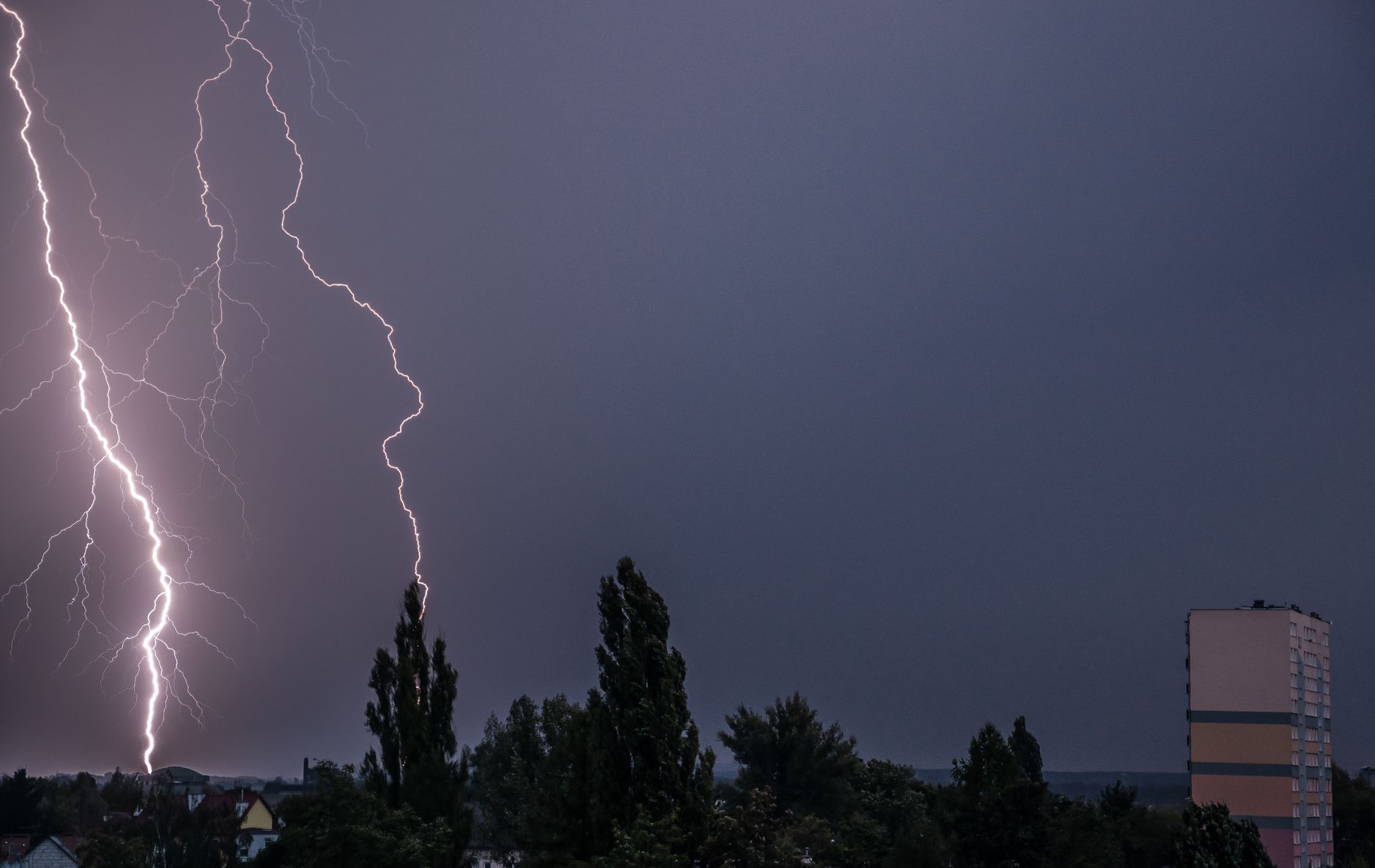
Lightning Strikes the Same Place Twice (And More Often Than You'd Think)
The old saying that lightning never strikes the same place twice is backwards. Lightning actually tends to hit the same locations repeatedly, which is why tall structures like the Empire State Building get struck about 20 to 25 times per year on average. The building's height and conductive materials make it an attractive target for electrical discharge, and this pattern holds true for other prominent landmarks and geographic features. Mountains, water towers, and isolated trees all experience repeated strikes because lightning follows the path of least electrical resistance. What makes this stranger is that the ground itself matters. Certain soil compositions and geological formations create preferred pathways for current, turning specific spots into lightning magnets. This is why meteorologists can predict high-strike zones with reasonable accuracy. The risk to humans remains genuinely low because we're usually not the tallest or most conductive object in our surroundings, but understanding this behavior has real consequences for infrastructure design and safety protocols. Engineers deliberately place lightning rods on buildings to channel strikes away from inhabited spaces, essentially sacrificing one spot to protect the whole structure. So lightning doesn't avoid repetition, it embraces it, returning to the same targets again and again like a persistent electrical storm with a long memory.