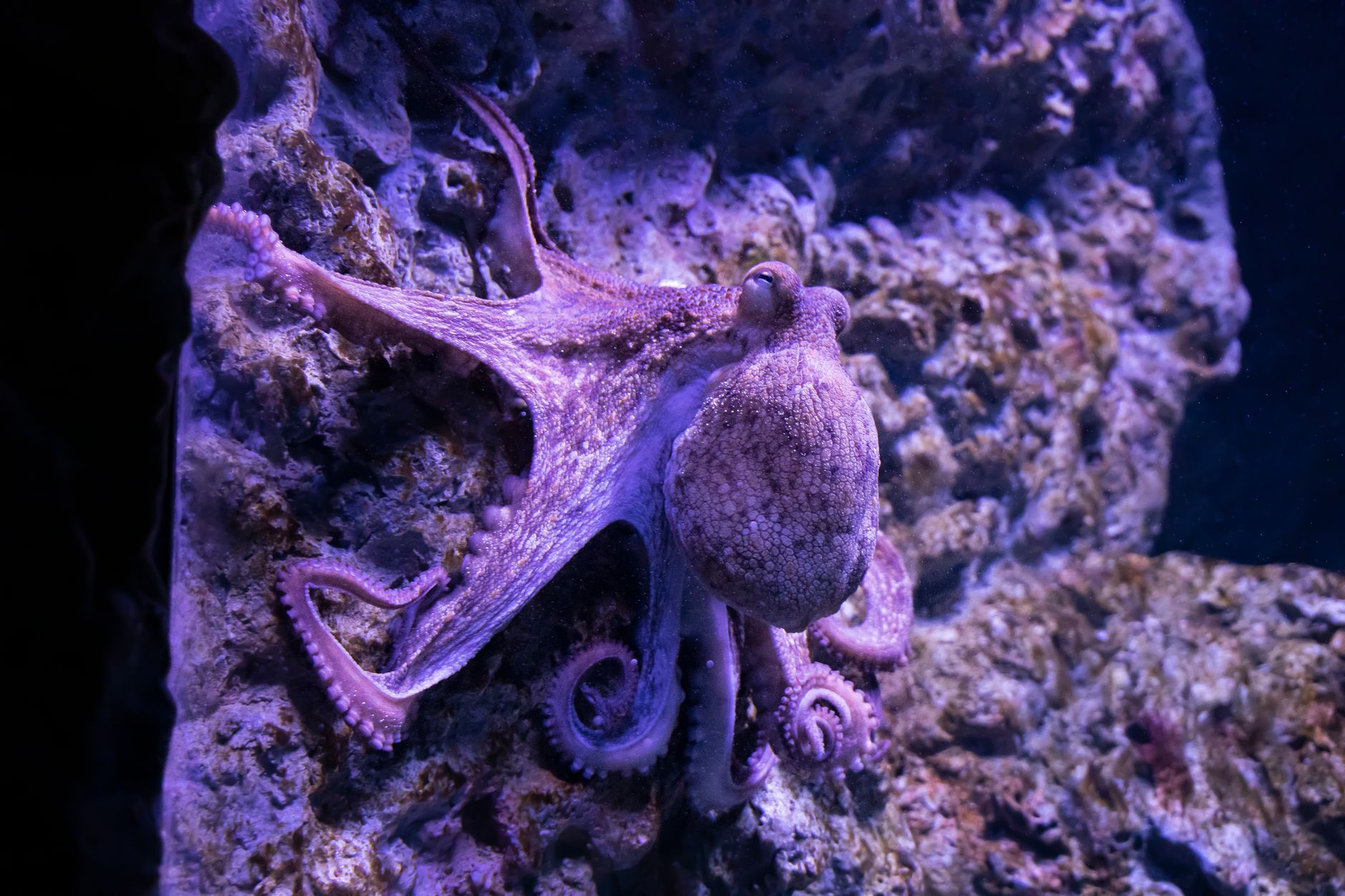
Octopuses possess a neurological architecture that fundamentally challenges our understanding of intelligence and consciousness. While humans concentrate their neural processing in a single brain, octopuses distribute cognitive function across nine distinct brains: one central brain and a mini-brain in each of their eight arms. Remarkably, each arm operates with significant autonomy, capable of solving problems and making decisions independently without consulting the central brain. This distributed intelligence allows an octopus to simultaneously manipulate multiple objects, taste with its suckers, and navigate complex environments with unprecedented flexibility. Even more astonishing is their circulatory system. Octopuses have blue blood due to a copper-based oxygen-carrying protein called hemocyanin, rather than the iron-based hemoglobin found in vertebrates. This adaptation proves remarkably efficient in cold, low-oxygen ocean environments. The three hearts work in concert—two pump blood to the gills, while the third sends it throughout the body. When an octopus swims, the heart that delivers blood to the body actually stops beating, which explains why these creatures prefer crawling to swimming; the exertion would exhaust them. This combination of distributed neural processing and unique biochemistry makes octopuses one of nature's most alien intelligences, capable of tool use, problem-solving, and even playful behavior—all orchestrated by a brain system fundamentally different from anything in the vertebrate world.