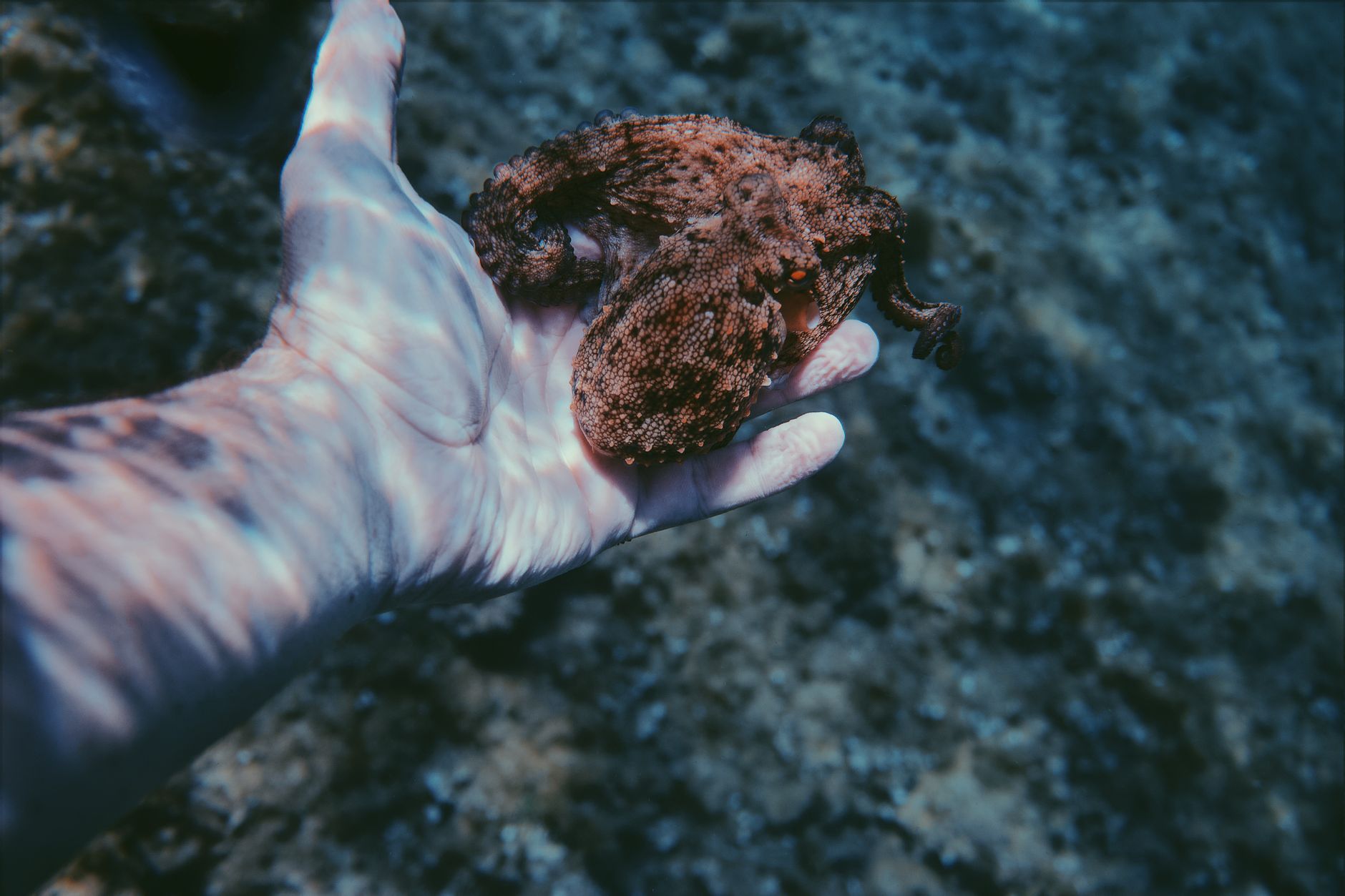
An octopus doesn't rely on a single command center the way humans do. It has one brain in its head, but two-thirds of its neurons live in its eight arms. Each arm operates with substantial autonomy, capable of solving problems and hunting prey independently while the central brain handles other tasks. This distributed nervous system means an octopus arm can react to stimuli and make decisions without waiting for instructions from above. Researchers have observed severed arms still responding to food and attempting to eat, demonstrating that the arm itself possesses functional intelligence. This arrangement gives octopuses remarkable flexibility. While one arm investigates a crevice for food, another can simultaneously defend against a threat, and the central brain can focus on navigation or camouflage. It's a completely different model of cognition from vertebrates, where the brain maintains strict hierarchical control. Scientists believe this decentralized system evolved because octopuses needed to coordinate eight independently mobile limbs in three-dimensional ocean environments. The trade-off is that octopuses can't multitask in ways centralized brains can, but they gain rapid, localized responses to immediate environmental challenges. This neural architecture represents one of the most alien forms of intelligence on Earth, evolved on a different branch of the animal tree entirely.