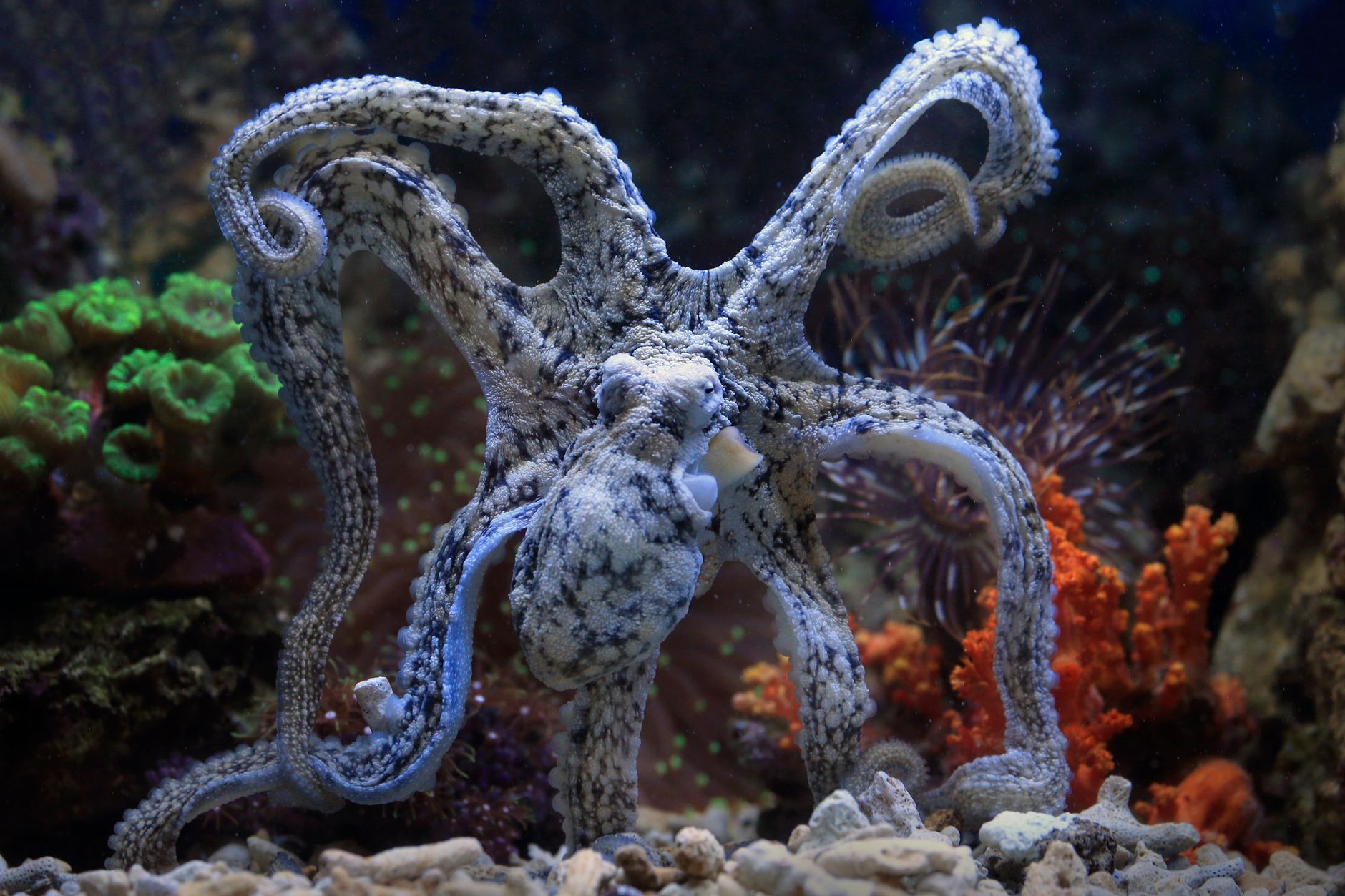
An octopus's nervous system is radically different from most animals. Two-thirds of its neurons live in its arms, not its head. Each arm can taste, touch, and make decisions independently while the central brain handles bigger-picture tasks. This means an octopus arm can solve problems and grab food without waiting for permission from above. Scientists discovered that when an octopus loses an arm to a predator, the severed limb continues to twitch and respond to stimuli for hours, driven by its own local nerve clusters. The distributed intelligence explains why octopuses are so adaptable and skilled at escaping from tanks, manipulating objects, and hunting in complex environments. Their arms literally think for themselves. This architecture is so different from vertebrate brains that it raises questions about what consciousness really is. An octopus doesn't experience the world the way you do, with one central command center. Instead, it's more like nine semi-autonomous units working in loose coordination. This structure emerged from millions of years of evolution in soft-bodied creatures that needed arms capable of operating in murky ocean environments where a signal traveling to the brain and back might take too long.