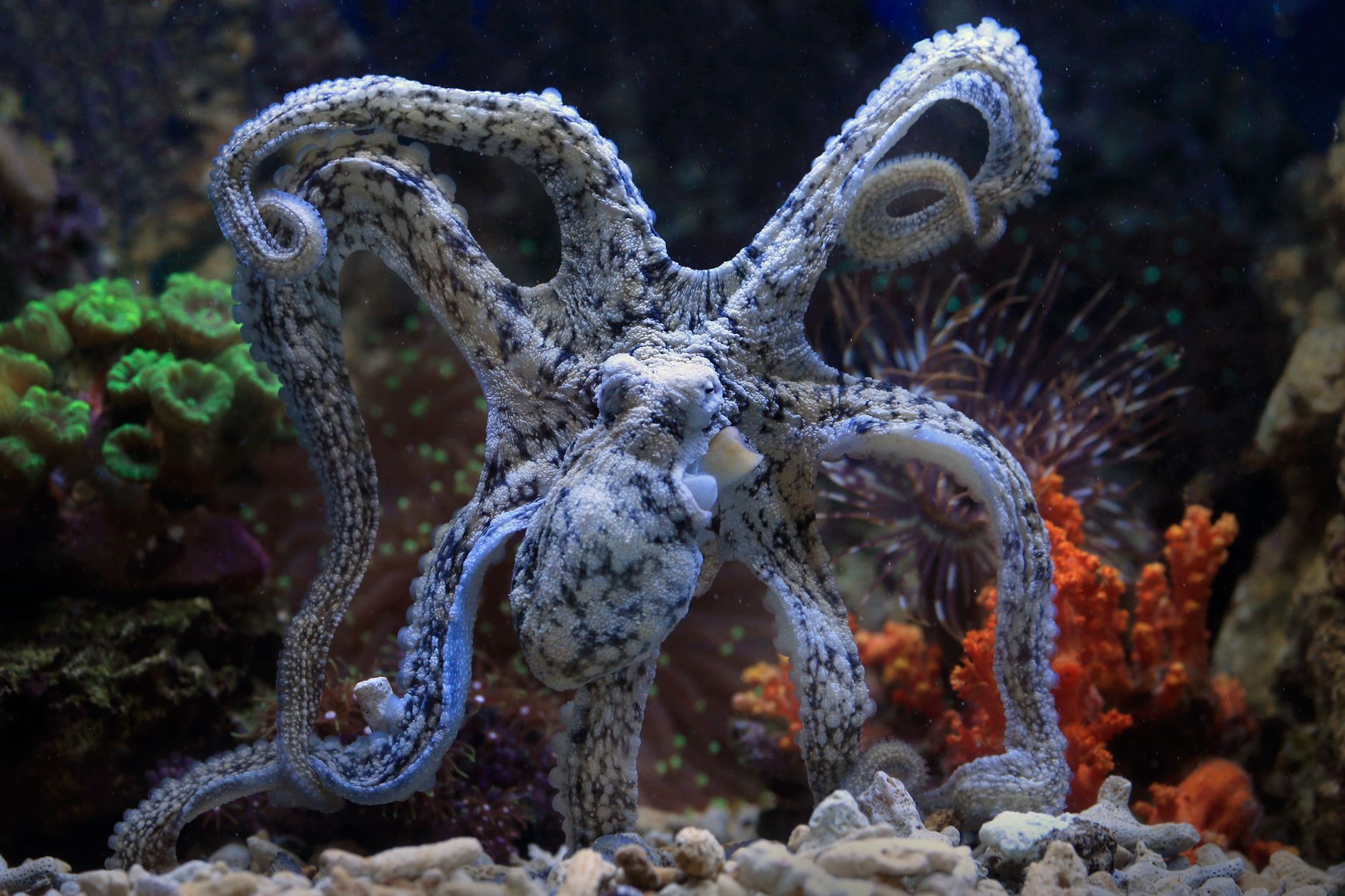
Octopuses Have Three Hearts and Blue Blood
Octopuses possess a biological setup that seems almost alien to humans. They have three hearts: two pump blood to the gills, while the third pumps it to the rest of the body. Even more remarkably, their blood is blue instead of red. This occurs because octopuses use a copper-based protein called hemocyanin to carry oxygen, whereas humans use iron-based hemoglobin. This copper compound is more efficient in cold, low-oxygen ocean environments where octopuses live. However, there's a trade-off: when an octopus swims, the heart pumping blood to the body actually stops beating, which is why these creatures prefer crawling along the ocean floor to swimming—it's less exhausting. This unique physiology, combined with their nine brains (one central brain and a mini-brain in each arm), makes octopuses one of nature's most remarkably adapted creatures. Their three-heart system and blue blood are perfect examples of how evolution produces wildly different solutions to the same survival challenges across species.