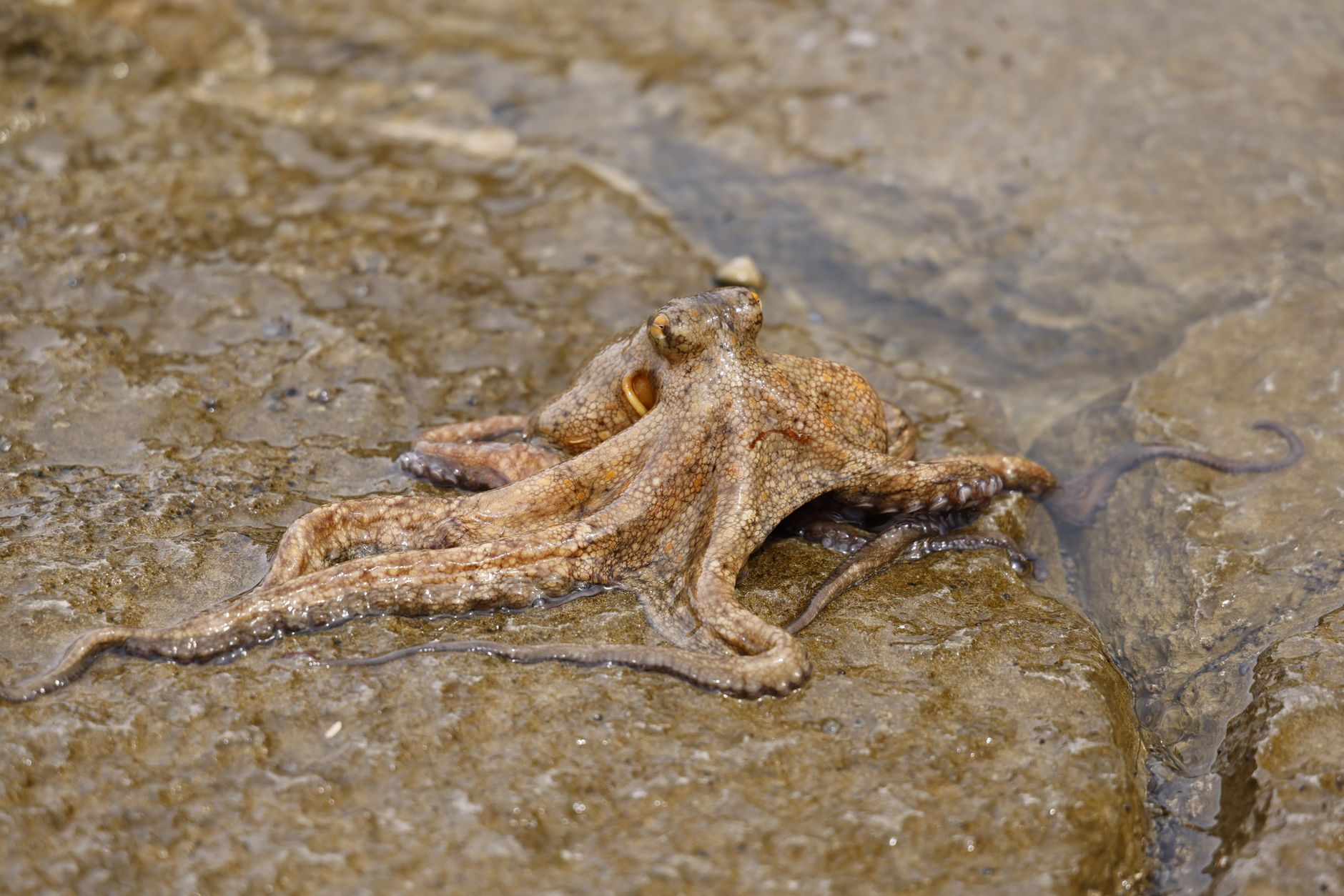
An octopus doesn't think the way you do. Two-thirds of its neurons live in its arms, not its head. Each arm operates with a degree of independence, capable of solving problems and exploring its environment without waiting for central command. This distributed nervous system means an octopus can taste with its suckers, manipulate objects with one arm while another hunts for food, all simultaneously and semi-autonomously. The central brain coordinates overall behavior, but the arm brains handle their own decisions in real time. This setup evolved because octopuses are solitary hunters in complex, three-dimensional ocean environments where split-second reactions matter more than unified thinking. Researchers discovered this through studying how octopuses behave even when sedated, how their arms respond to stimuli independently, and how damage to one arm doesn't impair the others. The payoff is extraordinary flexibility. An octopus can squeeze through impossibly tight spaces, unscrew jar lids, and change color and texture in milliseconds to match its surroundings. What looks like pure instinct is actually distributed intelligence at work. Understanding this has influenced robotics design, with engineers studying octopus arm mechanics to build more adaptable machines. It's a reminder that intelligence doesn't require a single command center.