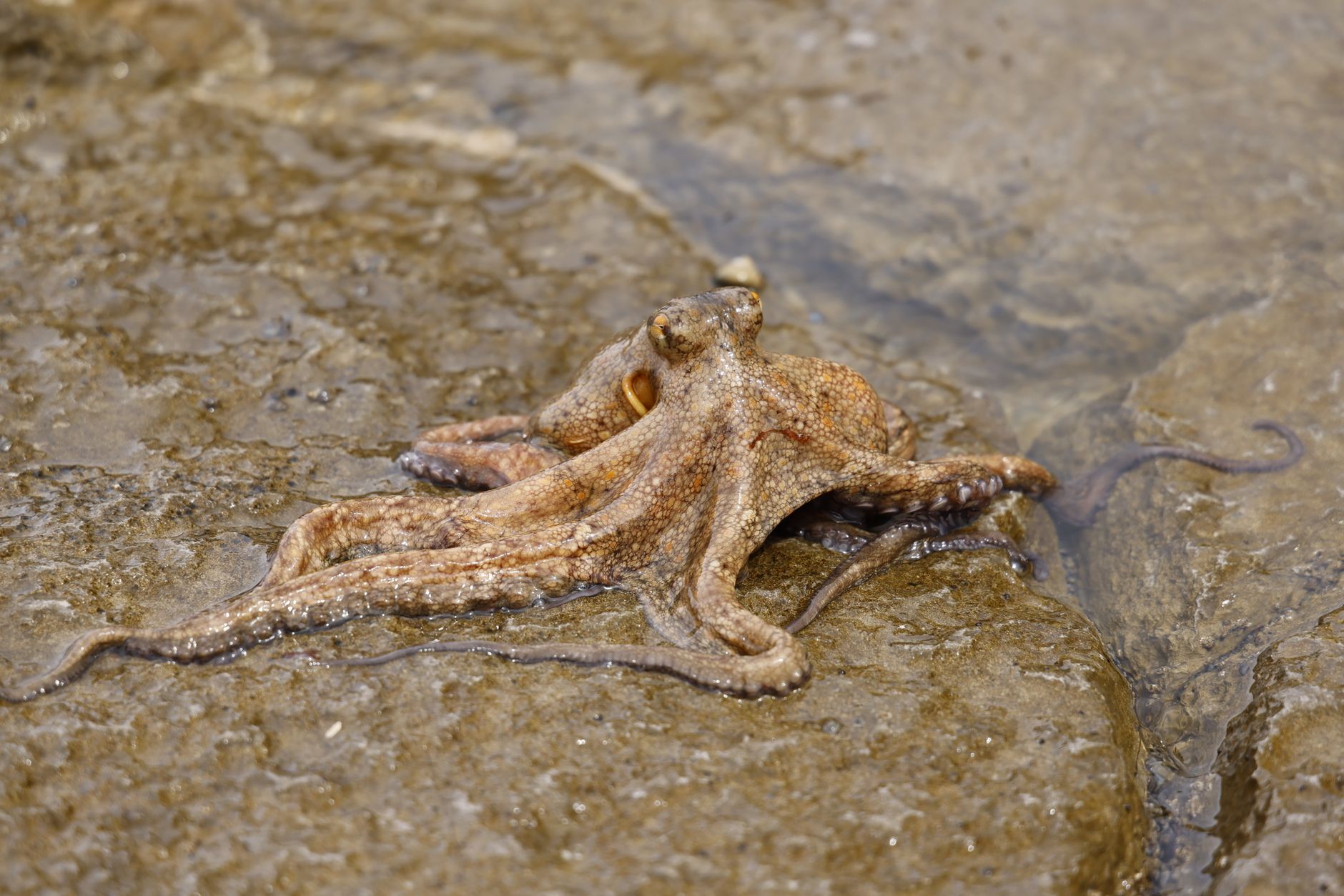
Octopuses possess a distributed nervous system unlike most animals—they have one central brain and nine mini-brains, with two-thirds of their neurons located in their arms rather than their head. This decentralized architecture allows each arm to solve problems and move independently, even continuing to search for food after being severed. Even more remarkably, octopuses have blue blood instead of red. Their blood contains copper-based hemocyanin rather than iron-based hemoglobin to carry oxygen. This copper compound is more efficient in cold, low-oxygen ocean environments where octopuses hunt. Additionally, octopuses can taste with their suckers—each sucker contains chemoreceptors that allow them to identify food on contact. These biological innovations make octopuses one of nature's most neurologically alien creatures despite being invertebrates. Their intelligence rivals that of some vertebrates, and they can solve mazes, use tools, and recognize individual humans. Scientists believe their unique neural distribution evolved to compensate for their lack of a rigid skeleton, allowing flexible problem-solving across their eight arms simultaneously.