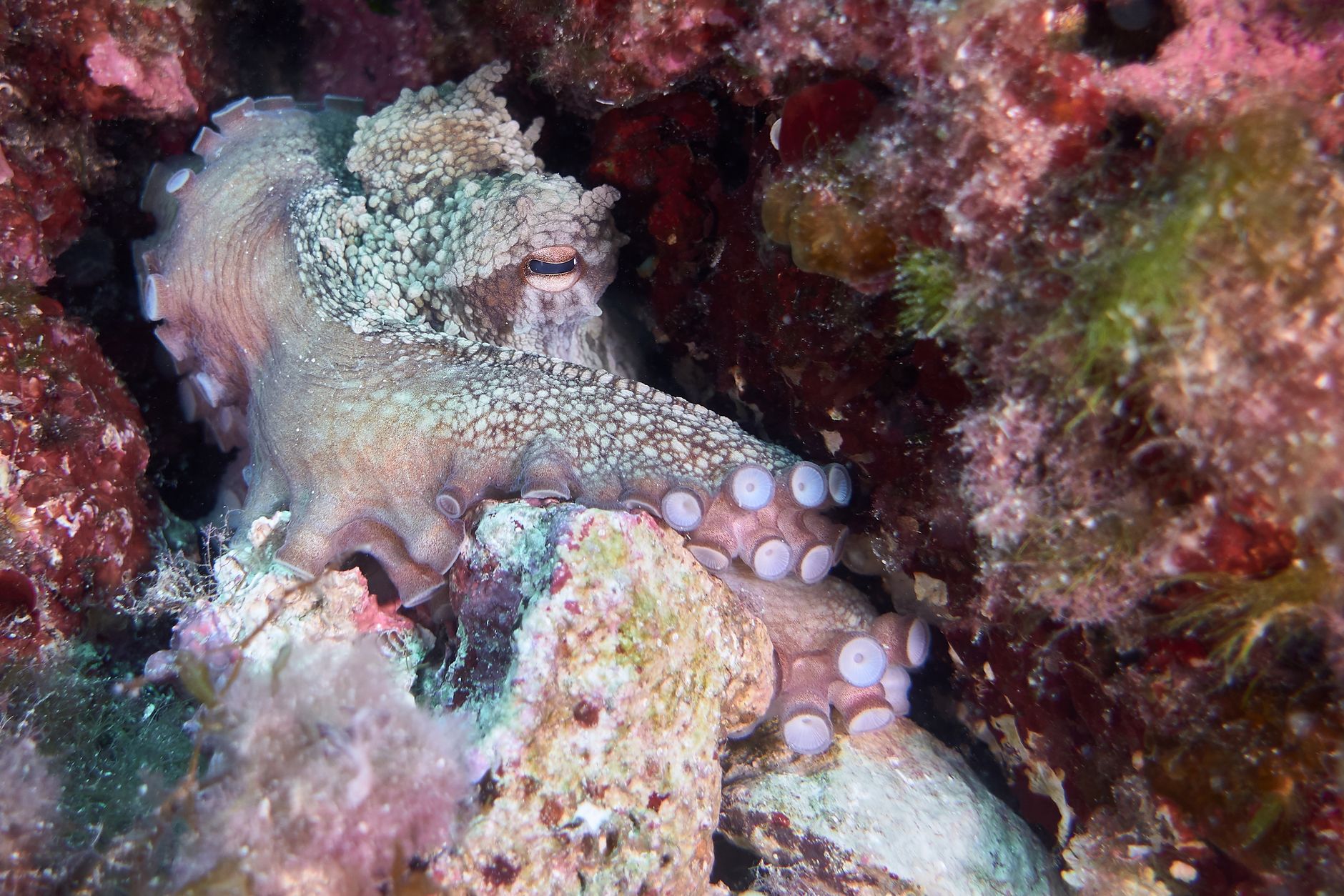
Octopuses Have Nine Brains—And Two-Thirds of Their Neurons Are in Their Arms
Octopuses possess a remarkably distributed nervous system that challenges our understanding of centralized intelligence. While they have one central brain located in their head, they also have a mini-brain in each of their eight arms, plus additional neural clusters throughout their body. Even more astonishing, approximately 66% of an octopus's neurons reside in its arms rather than its central brain. This means each arm can essentially think and act independently, solving problems and exploring environments without waiting for commands from the head. An arm can taste, touch, and manipulate objects autonomously, continuing to search for food even if severed from the body. This distributed intelligence allows octopuses to multitask at extraordinary levels—one arm might be hunting while another opens a jar and a third explores crevices. This neural architecture fundamentally differs from vertebrate brains and represents an evolutionary solution that makes octopuses among the most intelligent invertebrates on Earth. Their cognitive abilities, including problem-solving, tool use, and escape artistry, emerge from this unique decentralized system.