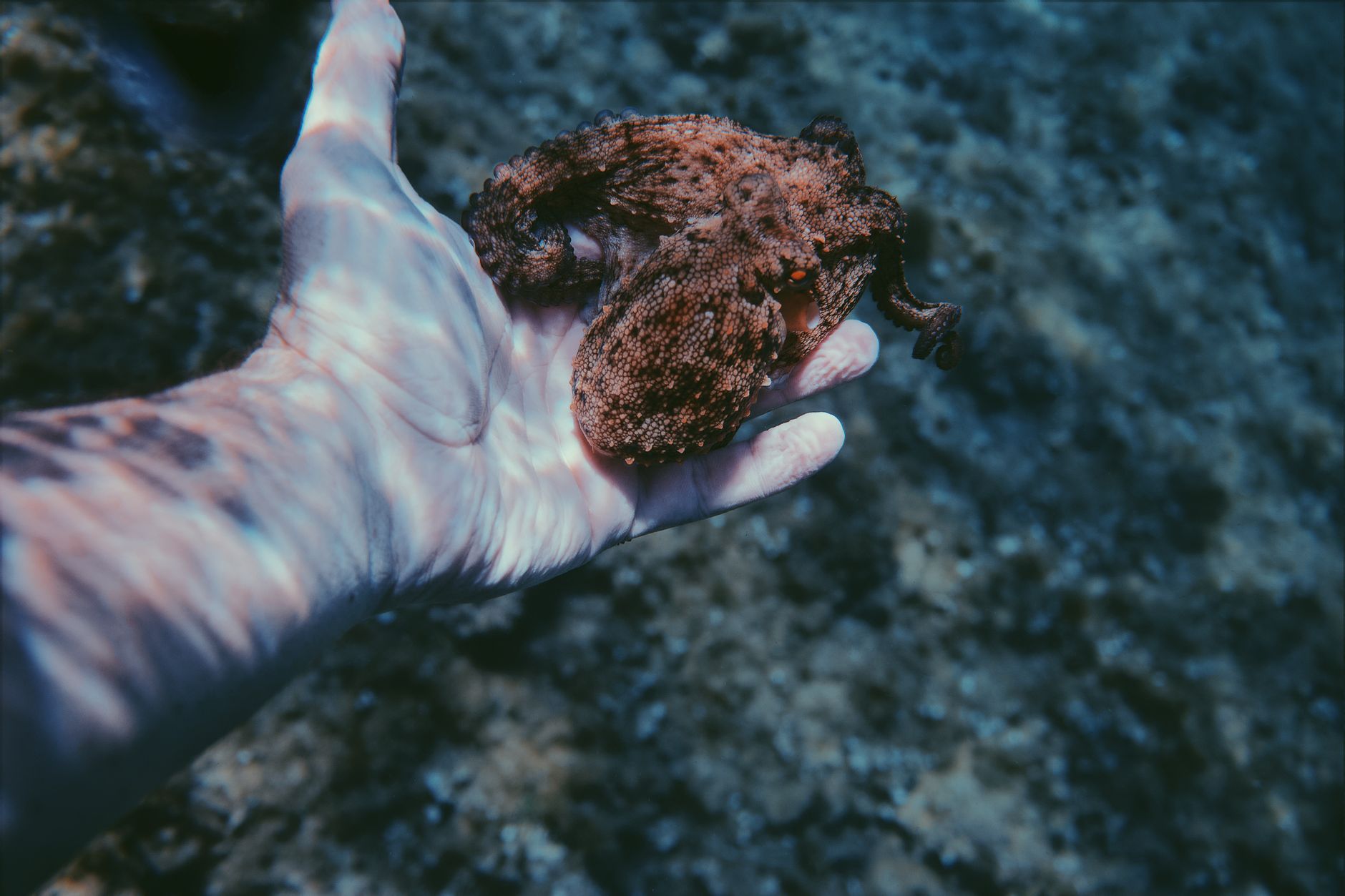
An octopus doesn't think the way you do. Two-thirds of its neurons live in its arms, not its head. Each arm can solve problems, find food, and even change color independently while the central brain handles other tasks. This distributed nervous system means an octopus arm can continue moving and responding to stimuli even after being severed from the body, sometimes for hours. The creature doesn't need to send signals all the way to a central command center for every decision. When an arm encounters prey, it can grab and taste it without waiting for approval from headquarters. This radically different brain architecture lets octopuses process information in parallel across their entire body. They can juggle multiple complex tasks at once, each limb operating semi-autonomously. Scientists discovered this by studying how quickly octopuses react to touch and threats. The response time is far too fast to involve the central brain. Instead, local neural circuits in the arms handle the decision-making on the spot. This arrangement works perfectly for an animal that hunts in rocky crevices and needs to manipulate objects in confined spaces. The octopus brain evolved this way because of its unique body plan and hunting style, not despite it.