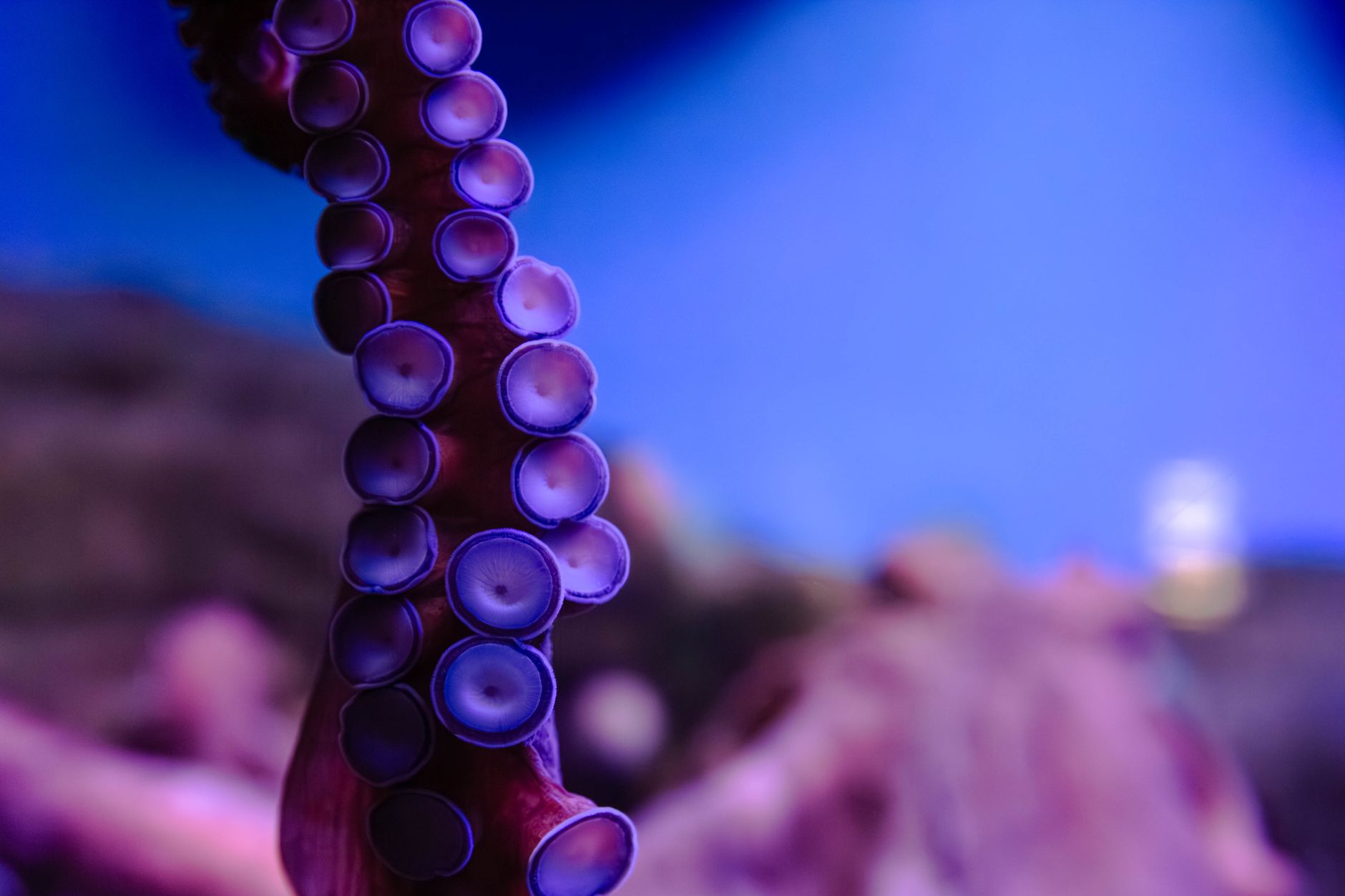
Octopuses possess a decentralized nervous system that fundamentally challenges our understanding of intelligence and consciousness. While they have one central brain, two-thirds of their 500 million neurons are distributed throughout their eight arms, each functioning semi-independently. This means each arm can solve problems, taste, and even act intelligently without input from the central brain. Even more remarkably, octopuses have blue blood instead of red. Their blood uses copper-based hemocyanin rather than iron-based hemoglobin to carry oxygen. This adaptation makes them exceptionally efficient at surviving in cold, low-oxygen ocean environments where they live. Their unique circulatory system, combined with their distributed neural architecture, allows octopuses to exhibit problem-solving abilities, use tools, and demonstrate what appears to be individual personality traits—all without a unified consciousness as we understand it. This biological arrangement suggests that intelligence and consciousness might not require centralized brain control. Recent research indicates octopus arms can make decisions independently, learning and remembering information separately from the main brain. Scientists studying octopus DNA have found that their genome underwent unique evolutionary changes, particularly in genes related to neural development, making them one of nature's most neurologically alien creatures despite sharing a common ancestor with humans over 600 million years ago.