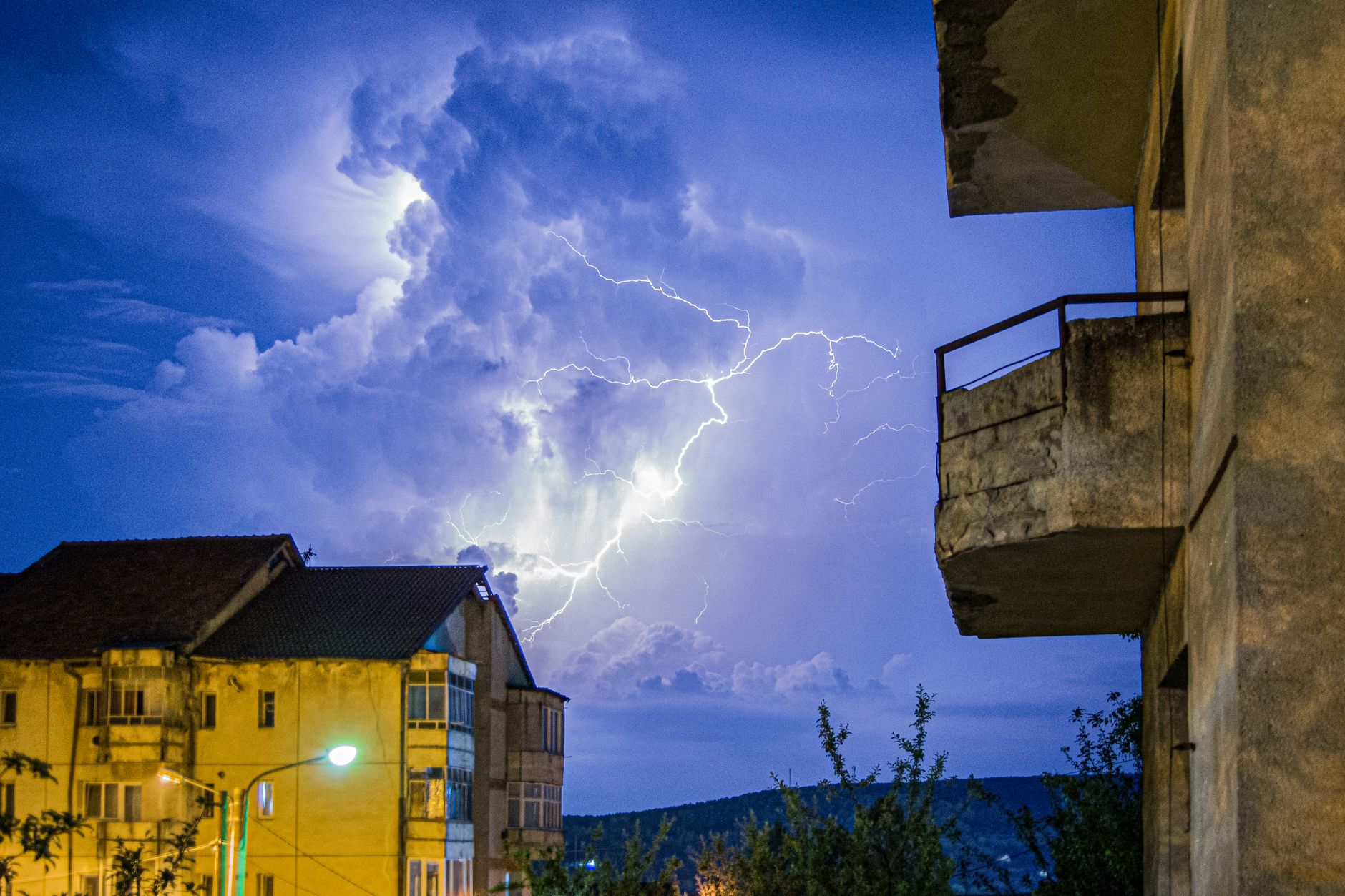
Lightning Can Strike the Same Place Twice, and Does Regularly
The old saying that lightning never strikes twice in the same place is completely false. Lightning strikes the Empire State Building about 20 to 25 times per year on average. The building's height and conductive steel frame make it an attractive target for electrical discharge, and it has been struck thousands of times since its completion in 1931 without serious damage due to its lightning rod system. This happens because lightning seeks the path of least resistance to the ground, and tall structures with good conductivity create predictable targets. Roy Sullivan, a park ranger in Virginia, was struck by lightning seven times between 1969 and 1977 and survived each strike, holding the record for lightning strike survivorship. Scientists believe his repeated exposure was partly due to his work in open areas during storms and his metal ranger equipment. The reason this myth persists is statistical misunderstanding. Most places on Earth are unlikely to be hit, simply because lightning strikes are distributed across vast areas. But specific tall objects, conductive landmarks, and people who work outdoors during storms face much higher odds. Understanding this fact has real implications for safety protocols in buildings, outdoor recreation, and how we design protective structures in lightning-prone regions.