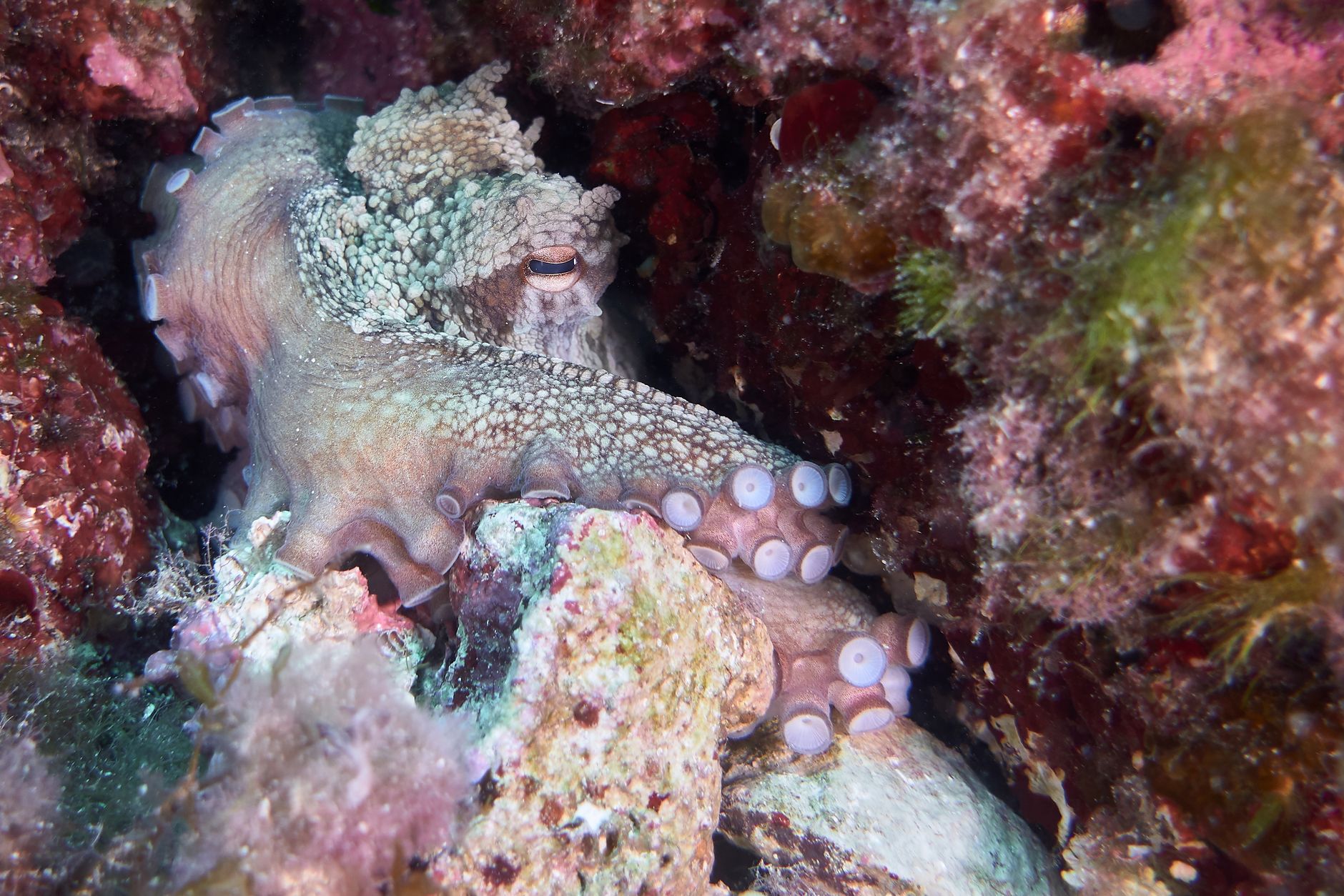
An octopus doesn't rely on a single command center the way humans do. It has one central brain, but two-thirds of its neurons live in its eight arms. Each arm can solve problems, taste, and move independently without waiting for the main brain to approve every action. This distributed nervous system lets octopuses multitask in ways that seem almost alien. One arm might be hunting for food while another explores a crevice and a third opens a jar, all simultaneously and somewhat autonomously. The arms can even react to danger on their own, pulling away from threats faster than the central brain could process the signal and send a command. This neural decentralization is one reason octopuses are so adaptable and inventive. They don't think in a linear way like we do. Instead, their problem-solving emerges from millions of independent decisions happening across their entire body at once. It's a completely different architecture for intelligence, which may explain why octopuses can squeeze through impossibly tight spaces, camouflage in seconds, and escape from aquarium tanks with an almost deliberate cunning.