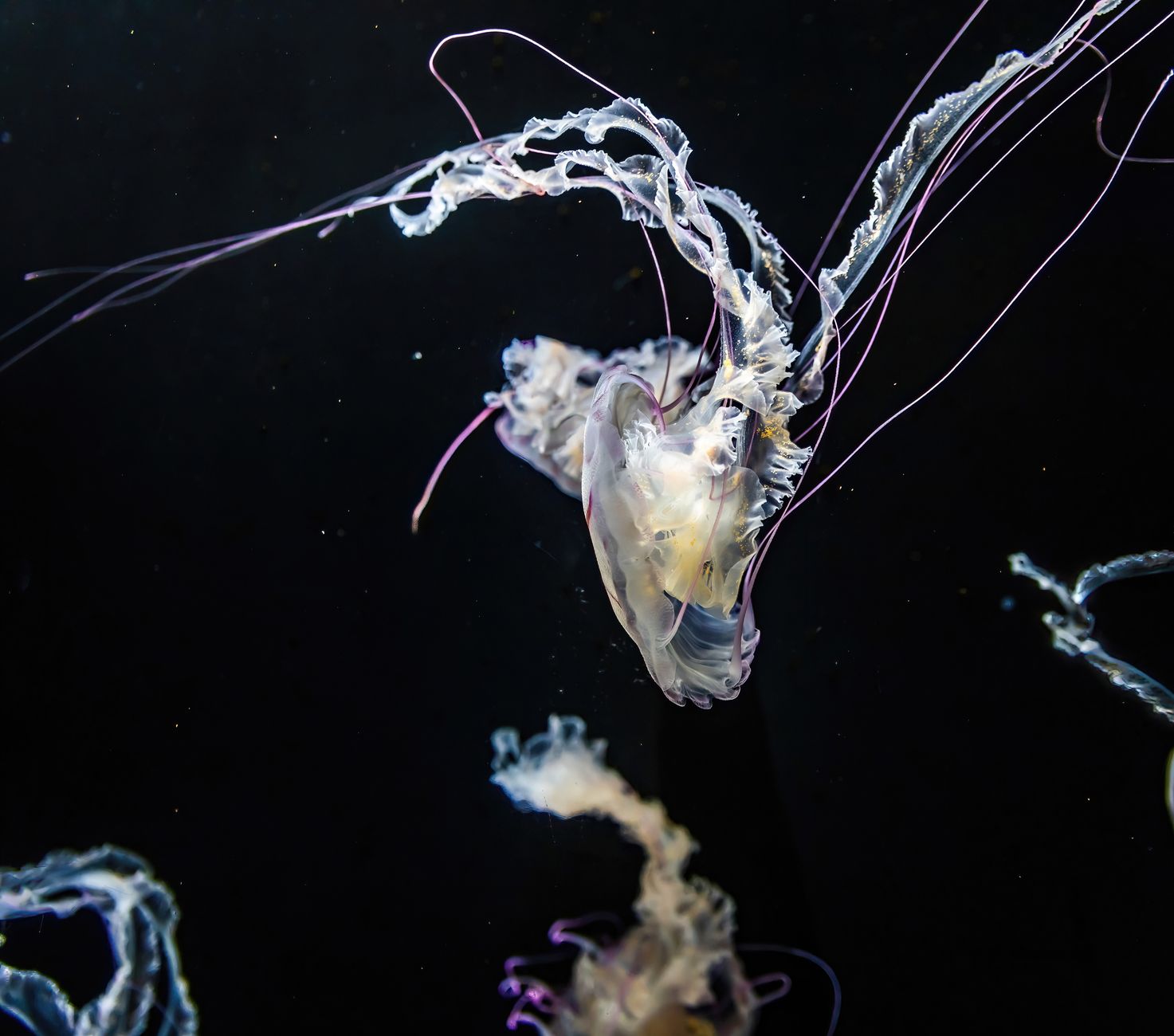
The ocean covers more than 70 percent of Earth's surface, yet we've explored less than 5 percent of it. One reason is simple: light doesn't travel far underwater. Beyond about 200 meters, the ocean becomes completely dark. This boundary, called the photic zone, is where sunlight can still penetrate enough for photosynthesis to occur. Below that lies the aphotic zone, a vast expanse of permanent darkness that makes up the majority of Earth's living space. In these lightless depths, creatures have evolved bizarre adaptations. Many fish produce their own light through bioluminescence, using chemical reactions to create glowing lures or communication signals. Others have enormous eyes to capture whatever faint light exists, or no eyes at all because sight becomes useless. The pressure down there is crushing, the temperature hovers just above freezing, and food is scarce. Yet life persists in remarkable abundance. Scientists estimate that the deep ocean contains more species than the entire Amazon rainforest, most of them still unknown to science. The crushing darkness and pressure make deep-sea exploration extraordinarily difficult and expensive, which is why we know more about the surface of Mars than we do about our own ocean floor.