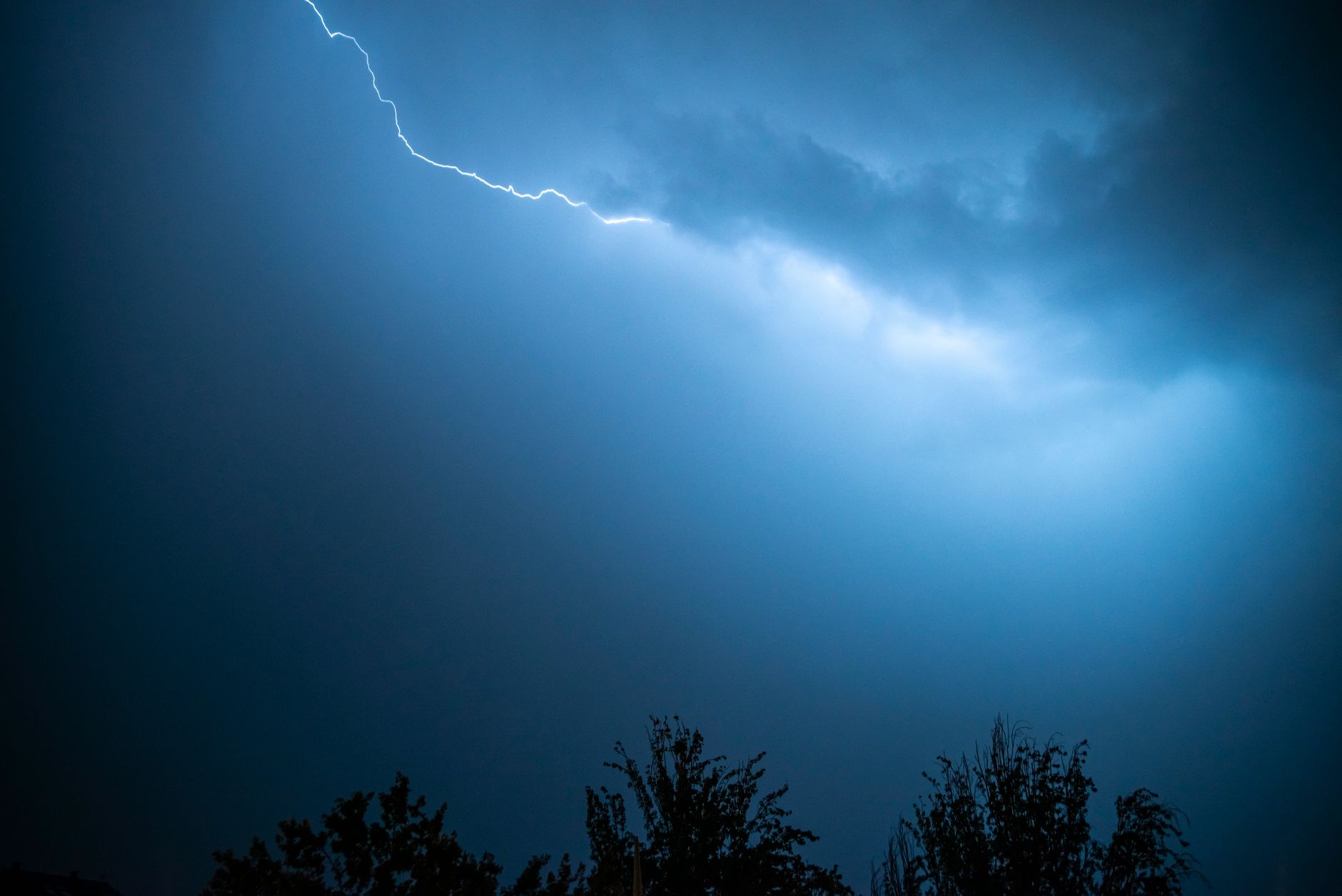
Lightning Can Travel Upward From the Ground
Most people assume lightning strikes down from clouds to earth. The reality is more complex. While the initial stepped leader does descend from the cloud, the actual bright lightning stroke we see travels upward from the ground. When a leader approaches the surface, objects on the ground (trees, buildings, even people) send up streamers of positive charge to meet it. The connection between upward streamer and downward leader completes the circuit, and then the return stroke races upward at roughly one-third the speed of light. This return stroke is what illuminates the entire channel and what we perceive as the lightning bolt. The distinction matters for safety. Tall structures like skyscrapers and radio towers are struck frequently because they're more likely to send up strong streamers that connect with descending leaders. Ground-based lightning protection systems exploit this principle, using tall rods and conductive paths to intercept the upward streamer before it reaches the main structure. So in a sense, the ground is actively reaching up to meet the lightning, not passively receiving it from above.