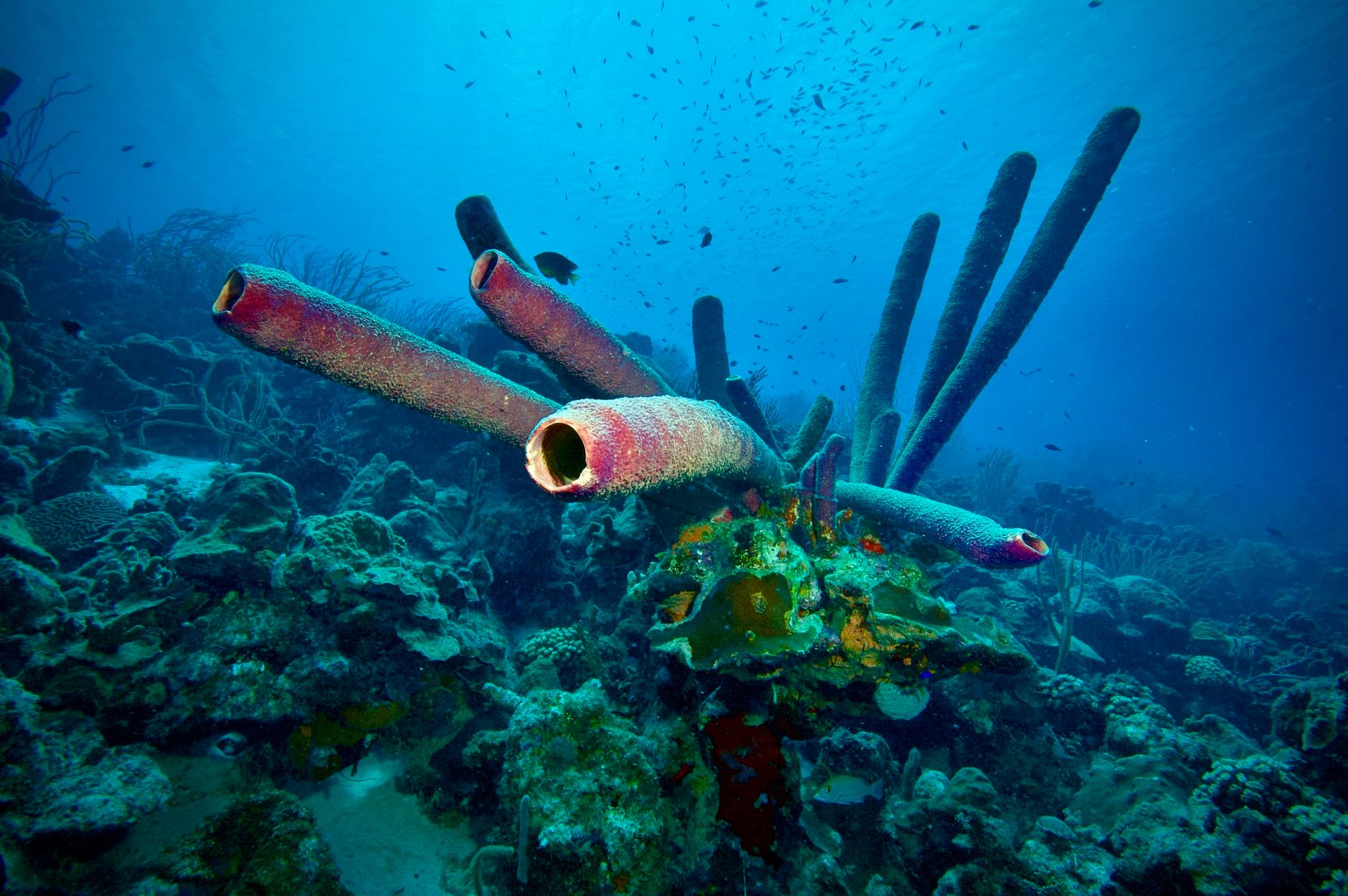
A honey fungus in Oregon holds the record for the largest living organism on Earth, but the ocean has its own contender that most people never see. The largest organism underwater is not a whale or a giant squid, but a sponge. Specifically, a giant barrel sponge found in the Caribbean and other deep waters can grow to over 6 feet tall and live for more than 2,000 years. Even more impressive, some colonies of coral polyps span miles across the ocean floor, with individual polyps connected through shared tissue. These aren't single organisms in the way we usually think of them, but they function as unified living systems. What makes underwater giants so different from their land counterparts is the ocean's unique environment. Water provides constant structural support, so organisms don't need rigid skeletons the way tall land animals do. The deep ocean also offers stable temperatures and consistent pressure, conditions that allow creatures to grow extraordinarily slowly and live extraordinarily long. A giant sponge might add just a few millimeters per year, but given millennia, that adds up. These underwater giants have survived ice ages, volcanic eruptions, and human activity because their slow metabolism and deep-water refuges protect them from rapid environmental changes that would devastate faster-living species on land.