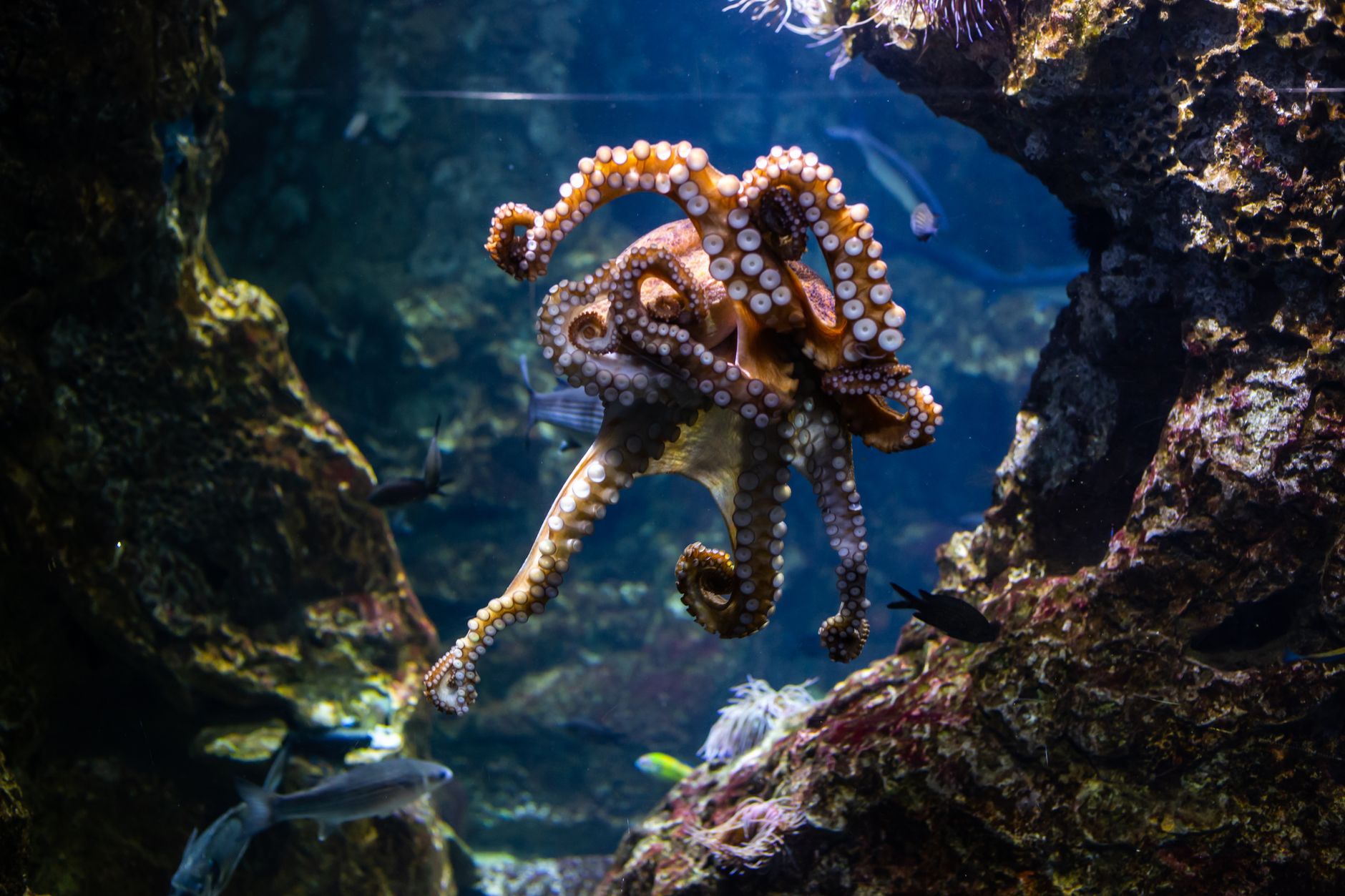
Octopuses possess a distributed nervous system unlike anything in the vertebrate world. While they have one central brain, they also have a mini-brain in each of their eight arms, allowing each limb to act with remarkable autonomy. An arm can solve problems, hunt, and manipulate objects independently, even when completely severed from the body. This decentralized intelligence gives octopuses extraordinary problem-solving abilities and dexterity. Even more bizarre, their blood is blue rather than red because it uses copper-based hemocyanin to carry oxygen instead of the iron-based hemoglobin found in vertebrates. This copper-based system is actually more efficient in cold, low-oxygen ocean environments where octopuses thrive. Their unique physiology extends to having three hearts—two pump blood to the gills, while the third pumps it to the rest of the body. Additionally, octopuses are the only invertebrates known to use tools, and they can change color and texture in milliseconds through specialized skin cells called chromatophores, iridophores, and leucophores. They're also highly intelligent escape artists, famous for sneaking out of aquarium tanks. Despite their incredible abilities, octopuses are solitary creatures with relatively short lifespans of 1-5 years depending on species, making them one of nature's most fascinating yet enigmatic creatures.