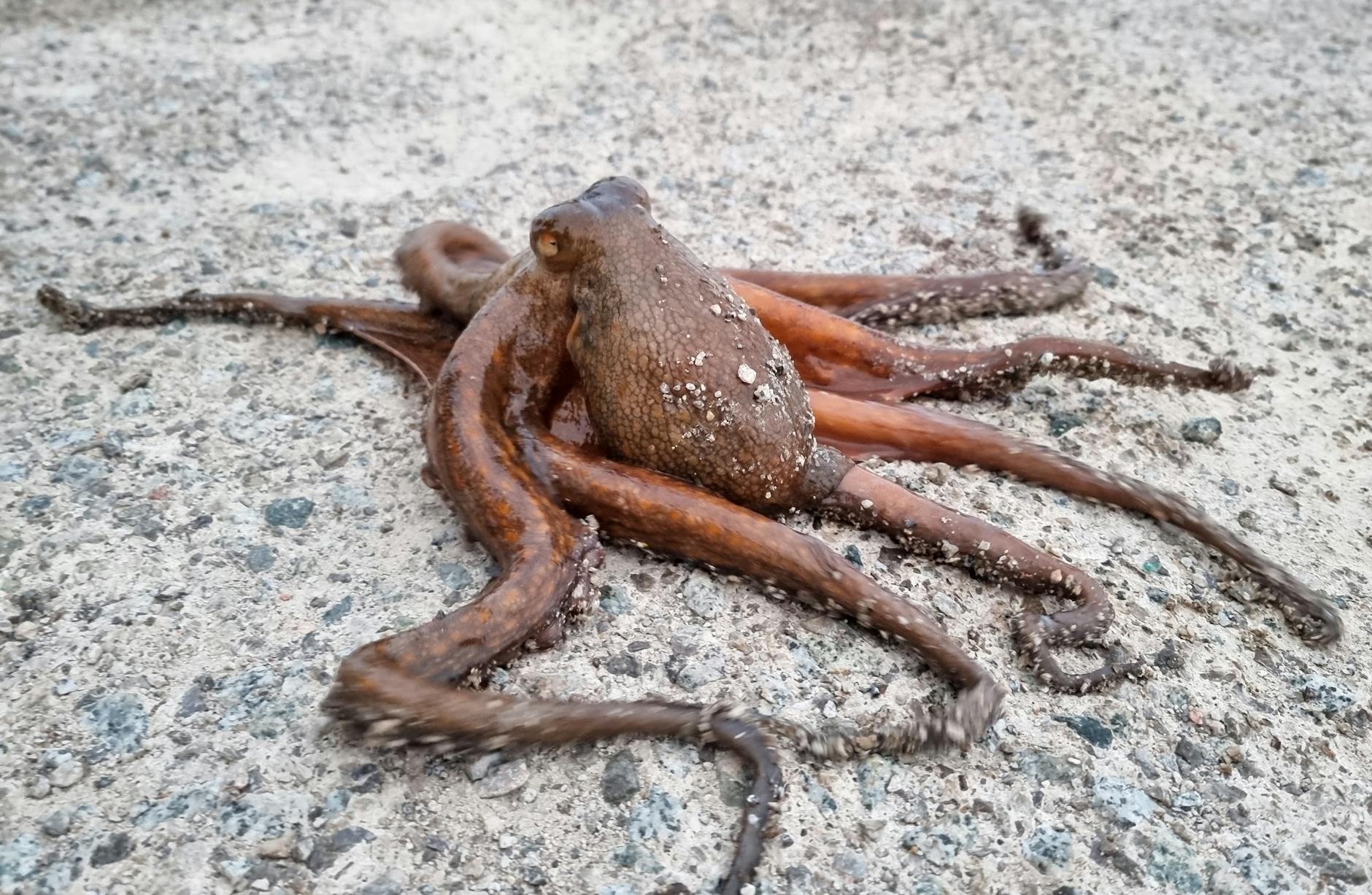
Octopuses possess a distributed nervous system fundamentally different from most animals. They have one central brain, but two-thirds of their 500 million neurons are located in their eight arms, allowing each arm to act semi-independently. This means an octopus arm can solve problems, taste, and react to stimuli without waiting for signals from the central brain—essentially giving them nine functional brains working in parallel. Even more bizarre, octopuses have blue blood instead of red. Their blood uses copper-based hemocyanin rather than iron-based hemoglobin to carry oxygen. This adaptation makes them exceptional deep-sea survivors; hemocyanin is more efficient at binding oxygen in cold, low-oxygen environments found at ocean depths. Their blue blood also contains no immune cells, meaning octopuses lack a traditional immune system, instead relying on specialized proteins that recognize pathogens directly. This remarkable physiology enables octopuses to squeeze through impossibly tight spaces (since they have no bones), change color in milliseconds, and display problem-solving intelligence rivaling some vertebrates. Their alien-like biology represents one of evolution's most successful solutions for a marine predator, achieving cognitive complexity through radically different neural architecture than mammals or birds.