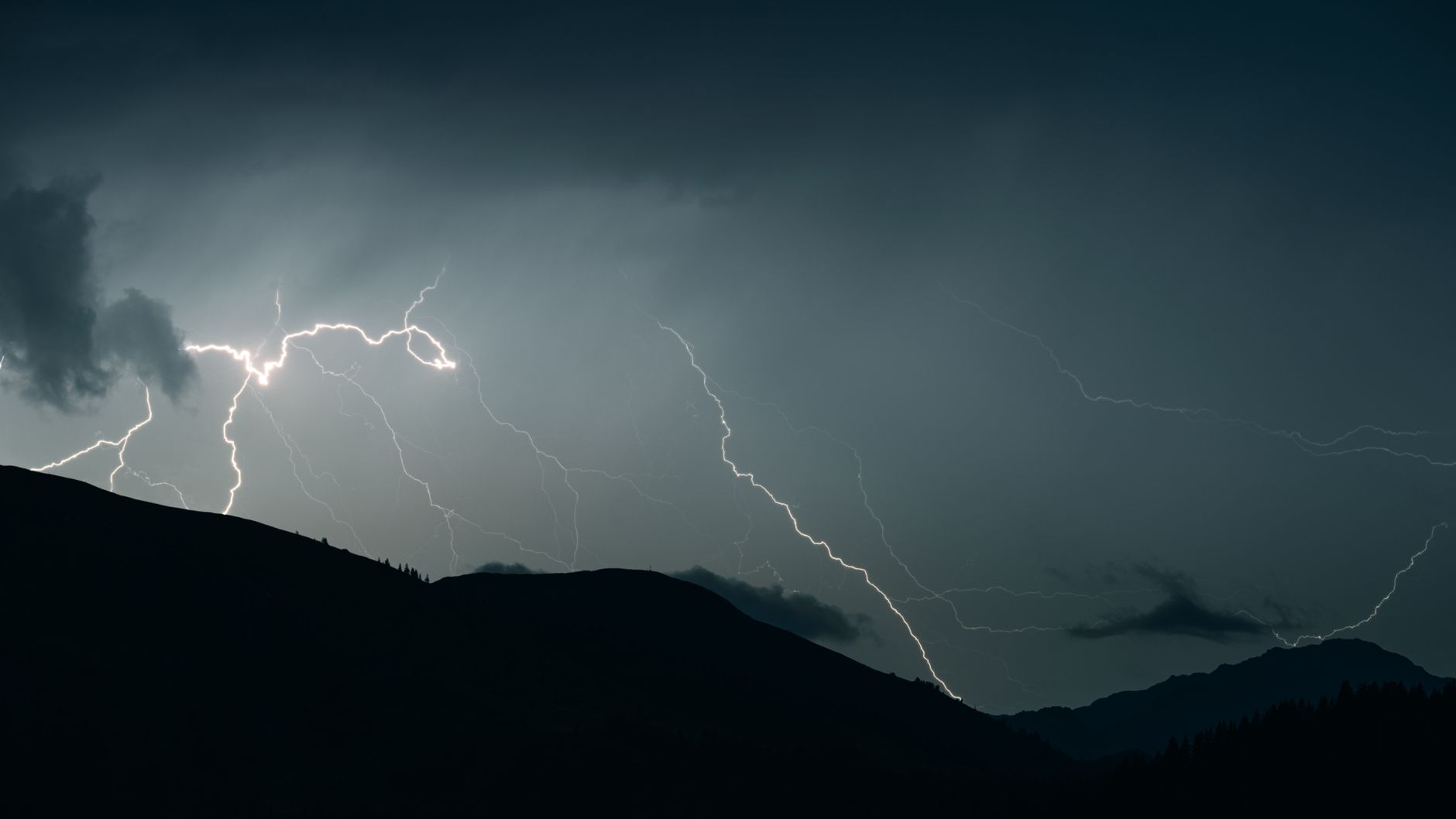
Most people picture lightning as a bolt that streaks down from the sky and hits the ground. The reality is far stranger. Lightning actually travels upward. What we see as a dramatic downward flash is the return stroke, the visible part of a much more complex process. A stepped leader, an invisible channel of ionized air, begins at the cloud and moves toward the ground in roughly 50-meter jumps. When this leader gets close enough to the surface, positive charge from the ground rushes upward to meet it, creating the bright, hot channel we recognize as lightning. This upward flow is what actually illuminates the sky. The entire process happens so fast, in just a few milliseconds, that our eyes perceive it as a single downward strike. This distinction matters more than it seems. Understanding that the electrical discharge is bidirectional, not unidirectional, has helped engineers design better lightning protection systems. Lightning rods work precisely because they create a preferred upward path for charge to escape, preventing it from finding more destructive routes through buildings. So when a lightning strike hits you, it is technically pulling energy up from your feet, not hammering down from above. That upward current is what causes the severe burns and cardiac disruption associated with lightning injuries.