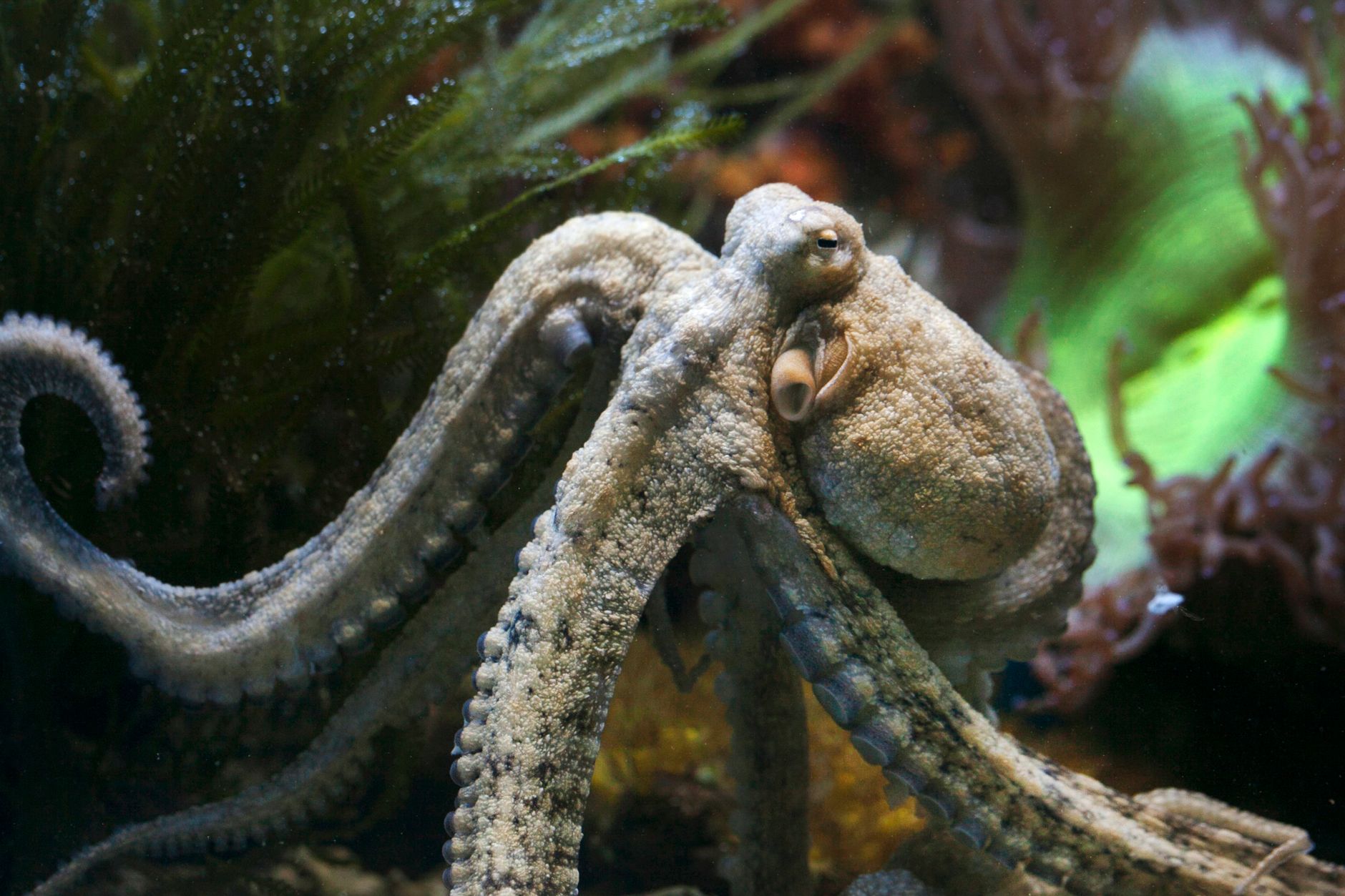
Octopuses possess a truly alien neurology that challenges our understanding of intelligence. While they have one central brain, they also have a mini-brain in each of their eight arms, giving them nine brains total. This distributed nervous system allows each arm to act semi-independently, solving problems and exploring environments without waiting for central brain approval. An octopus arm can taste, touch, and react to stimuli autonomously—essentially thinking for itself. Even stranger, octopuses use copper-based hemocyanin to carry oxygen instead of the iron-based hemoglobin found in vertebrates like us. This makes their blood blue instead of red. Hemocyanin is actually more efficient at delivering oxygen in cold, low-oxygen environments like the ocean depths where octopuses thrive. This ancient molecular choice reveals how evolution crafts different solutions for survival. Combined with their distributed intelligence, octopuses represent one of nature's most radically different approaches to neurology and physiology, having evolved their complex behaviors completely independently from vertebrates—a stunning example of convergent evolution producing intelligence through entirely different biological architecture.