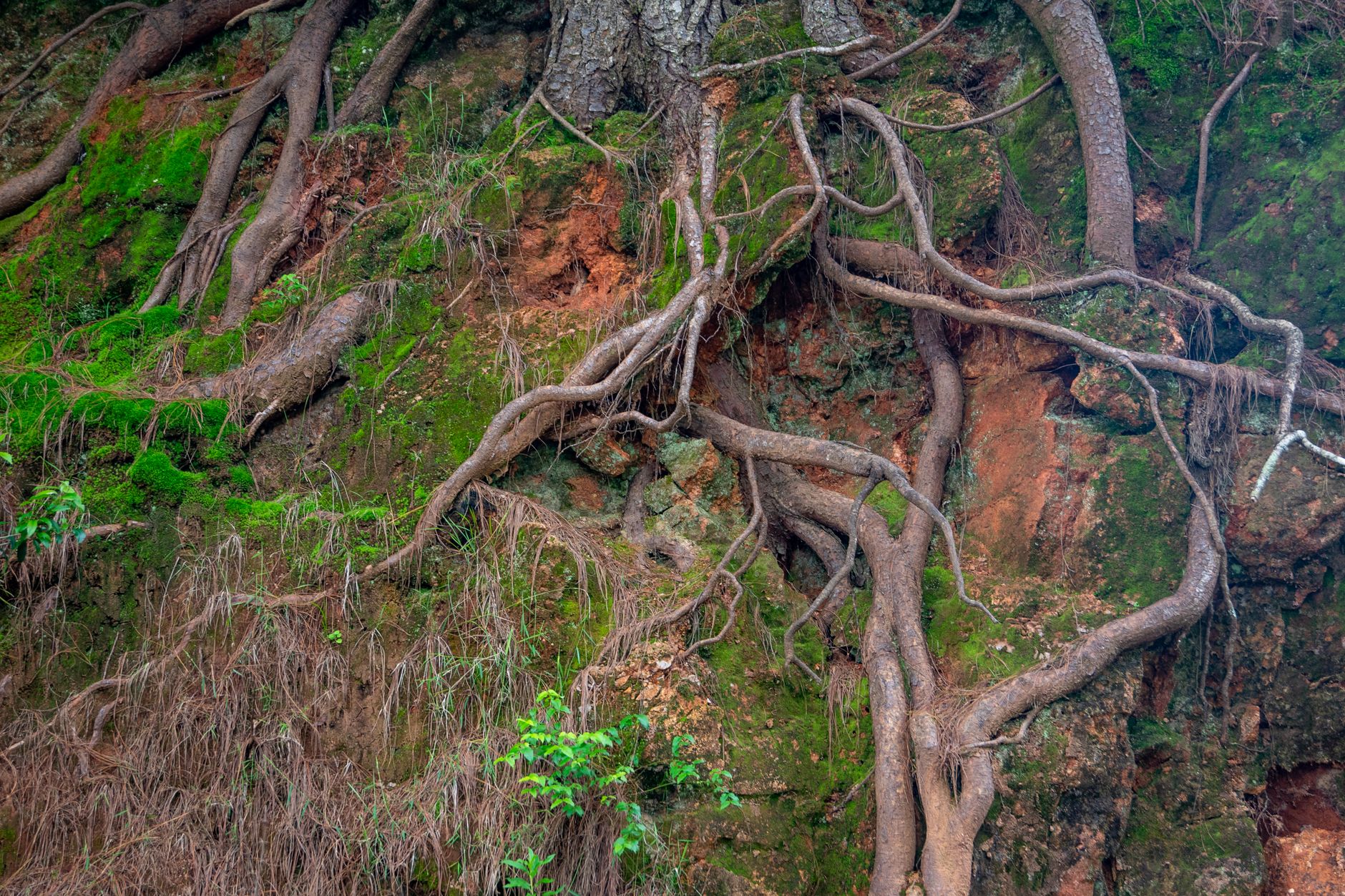
Trees Can "Talk" Through Underground Networks
Beneath the forest floor lies one of nature's most astonishing communication systems: the mycorrhizal network, often called the "Wood Wide Web." Trees are connected by threadlike fungal filaments that form symbiotic relationships with their roots. Through these networks, trees can send chemical signals, nutrients, and even warning messages to neighboring trees. When a tree is attacked by insects, it can send distress signals through the fungal network to alert nearby trees, which then preemptively boost their own chemical defenses. Mother trees can also transfer carbon and nutrients to their struggling offspring or weakened neighbors through these underground connections. Research by scientist Suzanne Simard demonstrated that a mother Douglas fir tree actively supports her seedlings through the mycorrhizal network, preferentially sending them more carbon than to unrelated trees. This discovery fundamentally changed our understanding of forests from competitive environments to cooperative communities. The network can span across entire forests, connecting hundreds of trees in a living, communicating system. Some scientists estimate that up to 30% of a tree's photosynthesized carbon may be transferred through these fungal networks. This underground economy reveals that forests operate as superorganisms, with trees genuinely caring for their kin.