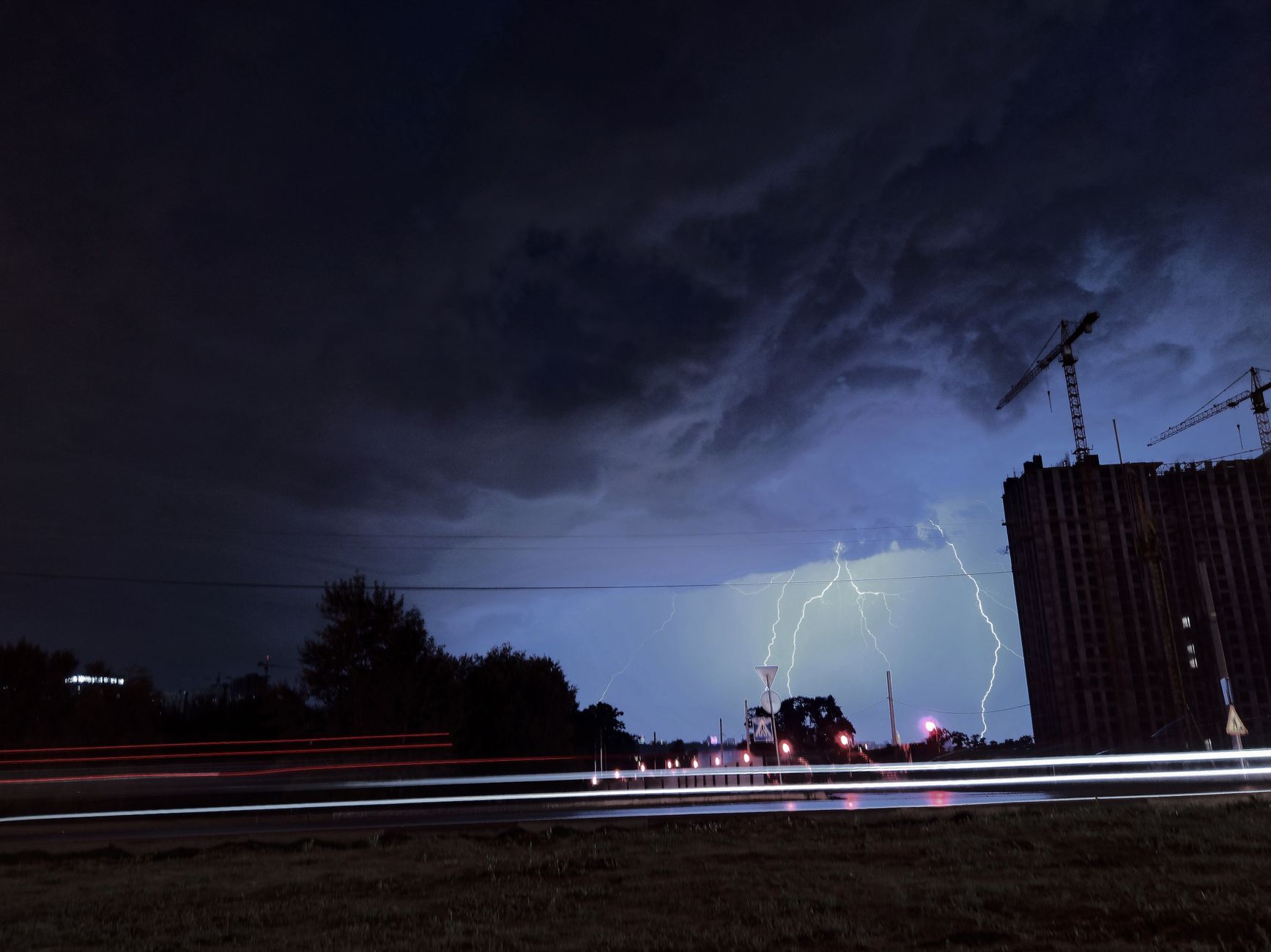
Lightning Strikes the Same Place Twice, Constantly
The Empire State Building gets struck by lightning about 20 to 25 times every year. For decades, people believed the old adage that lightning never strikes the same place twice, but this is completely false. Tall structures, exposed peaks, and conductive surfaces attract lightning repeatedly because they offer the path of least resistance through the air. Roy Sullivan, a park ranger in Virginia, was struck by lightning seven times between 1969 and 1977 and survived every strike. He holds the official record for the most lightning strikes survived by a human. Each strike caused severe burns and lasting injuries, yet he continued working outdoors for years. Lightning actually prefers to follow established conductive paths. Once a location proves to be a good conductor, it becomes more likely to be struck again. This is why lightning rods were invented, protecting buildings by deliberately channeling strikes into the ground where the energy dissipates safely. The odds of being struck by lightning in any given year are roughly one in 500,000 in the United States, but for people who work outdoors regularly, the risk climbs significantly. Understanding that lightning strikes the same location repeatedly has shaped how we design buildings, protect infrastructure, and engineer safety systems in storm-prone regions.