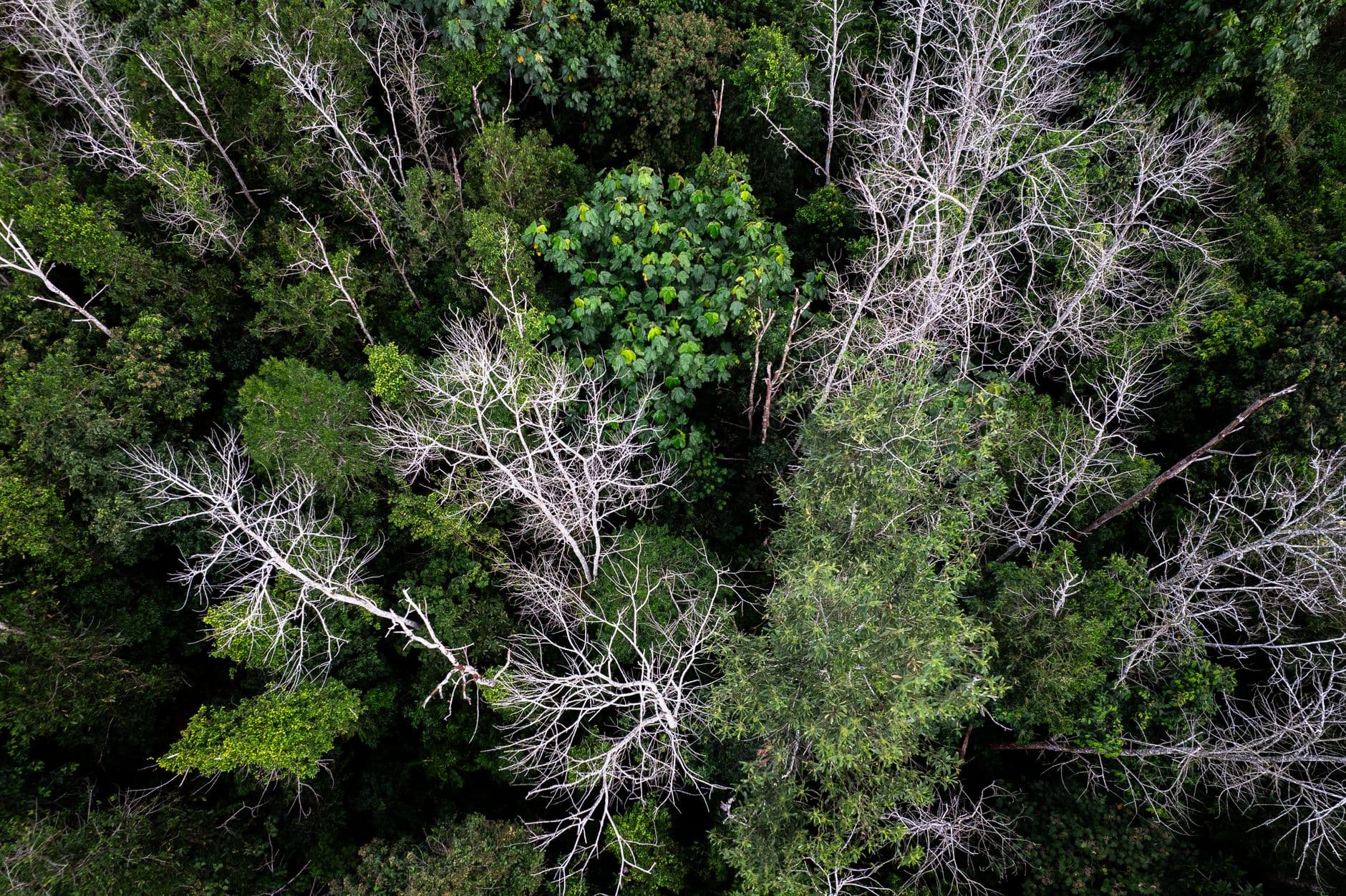
Amazon Rainforest Could Reach a Tipping Point by 2040s, New Study Warns
The Amazon rainforest, which has survived for millions of years as one of Earth's most resilient ecosystems, could collapse into savanna within just one or two decades. Not from a single catastrophic event, but from a combination of chainsaw and thermometer: deforestation clearing the forest while rising temperatures dry it out.
A new analysis published by Mongabay reveals that if deforestation and climate warming continue on their current trajectory, the Amazon could cross an irreversible threshold as early as the 2040s. Once crossed, that threshold means the forest transforms from a carbon-absorbing giant into a carbon-releasing wasteland.
How Deforestation and Climate Change Work Together
Neither force alone would necessarily doom the Amazon. Deforestation has already cleared roughly 20 percent of the forest, yet it persists. Rising temperatures stress ecosystems everywhere, yet many adapt or relocate.
But together, they create a feedback loop that accelerates collapse. When you remove trees, you reduce the forest's ability to recycle moisture and cool itself. Fewer trees mean less evapotranspiration, the process where plants release water vapor that forms rainfall. The remaining forest dries out. Hotter temperatures make that drying worse, pushing the ecosystem toward a breaking point where it can no longer sustain itself.
The tipping point isn't gradual decline. It's a sudden shift where the Amazon stops being a rainforest and becomes something else entirely, dominated by drought-resistant grasses and shrubs rather than dense canopy.
What Climate Scientists Say About Amazon Collapse Risk
Climate researchers have warned about Amazon tipping points for years, but the timeline keeps getting shorter. Earlier estimates placed the danger zone at 2050 or beyond. This new analysis compresses that window to just 15 to 20 years from now.
The mechanism is straightforward: the Amazon's survival depends on maintaining enough forest cover and enough moisture cycling to keep itself cool and wet. Current deforestation rates, combined with warming already locked into the atmosphere, push the system toward the edge.
What makes this particularly alarming is that climate change and deforestation don't operate on a straight line. They accelerate each other. Each percentage of forest lost makes the remaining forest more vulnerable to drought. Each tenth of a degree of warming increases that vulnerability further.
Why the 2040s Matter More Than You Think
The 2040s might sound distant. But for a living system like a rainforest, that timeline is immediate. Forests develop over centuries. Their collapse, once triggered, can happen in years.
The Amazon stores roughly 150 to 200 billion tons of carbon. If it transitions to savanna, that carbon enters the atmosphere, accelerating global warming far beyond current projections. The rainforest becoming a climate source rather than a climate sink would reshape weather patterns across the entire planet.
Brazil produces roughly one-fifth of the world's oxygen. It also regulates moisture for agricultural regions across South America and beyond. An Amazon collapse isn't an environmental issue confined to one country. It's a global crisis.
What Can Still Be Done
The tipping point is a threshold, not an unavoidable fate. If deforestation halts and climate change slows, the Amazon can stabilize. The forest has shown resilience even after severe damage.
Protecting remaining forest from illegal logging and agricultural expansion remains the most direct intervention. Simultaneously, reducing global carbon emissions slows the warming that stresses the system. Neither step alone is sufficient. Both together might still keep the Amazon functioning.
The next 15 years will determine whether the rainforest survives or transforms. That window is closing fast, and every decision made in boardrooms and governments between now and 2040 carries weight in that outcome.
Learn more about climate science and environmental impacts on our site, or explore our daily environmental news feed for updates on rainforest conservation efforts.