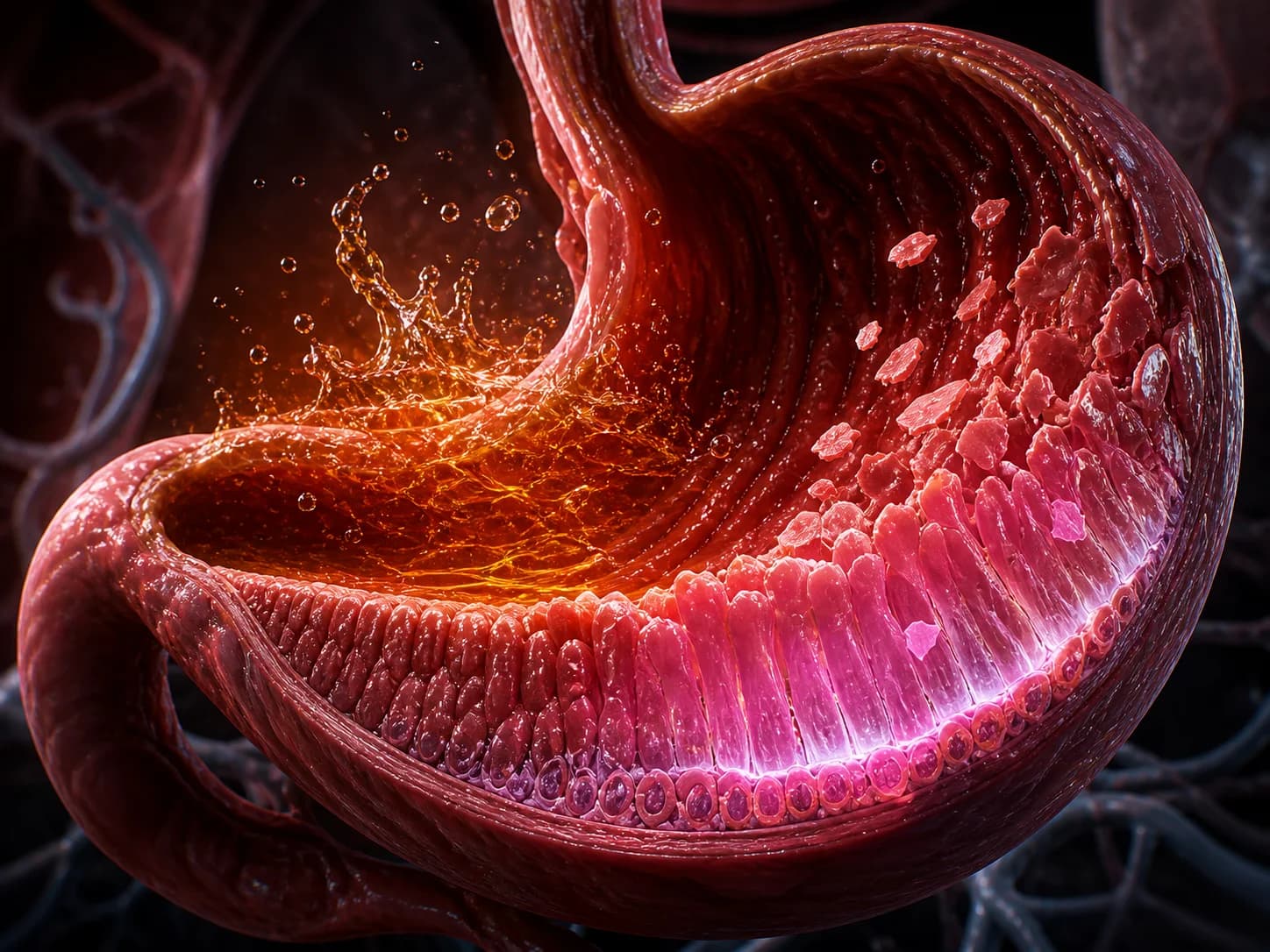
There is something almost unsettling about realizing that parts of your body are constantly disappearing and being replaced without you ever noticing. Beneath the surface of your everyday awareness, deep inside your abdomen, your stomach is engaged in a relentless act of destruction and renewal.
It is not a slow, occasional repair process. It is a rapid, continuous cycle that ensures you survive the very thing you do multiple times a day: eating.
The Controlled Storm of Gastric Acid
Every meal you consume sets off a controlled storm. Your stomach floods itself with acid strong enough to dissolve food, break down proteins, and kill harmful microbes. This acid, primarily hydrochloric acid, is so potent that it could damage most tissues in your body if exposed for too long. And yet, your stomach holds it effortlessly, containing and directing its force with precision.
The reason this is possible lies in a remarkable biological strategy: your stomach lining is constantly being renewed.
The Mucosal Shield: Your Dynamic Living Barrier
The inner surface of the stomach is covered by a specialized layer of cells known as the gastric mucosa. These cells are not passive barriers. They actively produce mucus, bicarbonate, and other substances that protect the underlying tissue from being digested.
Think of this lining as a living shield, one that stands between corrosive acid and the delicate structures beneath it. But unlike a static shield, this one is temporary. It is continuously worn down and rebuilt, over and over again.
The Astronomical Speed of Cell Turnover
What makes this process extraordinary is its speed. The cells that form the outermost layer of your stomach lining have an incredibly short lifespan. Within just a few days—typically between two and four days—they are replaced entirely.
Old cells die and are shed into the stomach, while new ones rise up from deeper layers to take their place. This means that the surface of your stomach is never the same from one week to the next. It is a constantly renewing landscape, shaped by necessity.
This rapid turnover is not a luxury; it is an absolute requirement. The environment inside the stomach is far too hostile for cells to survive long-term exposure. Even with protective mucus, the acid and digestive enzymes pose a constant threat. Microscopic damage happens regularly, sometimes with every meal. Without rapid regeneration, these small injuries would accumulate, eventually leading to ulcers or more serious conditions. The body prevents this by staying one step ahead—replacing cells before the damage becomes critical.
How Stem Cells Direct the Rebuilding Process
The coordination behind this renewal is remarkably precise. Stem cells located in the deeper, protected layers of the stomach lining act as the permanent source of new life. These stem cells divide and differentiate into the various types of specialized cells needed in the gastric mucosa:
Mucus-producing cells: Form the physical baseline shield against chemical burns.
Parietal cells: Responsibly secrete the necessary hydrochloric acid.
Chief cells: Release enzymes like pepsinogen to aid in protein digestion.
As new cells are formed, they gradually migrate upward like a slow-moving microscopic escalator, eventually reaching the surface where they perform their protective role before being shed.
This entire process is tightly regulated by signals within the body. Hormones, growth factors, and local chemical cues all work together to maintain the balance between cell loss and cell production. According to clinical overviews of stomach anatomy and gastrointestinal health, if this delicate balance is disrupted, the consequences can be significant. Too little renewal can leave the stomach vulnerable to self-digestion, while excessive or uncontrolled growth can contribute to systemic disease.
External Disruptors: What Affixes the Regenerative Cycle?
Interestingly, this renewal process is heavily influenced by more than just automatic internal biology. External factors such as diet, stress, medication, and infection can all affect how well the stomach lining regenerates.
1. Medications and NSAIDs
Certain medications, specifically nonsteroidal anti-inflammatory drugs (NSAIDs) like ibuprofen, can block the chemical pathways responsible for production of protective mucus, making the lining drastically more susceptible to acid damage.
2. Bacterial Infections
Infection with widespread bacteria like Helicobacter pylori (H. pylori) can actively disrupt the integrity of the gastric mucosa, causing chronic inflammation and creating deep ulcers in the unshielded tissue layers.
3. Lifestyle Demands
Chronic psychological stress, highly irregular eating patterns, and excessive alcohol consumption can over-consume the resources your body allocates to cell division, making it lag behind the acid's destructive pace.
Conclusion: A Flowing System of Survival
What makes this process even more fascinating is how little we feel it. There is no sensation tied to the shedding and replacement of these millions of cells. It happens silently, efficiently, and continuously, without demanding an ounce of your conscious attention.
The stomach is not a fixed, unchanging object; it is a dynamic process. Its true identity is maintained not by keeping the same physical cells, but by constantly replacing them. It is a flowing system where continuity is achieved purely through change.
So the next time you sit down to eat, consider what is happening beyond your awareness. As your stomach begins to break down your meal, it is also quietly preparing to discard and replace parts of itself. It is a hidden rhythm that keeps you alive and well—proving that constant renewal is the ultimate strength.