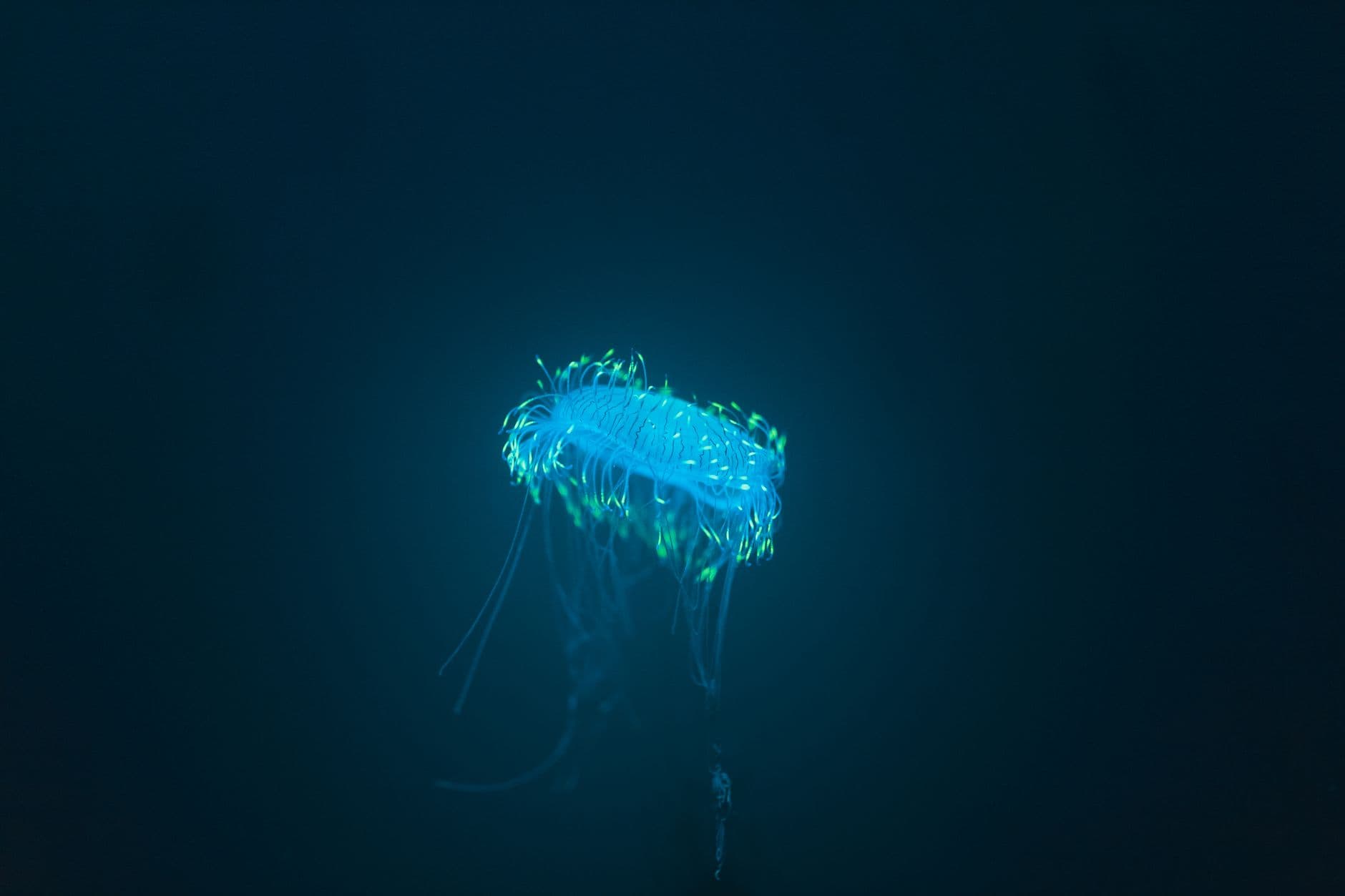
Bioluminescent Creatures: The Ocean's Living Light Show
Ninety percent of deep-sea creatures produce their own light—yet most humans will never witness this underwater fireworks display in their lifetime.
The ocean depths are pitch black beyond 200 meters. No sunlight penetrates there. Yet the darkness comes alive with pulsing blues, greens, and reds as bioluminescent creatures flash, glow, and shimmer through the water.
This isn't magic. It's chemistry—and it's one of nature's most ingenious survival strategies.
How Ocean Bioluminescence Actually Works
Bioluminescence happens when a chemical reaction inside a living organism produces light. The key players are luciferin (the light-producing compound) and luciferase (the enzyme that makes it glow). When they mix, energy releases as light instead of heat.
Think of it like a biological LED. No flames, no electricity—just pure chemical brilliance.
Marine creatures didn't invent this alone. Many glowing animals partner with bacteria. The Hawaiian bobtail squid, for example, farms bioluminescent bacteria in its own body like a living lantern. The bacteria get shelter and nutrients. The squid gets a searchlight for hunting.
This partnership reveals something profound: the ocean rewards cooperation, even between species separated by evolution.
Why Deep Sea Creatures Need to Glow
Survival in the abyss demands innovation. Glowing marine animals use light for three main reasons: hunting, mating, and defense.
The anglerfish dangles a glowing lure above its head—a fishing rod evolved over millions of years. Small prey drawn to the light become dinner. The barreleye fish has a transparent head and tubular eyes that point upward, watching for the silhouettes of prey backlit by bioluminescent displays overhead.
For mating, some fish flash species-specific light patterns like underwater morse code. A female recognizes her mate's signature glow through the blackness. In a world where finding a partner is nearly impossible, this evolutionary solution is elegant.
Others glow defensively. The sea firefly produces a blinding flash to startle predators. Dinoflagellates—tiny bioluminescent plankton—create a defensive display when disturbed, alerting larger predators that something's hunting them.
Underwater Light and Human Discovery
We've barely scratched the surface of understanding these creatures. Submersibles equipped with red lights (which most deep-sea animals can't see) have revealed astonishing sights. Jellyfish drifting past like living constellations. Squid performing light shows that rival any theater production.
Research published in Nature suggests that nearly 90 percent of animals in the mesopelagic zone—the twilight zone between 200 and 1,000 meters deep—produce light. That's billions upon billions of creatures we've never met.
Scientists are even stealing this technology for human benefit. Medical researchers use luciferase as a genetic marker in cancer research. Bioluminescent proteins are transforming how we visualize disease at the cellular level.
The Fragile Glow of Our Oceans
Ocean pollution, warming waters, and overfishing threaten these light-producing ecosystems. Coastal bioluminescence is declining as plankton populations collapse from pollution.
When we damage the ocean, we extinguish lights that have burned for millions of years. We lose not just species, but entire communication systems, hunting strategies, and evolutionary masterpieces.
The good news? We can still change course. Marine reserves, reducing plastic pollution, and supporting sustainable fishing directly protect these creatures and their remarkable abilities.
Next time you see the ocean, imagine what's glowing in the depths below. The underwater light show continues whether we're watching or not. But it won't if we keep ignoring the crisis unfolding beneath the waves.
Ready to explore more about our incredible oceans? Discover more underwater wonders and learn how you can help protect these bioluminescent ecosystems. Visit our daily nature feed for the latest marine discoveries, or browse our full category collection to find stories that inspire action.