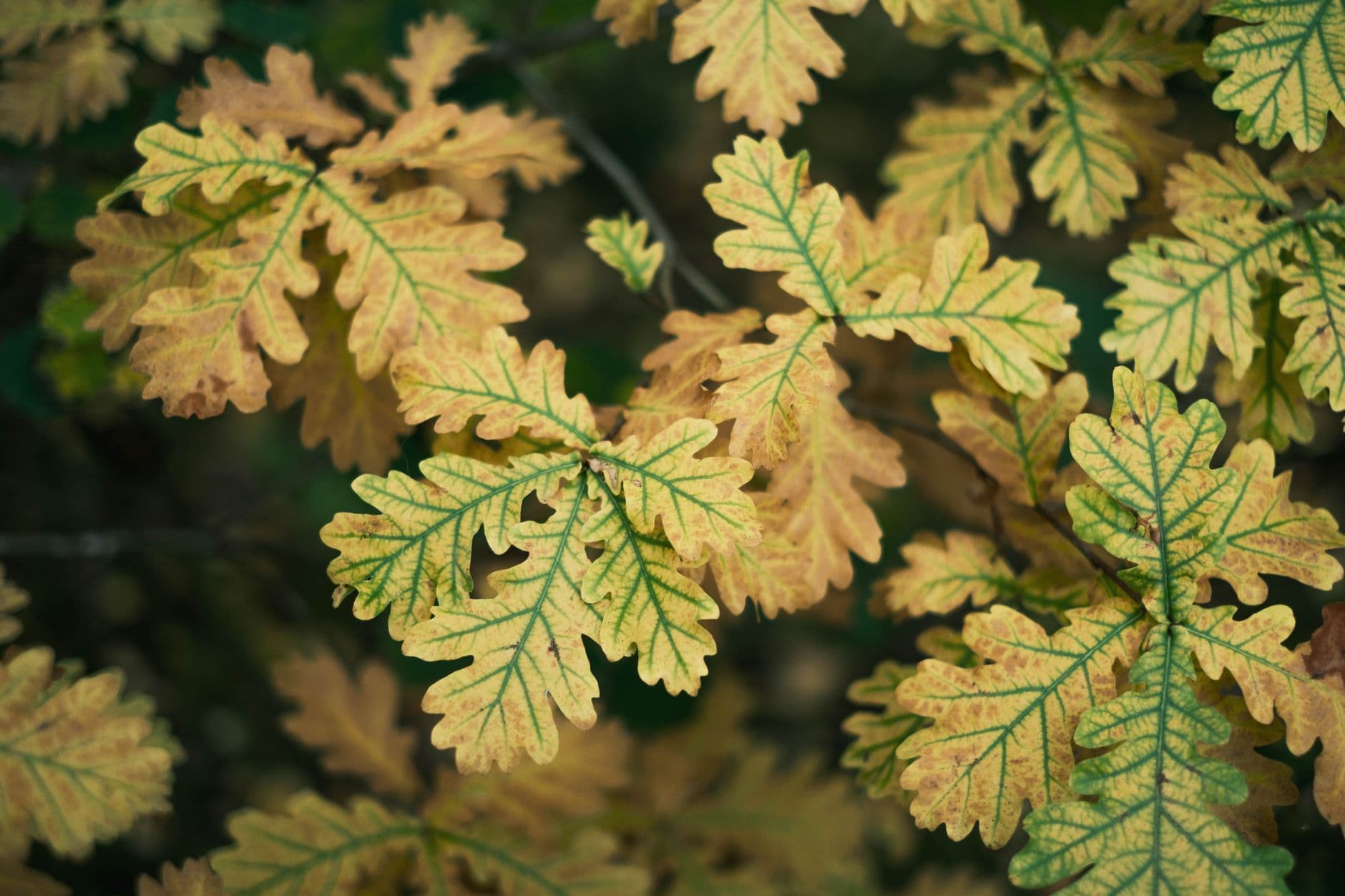
Oak Trees Keep Photosynthesizing Months After Growth Stops, Challenging Carbon Predictions
Oak trees continue pulling carbon from the atmosphere long after they've stopped growing for the season, contradicting what scientists thought they knew about how trees store carbon.
For decades, researchers have assumed that once a tree stops its visible growth, its photosynthetic work is essentially done. That assumption just got turned on its head. Recent findings from ScienceDaily show that oak trees continue actively photosynthesizing for months after they've finished growing new leaves and branches.
The implications ripple outward. If oak trees are pulling in more carbon than models predicted, then our forecasts for how much carbon forests can actually store need serious revision. Climate models rely on these projections. Get them wrong, and you're getting the whole carbon budget calculation wrong.
When Oak Tree Growth Cycles Don't Match Photosynthesis Patterns
The disconnect is simple but striking. Trees grow new tissue in spring and early summer when conditions are ideal. Then they stop. But their leaves keep working.
Oak trees shed their leaves in fall, yes. Before they do, those leaves are still converting sunlight into sugars and storing carbon. Even as growth halts and the tree enters a kind of dormancy, the photosynthetic machinery keeps running. This extended photosynthesis window wasn't well documented until now.
What makes this discovery significant is the duration. We're not talking about a few extra weeks. Oak trees photosynthesized actively for months beyond when researchers expected them to shut down their carbon intake.
Carbon Storage Forecasts Face Revision
Climate scientists use tree photosynthesis data to calculate how much carbon forests remove from the atmosphere each year. Those calculations feed into larger models that predict whether we can meet climate targets using natural carbon sinks like forests.
If oaks are absorbing more carbon than previous models accounted for, that changes the math. The revision might be modest or it might be substantial, depending on how widespread this behavior is across different oak species and climates.
The research doesn't mean forests are suddenly our climate savior. It means the picture was incomplete. Understanding the real scope of tree photosynthesis, including these late-season contributions, gives us better data for building accurate climate models.
What This Means for Forest Carbon Research
Scientists now have to ask harder questions. Which tree species show this extended photosynthesis pattern? How does it vary by geography and climate? Do younger oaks behave differently than old growth trees?
The findings open new research directions. Understanding seasonal photosynthesis patterns could help land managers better predict forest productivity and carbon sequestration potential. It might also reveal how trees adapt to changing seasonal patterns as climate shifts.
Oak forests cover millions of acres across the Northern Hemisphere. If these trees are systematically absorbing more carbon than we thought, scaling that discovery across entire forests becomes crucial for carbon accounting.
The Broader Picture of Tree Physiology
This discovery fits into a larger pattern. Trees are more physiologically complex than simple models suggest. Their behavior changes with conditions, varies by species, and doesn't always follow the neat timelines we've mapped out.
Research into tree biology and plant science keeps revealing surprises. Every new finding forces us to refine our understanding and rebuild our predictions.
For climate scientists, this is both humbling and useful. The planet's carbon cycle depends on biological processes we're still learning to measure accurately. Getting those measurements right matters enormously for our ability to project future climate conditions.
You can explore more about how trees function and their role in carbon cycles through Britannica's plant science resources or Smithsonian environmental research.
The next time you walk past an oak tree in late fall, remember it's still working. Quietly converting carbon into stored energy even as the visible growth has stopped. That hidden productivity just became part of the climate equation.
Want to stay updated on the latest discoveries about trees and forest ecosystems? Check our daily feed for more science stories that reshape how we understand nature. You can also browse our full collection of environmental research articles.