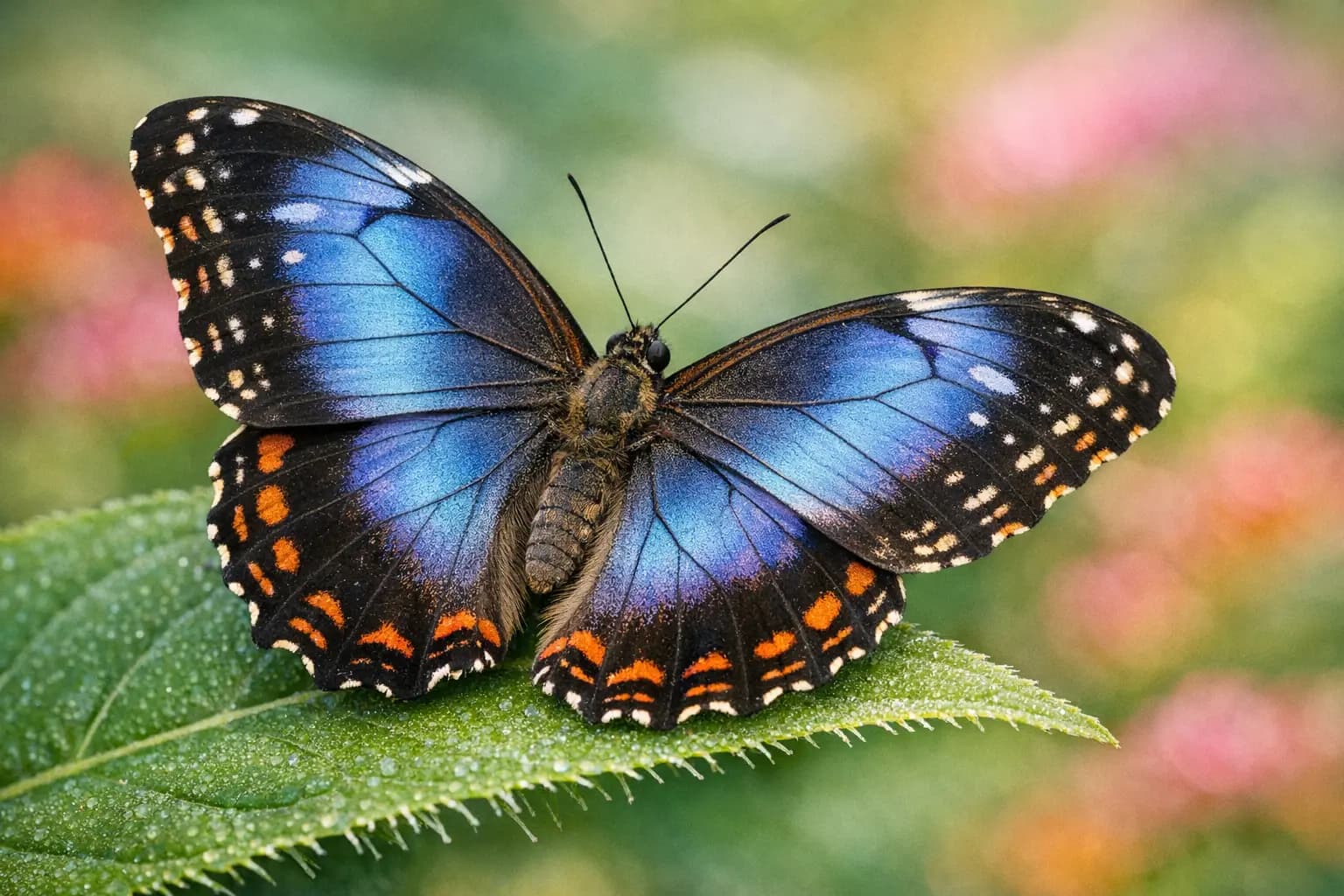
A fact that sounds fake… but isn’t
What if tasting your food meant stepping on it?
It sounds absurd from a human perspective. We rely on our tongues to detect flavors, decide what we like, and avoid what might harm us. But in the insect world, evolution has taken a completely different path.
Butterflies, those delicate and colorful creatures we associate with flowers and beauty, have a surprising ability. They taste with their feet.
This is not just a curious detail. It is a critical survival mechanism that determines where they eat, where they lay eggs, and whether their offspring will survive.
In this article, we explore how butterflies taste, the biology behind their sensory system, why this ability is essential for survival, how evolution shaped this unusual adaptation, and what it reveals about the hidden complexity of nature.
Science: how do butterflies taste with their feet?
Butterflies do not have taste buds like humans. Instead, they rely on chemoreceptors, specialized sensory cells that detect chemical compounds.
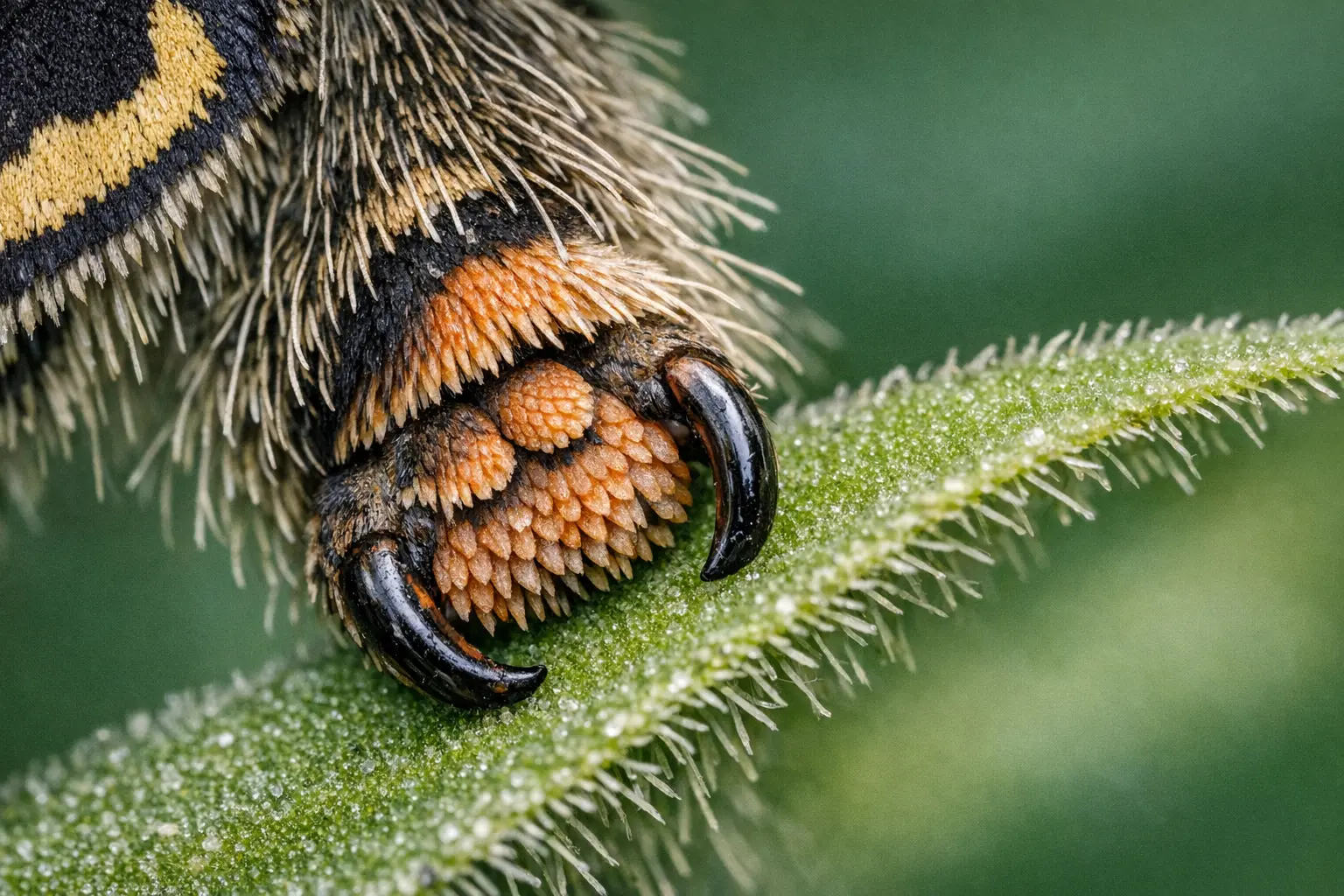
These receptors are located primarily on the tarsi, the ends of their legs. When a butterfly lands on a surface, these receptors immediately begin analyzing its chemical composition.
As soon as a butterfly touches down on a leaf or flower, chemical sensors in its feet activate instantly. They detect sugars, toxins, and plant compounds, allowing the butterfly to decide whether the surface is food, whether it is safe, and whether it is suitable for laying eggs. This entire process happens within milliseconds, and the sensitivity of these receptors may even exceed that of human taste buds.
Why do butterflies taste plants?
At first glance, it may seem that butterflies use their feet mainly to find nectar. That is only part of the story.
The deeper reason is reproduction. Female butterflies must find the perfect plant on which to lay their eggs. When those eggs hatch, the caterpillars can only eat specific plants, sometimes just a single species.
If the wrong plant is chosen, the caterpillars cannot feed, they starve, and the next generation dies. That is why butterflies carefully test plants before laying eggs.
Scientists have observed a behavior known as drumming, where butterflies tap their feet on leaves to release chemical compounds for testing.
A life or death decision
Imagine making a single decision that determines whether your children survive. That is exactly what butterflies do.
Monarch butterflies, for example, lay their eggs only on milkweed. Other plants may look similar but are deadly for their larvae.
By tasting with their feet, butterflies can detect nutritional value, toxic compounds, and species specific chemical signatures. This ensures their offspring are born into the right environment.
Not just for babies: finding food
Butterflies also use their feet to locate food.
When they land on a flower, their feet detect sugar levels. If nectar is present, they unroll their proboscis like a straw. If not, they fly away.
This ability saves time and energy. Instead of wasting effort, butterflies instantly know whether a flower is worth it.
Inside the butterfly foot: a microscopic lab
 Check here for further informations
Each butterfly foot is covered in tiny structures called sensilla. These are hair like sensors connected directly to neurons and designed to detect chemical molecules.
When a butterfly touches a surface, liquid chemicals enter these structures and signals are sent to the brain. A decision is made almost instantly, turning every step into a chemical analysis.
Evolution: why did this ability develop?
Evolution does not create features randomly. It selects traits that improve survival.
Tasting with feet provides immediate feedback, allowing butterflies to make decisions without consuming anything. It increases energy efficiency, since flying is energy intensive and quick decisions reduce wasted effort. It also improves reproductive success by ensuring correct egg placement and helps butterflies adapt to specific environments.
Over millions of years, this ability became essential for survival.
A world experienced differently
Humans experience the world through sight, sound, and taste through the tongue. Butterflies experience it through vision, including ultraviolet light, smell through their antennae, and taste through their feet.
Their sensory system is completely different. They can see ultraviolet patterns on flowers that are invisible to humans, detect chemical signals in the air, and taste simply by landing.
This shows how different life forms can evolve entirely unique ways of perceiving reality.
When things go wrong
Even with this advanced system, butterflies sometimes make mistakes.
Some plants mimic the chemical signals of the correct host plant. A butterfly may lay eggs on a similar looking plant, but the caterpillars cannot survive on it.
This highlights how delicate and precise this system is.
What this teaches us about nature
The idea that butterflies taste with their feet may sound like a fun fact, but it reveals something deeper.
Nature is far more complex than it appears. Even tiny insects possess advanced sensory systems, decision making abilities, and highly specialized survival strategies.
It challenges our assumptions about intelligence and adaptation.
Why this matters today
Understanding butterfly behavior is not just interesting, it is important.
Butterflies depend on specific plants. If those plants disappear, butterflies cannot reproduce and their populations decline.
They also play important roles in pollination, food chains, and biodiversity. Studying their sensory systems helps scientists better understand chemical detection, neural processing, and evolutionary biology.
Final thought
The next time you see a butterfly land on a flower or a leaf, remember that it is not just resting. It is analyzing, deciding, and possibly making a life or death choice for its future offspring.