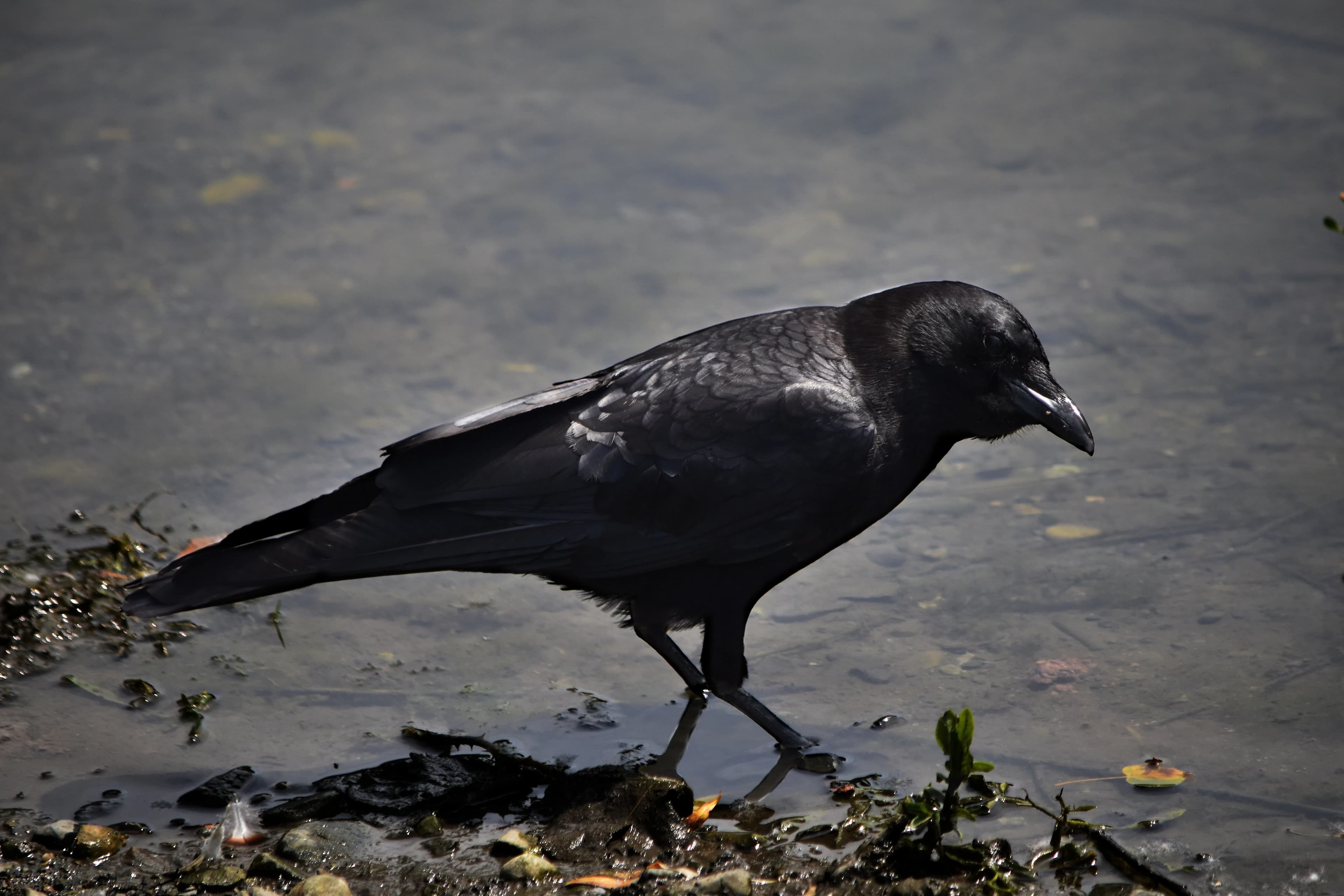
If you have ever felt like a crow was watching you more closely than expected, you may not be imagining it. Crows are not just observing their surroundings in a general way. They are capable of recognizing individual human faces and remembering them over long periods of time.
This ability has been studied in detail by scientists and is now well established. It shows that crows are far more intelligent than most people assume. They do not simply react to movement or noise. They identify individuals, remember past experiences, and adjust their behavior based on what they have learned.
Understanding how crows recognize human faces gives insight into animal intelligence and memory. It also changes the way we think about everyday encounters with wildlife.
Scientific evidence behind face recognition
The most well known research on this topic was conducted at the University of Washington. In this study, researchers wore specific masks while capturing and tagging wild crows. One mask represented a threatening human, while another represented a neutral presence.
After the initial interaction, the researchers continued to walk through the same area wearing the masks. The results were clear and consistent. Crows reacted strongly to the mask associated with danger. They made loud warning calls, gathered in groups, and sometimes even swooped down toward the person wearing it. In contrast, they showed little to no reaction to the neutral mask.
What made this finding remarkable was how long the memory lasted. Even years after the original capture event, crows continued to recognize and respond to the threatening face. This demonstrated that their memory was not short term, but long lasting and specific.
The study provided strong evidence that crows are able to distinguish between individual human faces and associate them with past experiences.
How crows process human faces
Crows rely heavily on vision. Their eyesight is highly developed, allowing them to detect fine details in their environment. When a crow looks at a human face, it does not simply see a general shape. It processes patterns, proportions, and features in a detailed way.
Inside the crow’s brain, the regions responsible for visual processing are particularly advanced. Research has shown that corvids, the group that includes crows, have a high density of neurons in areas linked to cognition. This supports complex learning and memory.
When a crow encounters a human, it forms a mental representation of that individual. This includes visual features as well as contextual information such as behavior and location. The next time the crow sees the same face, it can quickly compare it to stored memories and decide how to react.
This process is similar in principle to how humans recognize familiar faces, although it has evolved independently.
Memory and long term learning
One of the most striking aspects of this ability is how long crows can remember faces. In follow up studies, crows continued to respond to specific individuals even after several years had passed.
This type of long term memory is relatively rare in animals. It requires not only storing information, but also retrieving it accurately after long periods without reinforcement.
Crows do not just remember the face itself. They remember the meaning associated with it. A person who caused stress or danger is remembered as a threat. A person who posed no risk may be ignored.
This combination of visual recognition and emotional memory allows crows to make informed decisions about how to behave in future encounters.
Social learning and communication
Crows are highly social birds, and they do not keep important information to themselves. When one crow identifies a human as dangerous, it communicates this to others.
This communication often takes the form of specific calls that signal alarm or threat. Other crows respond to these calls and learn to associate the same human face with danger, even if they have never experienced it directly.
Over time, this information can spread through groups of crows. Entire populations can learn to recognize and avoid certain individuals based on shared knowledge.
This ability to transfer information between individuals is a key feature of advanced social intelligence. It allows crows to adapt quickly to changes in their environment without each individual needing to learn everything through direct experience.
Why recognizing humans is useful
From an evolutionary perspective, recognizing individual humans provides clear advantages. Crows often live in environments where humans are present. Some humans pose a threat, while others do not.
If a crow treated every human as equally dangerous, it would waste energy avoiding situations that might actually be safe. On the other hand, if it ignored potential threats, it could be harmed.
By recognizing individual faces, crows can respond more precisely. They can avoid specific threats while remaining calm around neutral or harmless people. This reduces stress and improves survival.
In urban environments, where human activity is constant, this ability becomes even more important. It allows crows to navigate complex social landscapes that include both risks and opportunities.
Observations in everyday life
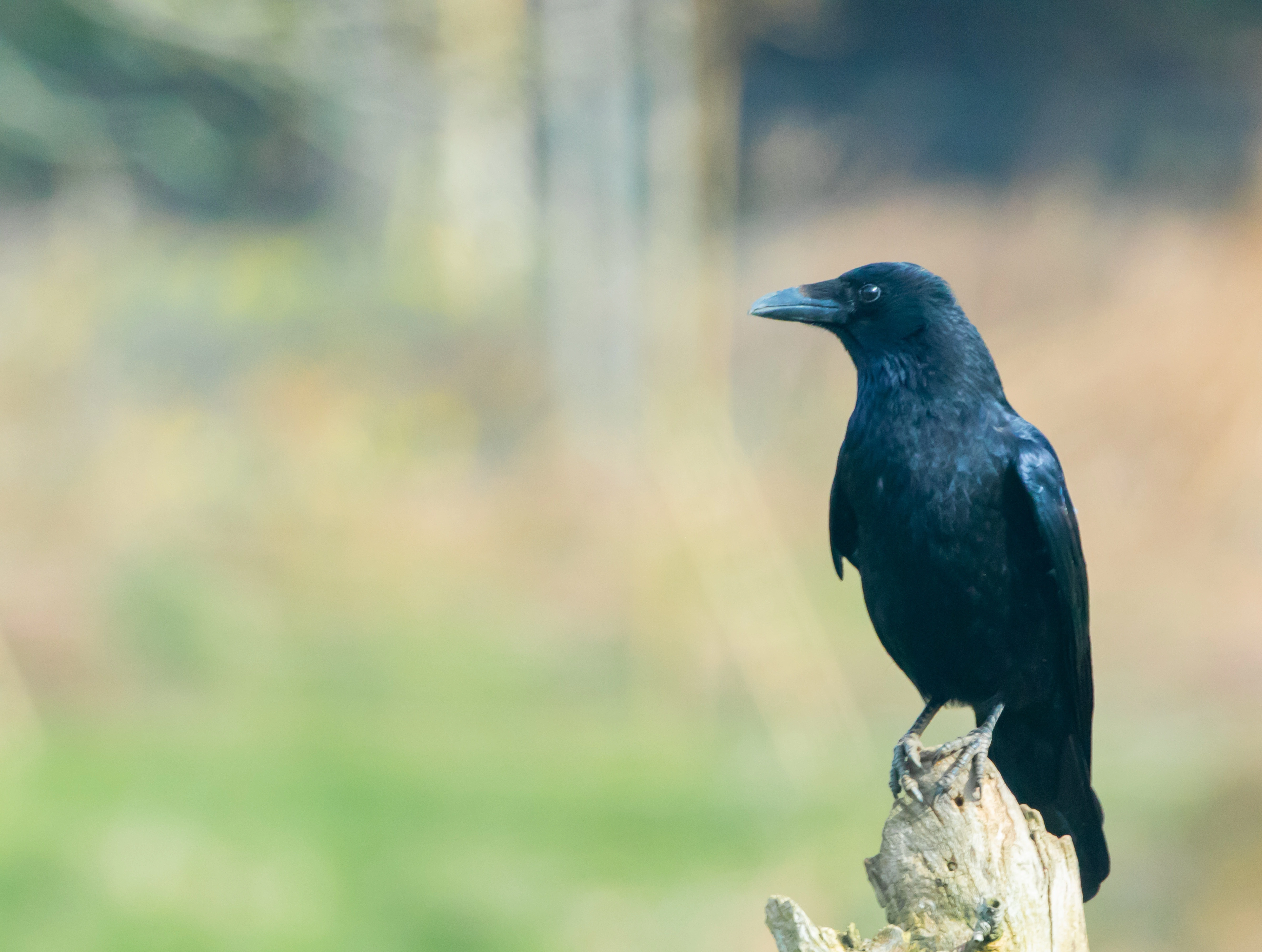
Outside of scientific studies, many people have reported experiences that support these findings. Individuals who regularly interact with crows often notice that the birds behave differently toward them compared to strangers.
Some people who feed crows observe that the birds become more comfortable over time. They may approach more closely and show less fear. In contrast, people who disturb or threaten crows may notice increased vocal activity or avoidance.
These observations align with the idea that crows recognize and remember specific individuals. They are not reacting randomly. Their behavior is based on past interactions and learned associations.
Intelligence of crows in a broader context
Crows are part of a group of birds known for their intelligence. They have demonstrated abilities such as tool use, problem solving, and planning.
In controlled experiments, crows have been able to use objects to obtain food, solve multi step puzzles, and even plan for future needs. These behaviors require a level of cognitive flexibility that was once thought to be limited to mammals.
The ability to recognize human faces fits within this broader pattern. It is another example of how crows process complex information and use it to guide their actions.
Their intelligence is not identical to human intelligence, but it is highly effective in the contexts in which they live.
Implications for how we view animals
The fact that crows can recognize human faces challenges traditional views of animal behavior. It shows that some animals have a level of awareness and memory that goes beyond simple instinct.
This does not mean that crows think in the same way humans do, but it does mean that they are capable of more complex mental processes than previously assumed.
Recognizing this can influence how we interact with wildlife. It suggests that animals may respond to us as individuals, not just as members of a species.
Conclusion
Crows are not simply reacting to the presence of humans. They are observing, learning, and remembering.
When a crow looks at a person, it may recognize that individual based on past experience. It may remember whether that person was a threat or not. It may even share that information with other crows.
This ability reflects a level of intelligence that is often underestimated. It shows that even common animals can have complex and sophisticated ways of understanding their environment.
The next time you notice a crow watching you, it may not be a coincidence. It may be recognition.
Check here for further informations