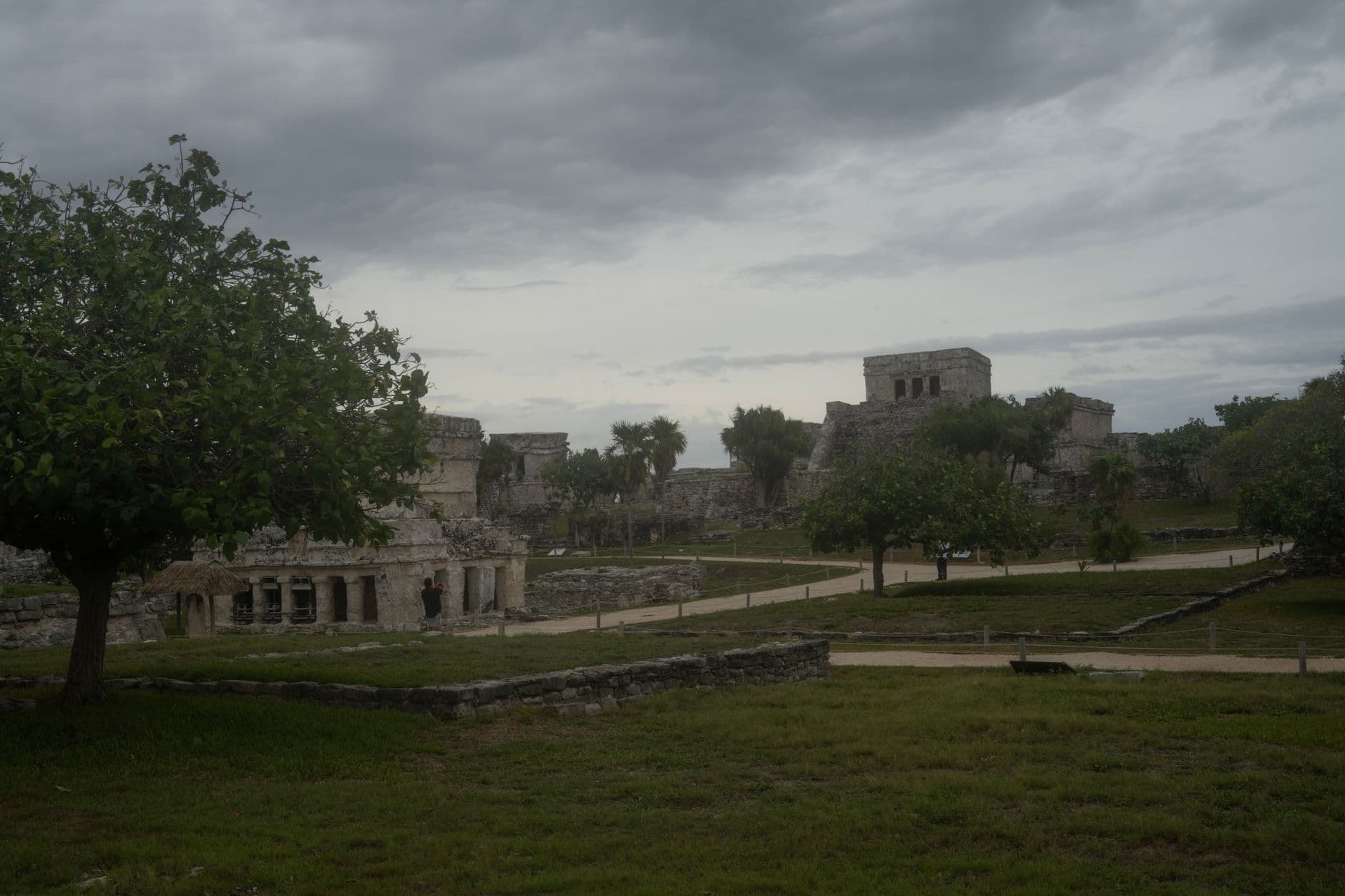
Lost Maya City Discovered in Mexican Jungle Reveals Collapse Secrets
Archaeologists just found an entire Maya city hidden beneath centuries of jungle overgrowth in Mexico, and it's changing everything we thought we knew about why one of history's greatest civilizations vanished.
The discovery happened almost by accident. Researchers using advanced scanning technology flew over remote sections of the Yucatan Peninsula and spotted something extraordinary: the unmistakable geometric patterns of a major urban center buried under dense vegetation. What emerged from the jungle floor was not a small ceremonial site or minor settlement. This was a sprawling city with pyramids, plazas, residences, and infrastructure that suggests a thriving population numbering in the thousands.
According to Smithsonian Magazine, the scale and sophistication of this lost Maya city raises serious questions about population density and resource management during the late Classic period. The timing matters because this era, roughly 800 to 1000 CE, marks the beginning of the Maya collapse, when major cities were mysteriously abandoned.
Why the Maya Civilization Collapsed: New Evidence Emerges
For decades, archaeologists debated what caused the Maya collapse. Drought seemed like the obvious culprit. Overpopulation another. But this newly discovered city provides physical evidence that might finally crack the puzzle.
The site shows signs of rapid urban expansion followed by sudden abandonment. Researchers found sophisticated water management systems, which suggests the Maya were actively trying to solve resource problems even as their civilization was fragmenting. The city wasn't destroyed by conquest or war. Instead, it appears people simply left, moving elsewhere or dispersing into smaller communities.
What the remains tell us is that the Maya didn't disappear overnight. Their civilization transformed. Large ceremonial centers were abandoned, but Maya culture continued in smaller settlements and different forms. The lost city represents a snapshot of that transition moment, frozen in time beneath the jungle canopy.
Archaeological Methods Behind the Mexican Jungle Discovery
Finding this city required technology that didn't exist a decade ago. Lidar, or light detection and ranging, uses laser pulses to penetrate dense vegetation and map the ground beneath. When researchers flew lidar-equipped aircraft over the jungle, the technology revealed structures that would be invisible to the naked eye.
This method has revolutionized Maya archaeology. Instead of hacking through jungle for months to find a single pyramid, teams can now identify entire cities in weeks. The Mexican jungle is particularly challenging because the vegetation is so thick that ground surveys often miss major features entirely.
On-the-ground excavation still matters. Teams carefully removed soil layers to confirm what lidar suggested and to recover artifacts that tell the human story. Pottery, tools, and inscriptions provide dates and context that lidar alone cannot supply.
What This Means for Understanding Ancient Mesoamerican Civilizations
This discovery forces us to reconsider estimates of Maya population and urban development. If this city was unknown until now, how many others are still hidden beneath the jungle? The implications are staggering. Scholars may need to revise their understanding of how densely populated the Maya world actually was.
The findings also suggest the Maya collapse was less about civilizational failure and more about adaptation and migration. People responded to environmental stress, social pressure, and resource scarcity by reorganizing their settlements. In many ways, that's a more complex and interesting story than simple collapse.
Researchers continue excavating and analyzing the site. Each artifact recovered adds another piece to the puzzle of why the Maya abandoned their great cities and what happened next. The jungle kept these secrets for over a thousand years. Now, slowly, those secrets are emerging.
Want to explore more discoveries reshaping our understanding of ancient civilizations? Check our latest archaeology updates or browse our science and history collection. You might also find our full blog archive worth exploring for related stories on human history and discovery.
For deeper reading on Maya history, check out Wikipedia's Maya civilization article or National Geographic's coverage of Maya archaeology for additional context and ongoing research.