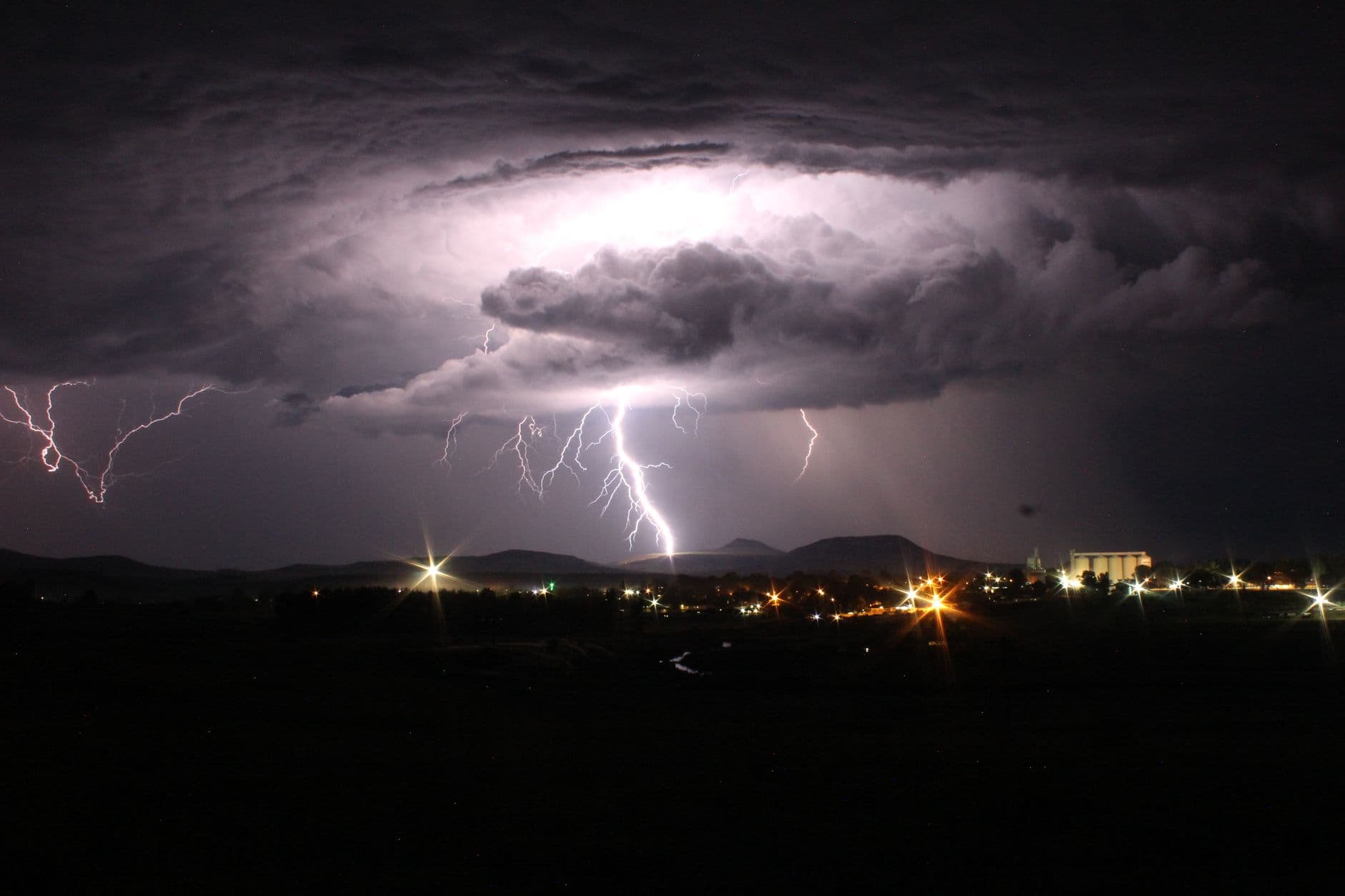
Ball Lightning: Nature's Most Mysterious Extreme Weather Phenomenon
Ball lightning has killed people in locked rooms with all windows closed, yet scientists still can't agree on what it actually is. This glowing, hovering orb of plasma appears during thunderstorms and behaves like nothing else in nature—moving through walls, hovering silently, and vanishing without a sound.
For centuries, witnesses have reported seeing these luminous spheres the size of basketballs floating through the air during storms. Some describe them as ghostly, others as terrifyingly real. What makes ball lightning so extraordinary is that mainstream science dismissed it as folklore for nearly two hundred years.
What Exactly is Ball Lightning?
Ball lightning appears as a sphere of light ranging from a few inches to several feet in diameter. It glows in colors from white to red to blue, and typically lasts between one and ten seconds before disappearing with a bang or a whisper.
The phenomenon defies conventional physics. Unlike regular lightning, which follows a predictable path from cloud to ground, ball lightning seems to ignore the laws of electricity. It hovers. It moves horizontally. It passes through solid objects.
In 2014, Chinese scientists finally captured ball lightning in a laboratory and proved it wasn't fantasy. They measured its light spectrum and temperature, confirming it reaches around 5,400 Kelvin—hotter than the surface of the sun.
The Science Behind Rare Weather Phenomena
The leading theory suggests ball lightning forms when regular lightning strikes soil rich in silicon. The intense heat vaporizes the silicon, which then condenses into a glowing plasma ball as it rises through the air.
This explains why ball lightning appears near the ground after lightning strikes. It also explains why it glows—the silicon particles are literally burning as they oxidize in the atmosphere.
But this theory doesn't explain everything. Some witnesses report ball lightning appearing far from any lightning strike. Others describe it moving against the wind or entering buildings through closed windows. The mystery deepens the more you investigate.
Extreme Weather Dangers and Historical Records
Ball lightning poses real danger. In 1753, a Russian physicist named Georg Wilhelm Richmann was killed by what witnesses described as a glowing ball during a thunderstorm. In 1969, a ball of light allegedly entered an airplane cabin at 20,000 feet, traveled down the aisle, and vanished through the fuselage.
Most encounters result in no injury, but the electromagnetic radiation could theoretically cause serious harm. A few documented cases report severe burns and property damage.
The unpredictability makes ball lightning particularly dangerous. Unlike regular lightning, which follows predictable patterns during storms, ball lightning appears without warning and moves erratically.
How Scientists Study Atmospheric Electricity Anomalies
Creating ball lightning in laboratories is incredibly difficult. Scientists must replicate the exact conditions of a lightning strike while measuring what happens in real time. Most attempts fail to produce anything visible.
Modern researchers use high-speed cameras and spectroscopy to study the rare natural occurrences. When ball lightning appears during storms, detection equipment can capture data about its temperature, light wavelength, and electromagnetic properties.
This methodical approach has transformed ball lightning from folklore to legitimate physics. Universities in China, Japan, and Europe now maintain active research programs dedicated to understanding this extreme weather anomaly.
The gap between observation and explanation remains wide. Witnesses continue reporting sightings that don't fit the silicon vaporization model. Some ball lightning events occur during clear weather. Others appear without any preceding lightning activity.
Ball lightning reminds us that nature still holds mysteries. Even in an age of advanced meteorology and atmospheric science, extreme weather phenomena can surprise us. Each documented sighting brings scientists closer to understanding what happens when electricity, heat, and air collide in the worst possible way.
Want to explore more about nature's most extreme phenomena? Check out our complete extreme weather category for more incredible stories about weather anomalies. Or browse our daily feed for the latest discoveries in natural science.