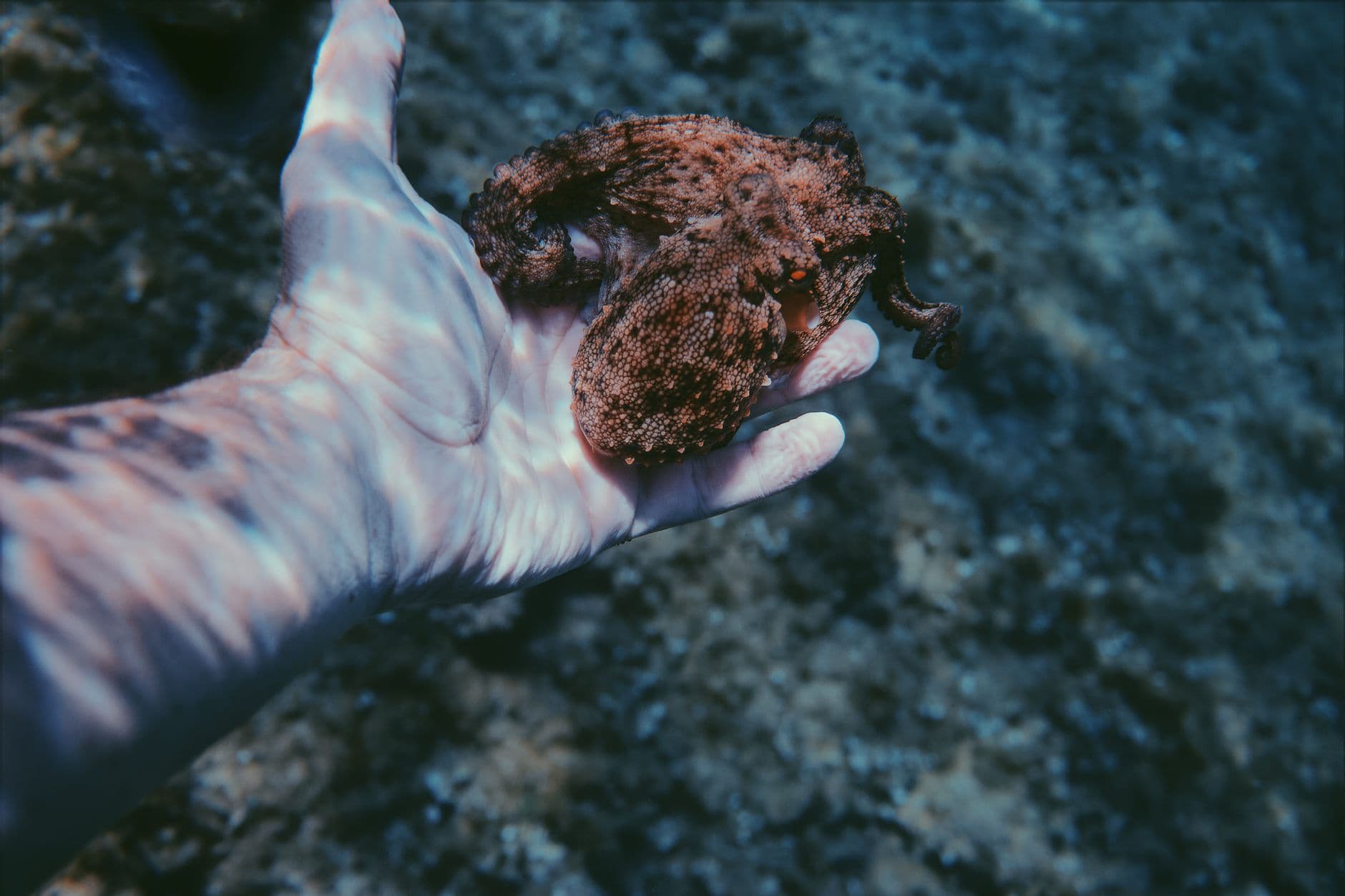
How Octopus DNA Rewrites Itself While Alive: Nature's Most Radical Survival Strategy
Octopuses can edit their own genetic code while they're swimming around hunting crabs. This sounds like science fiction, but it's absolutely real—and it's one of the most bizarre biological tricks ever discovered in the ocean.
Unlike humans, who inherit fixed DNA from their parents and keep those same genes for life, octopuses actively rewrite their genetic instructions mid-existence. They do this through a process called RNA editing, which is like having a copy-paste function for your own biology.
RNA Editing: The Secret to Instant Adaptation
Here's where it gets wild. Your DNA is locked in place—it's your biological blueprint, set in stone since conception. But RNA is different. RNA acts as a messenger, carrying instructions from your DNA to build proteins that actually do the work in your cells.
Octopuses discovered something humans never evolved: they can edit those RNA messages before they get translated into proteins. It's like intercepting a letter mid-delivery and changing what it says before the recipient reads it.
When an octopus encounters extreme cold or toxic environments, its cells don't panic. Instead, they systematically change the chemical code in their RNA, swapping out specific letters that alter how proteins behave. This happens in hours or days—not generations.
Why Cephalopods Possess This Alien-Like Ability
Scientists studying cephalopod biology have found that octopuses, squid, and cuttlefish all perform this genetic magic trick. The ability is especially strong in deep-sea species that face crushing pressure, near-freezing temperatures, and constant chemical shifts in their environment.
Think about what evolution normally demands. A species needs random mutations to occur, then natural selection filters out the weak versions over thousands of years. It's painfully slow.
Octopuses skipped that whole waiting game. They developed the ability to tweak their own proteins on demand, letting them survive in places that would kill almost any other animal. A National Geographic study showed that over 60% of the RNA in some octopus species gets edited—compared to less than 1% in humans.
The Shocking Cost of This Genetic Freedom
Here's the trade-off nature forced on these creatures. While octopuses gained incredible flexibility, they lost genetic stability. Their DNA mutates faster than other animals because the constant editing introduces errors.
It's a Faustian bargain: supreme adaptability in exchange for a shorter lifespan and higher genetic chaos. Most octopuses live only 1-2 years. They burn bright and fast, adapting furiously to whatever the ocean throws at them, then dying before accumulated mutations catch up.
This explains why octopuses are such brilliant problem-solvers despite having short lives. They're not relying on inherited wisdom from parents. They're hacking their own biology in real-time, learning and adapting faster than any other creature on Earth.
What This Teaches Us About DNA
The octopus story rewrites everything we thought we knew about genetic destiny. We used to think DNA was locked, unchangeable, the ultimate boss controlling your fate. Octopuses proved that wrong.
Researchers at Smithsonian Institution are now investigating whether other animals possess hidden RNA editing abilities we haven't detected yet. If octopuses cracked this code, maybe other deep-sea creatures did too.
The implications reach beyond marine biology. Understanding DNA and biology through creatures like octopuses could eventually help humans treat genetic diseases by editing our own RNA messages—something researchers are already exploring in labs.
Nature didn't give octopuses massive brains, long lifespans, or social structures. Instead, it gave them something better: the power to edit themselves. In the brutal deep ocean, that's the ultimate survival weapon.
Want to discover more astonishing truths about how animals adapt and survive? Explore our nature categories or check out our daily nature feed for stories that challenge everything you thought you knew about life on Earth.